mirror of
https://github.com/onyx-dot-app/onyx.git
synced 2026-02-17 07:45:47 +00:00
Compare commits
23 Commits
| Author | SHA1 | Date | |
|---|---|---|---|

|
f47d6798e1 | ||
|
|
8f67f1715c | ||
|
|
3b365509e2 | ||
|
|
022cbdfccf | ||
|
|
ebec6f6b10 | ||
|
|
1cad9c7b3d | ||
|
|
b4e975013c | ||
|
|
dd26f92206 | ||
|
|
4d00ec45ad | ||
|
|
1a81c67a67 | ||
|
|
04f965e656 | ||
|
|
277d37e0ee | ||
|
|
3cd260131b | ||
|
|
ad21ee0e9a | ||
|
|
c7dc0e9af0 | ||
|
|
75c5de802b | ||
|
|
c39f590d0d | ||
|
|
82a9fda846 | ||
|
|
842d4ab2a8 | ||
|
|
cddcec4ea4 | ||
|
|
09dd7b424c | ||
|
|
a2fd8d5e0a | ||
|
|
802dc00f78 |
20
.github/pull_request_template.md
vendored
20
.github/pull_request_template.md
vendored
@@ -6,6 +6,20 @@
|
||||
[Describe the tests you ran to verify your changes]
|
||||
|
||||
|
||||
## Backporting (check the box to trigger backport action)
|
||||
Note: You have to check that the action passes, otherwise resolve the conflicts manually and tag the patches.
|
||||
- [ ] This PR should be backported (make sure to check that the backport attempt succeeds)
|
||||
## Accepted Risk
|
||||
[Any know risks or failure modes to point out to reviewers]
|
||||
|
||||
|
||||
## Related Issue(s)
|
||||
[If applicable, link to the issue(s) this PR addresses]
|
||||
|
||||
|
||||
## Checklist:
|
||||
- [ ] All of the automated tests pass
|
||||
- [ ] All PR comments are addressed and marked resolved
|
||||
- [ ] If there are migrations, they have been rebased to latest main
|
||||
- [ ] If there are new dependencies, they are added to the requirements
|
||||
- [ ] If there are new environment variables, they are added to all of the deployment methods
|
||||
- [ ] If there are new APIs that don't require auth, they are added to PUBLIC_ENDPOINT_SPECS
|
||||
- [ ] Docker images build and basic functionalities work
|
||||
- [ ] Author has done a final read through of the PR right before merge
|
||||
|
||||
@@ -3,61 +3,61 @@ name: Build and Push Backend Image on Tag
|
||||
on:
|
||||
push:
|
||||
tags:
|
||||
- "*"
|
||||
- '*'
|
||||
|
||||
env:
|
||||
REGISTRY_IMAGE: ${{ contains(github.ref_name, 'cloud') && 'onyxdotapp/onyx-backend-cloud' || 'onyxdotapp/onyx-backend' }}
|
||||
REGISTRY_IMAGE: danswer/danswer-backend
|
||||
LATEST_TAG: ${{ contains(github.ref_name, 'latest') }}
|
||||
|
||||
|
||||
jobs:
|
||||
build-and-push:
|
||||
# TODO: investigate a matrix build like the web container
|
||||
# TODO: investigate a matrix build like the web container
|
||||
# See https://runs-on.com/runners/linux/
|
||||
runs-on: [runs-on, runner=8cpu-linux-x64, "run-id=${{ github.run_id }}"]
|
||||
runs-on: [runs-on,runner=8cpu-linux-x64,"run-id=${{ github.run_id }}"]
|
||||
|
||||
steps:
|
||||
- name: Checkout code
|
||||
uses: actions/checkout@v4
|
||||
- name: Checkout code
|
||||
uses: actions/checkout@v4
|
||||
|
||||
- name: Set up Docker Buildx
|
||||
uses: docker/setup-buildx-action@v3
|
||||
- name: Set up Docker Buildx
|
||||
uses: docker/setup-buildx-action@v3
|
||||
|
||||
- name: Login to Docker Hub
|
||||
uses: docker/login-action@v3
|
||||
with:
|
||||
username: ${{ secrets.DOCKER_USERNAME }}
|
||||
password: ${{ secrets.DOCKER_TOKEN }}
|
||||
- name: Login to Docker Hub
|
||||
uses: docker/login-action@v3
|
||||
with:
|
||||
username: ${{ secrets.DOCKER_USERNAME }}
|
||||
password: ${{ secrets.DOCKER_TOKEN }}
|
||||
|
||||
- name: Install build-essential
|
||||
run: |
|
||||
sudo apt-get update
|
||||
sudo apt-get install -y build-essential
|
||||
- name: Install build-essential
|
||||
run: |
|
||||
sudo apt-get update
|
||||
sudo apt-get install -y build-essential
|
||||
|
||||
- name: Backend Image Docker Build and Push
|
||||
uses: docker/build-push-action@v5
|
||||
with:
|
||||
context: ./backend
|
||||
file: ./backend/Dockerfile
|
||||
platforms: linux/amd64,linux/arm64
|
||||
push: true
|
||||
tags: |
|
||||
${{ env.REGISTRY_IMAGE }}:${{ github.ref_name }}
|
||||
${{ env.LATEST_TAG == 'true' && format('{0}:latest', env.REGISTRY_IMAGE) || '' }}
|
||||
build-args: |
|
||||
DANSWER_VERSION=${{ github.ref_name }}
|
||||
|
||||
- name: Backend Image Docker Build and Push
|
||||
uses: docker/build-push-action@v5
|
||||
with:
|
||||
context: ./backend
|
||||
file: ./backend/Dockerfile
|
||||
platforms: linux/amd64,linux/arm64
|
||||
push: true
|
||||
tags: |
|
||||
${{ env.REGISTRY_IMAGE }}:${{ github.ref_name }}
|
||||
${{ env.LATEST_TAG == 'true' && format('{0}:latest', env.REGISTRY_IMAGE) || '' }}
|
||||
build-args: |
|
||||
ONYX_VERSION=${{ github.ref_name }}
|
||||
|
||||
# trivy has their own rate limiting issues causing this action to flake
|
||||
# we worked around it by hardcoding to different db repos in env
|
||||
# can re-enable when they figure it out
|
||||
# https://github.com/aquasecurity/trivy/discussions/7538
|
||||
# https://github.com/aquasecurity/trivy-action/issues/389
|
||||
- name: Run Trivy vulnerability scanner
|
||||
uses: aquasecurity/trivy-action@master
|
||||
env:
|
||||
TRIVY_DB_REPOSITORY: "public.ecr.aws/aquasecurity/trivy-db:2"
|
||||
TRIVY_JAVA_DB_REPOSITORY: "public.ecr.aws/aquasecurity/trivy-java-db:1"
|
||||
with:
|
||||
# To run locally: trivy image --severity HIGH,CRITICAL onyxdotapp/onyx-backend
|
||||
image-ref: docker.io/${{ env.REGISTRY_IMAGE }}:${{ github.ref_name }}
|
||||
severity: "CRITICAL,HIGH"
|
||||
trivyignores: ./backend/.trivyignore
|
||||
# trivy has their own rate limiting issues causing this action to flake
|
||||
# we worked around it by hardcoding to different db repos in env
|
||||
# can re-enable when they figure it out
|
||||
# https://github.com/aquasecurity/trivy/discussions/7538
|
||||
# https://github.com/aquasecurity/trivy-action/issues/389
|
||||
- name: Run Trivy vulnerability scanner
|
||||
uses: aquasecurity/trivy-action@master
|
||||
env:
|
||||
TRIVY_DB_REPOSITORY: 'public.ecr.aws/aquasecurity/trivy-db:2'
|
||||
TRIVY_JAVA_DB_REPOSITORY: 'public.ecr.aws/aquasecurity/trivy-java-db:1'
|
||||
with:
|
||||
# To run locally: trivy image --severity HIGH,CRITICAL danswer/danswer-backend
|
||||
image-ref: docker.io/${{ env.REGISTRY_IMAGE }}:${{ github.ref_name }}
|
||||
severity: 'CRITICAL,HIGH'
|
||||
trivyignores: ./backend/.trivyignore
|
||||
|
||||
@@ -1,138 +0,0 @@
|
||||
name: Build and Push Cloud Web Image on Tag
|
||||
# Identical to the web container build, but with correct image tag and build args
|
||||
|
||||
on:
|
||||
push:
|
||||
tags:
|
||||
- "*"
|
||||
|
||||
env:
|
||||
REGISTRY_IMAGE: onyxdotapp/onyx-web-server-cloud
|
||||
LATEST_TAG: ${{ contains(github.ref_name, 'latest') }}
|
||||
|
||||
jobs:
|
||||
build:
|
||||
runs-on:
|
||||
- runs-on
|
||||
- runner=${{ matrix.platform == 'linux/amd64' && '8cpu-linux-x64' || '8cpu-linux-arm64' }}
|
||||
- run-id=${{ github.run_id }}
|
||||
- tag=platform-${{ matrix.platform }}
|
||||
strategy:
|
||||
fail-fast: false
|
||||
matrix:
|
||||
platform:
|
||||
- linux/amd64
|
||||
- linux/arm64
|
||||
|
||||
steps:
|
||||
- name: Prepare
|
||||
run: |
|
||||
platform=${{ matrix.platform }}
|
||||
echo "PLATFORM_PAIR=${platform//\//-}" >> $GITHUB_ENV
|
||||
|
||||
- name: Checkout
|
||||
uses: actions/checkout@v4
|
||||
|
||||
- name: Docker meta
|
||||
id: meta
|
||||
uses: docker/metadata-action@v5
|
||||
with:
|
||||
images: ${{ env.REGISTRY_IMAGE }}
|
||||
tags: |
|
||||
type=raw,value=${{ env.REGISTRY_IMAGE }}:${{ github.ref_name }}
|
||||
type=raw,value=${{ env.LATEST_TAG == 'true' && format('{0}:latest', env.REGISTRY_IMAGE) || '' }}
|
||||
|
||||
- name: Set up Docker Buildx
|
||||
uses: docker/setup-buildx-action@v3
|
||||
|
||||
- name: Login to Docker Hub
|
||||
uses: docker/login-action@v3
|
||||
with:
|
||||
username: ${{ secrets.DOCKER_USERNAME }}
|
||||
password: ${{ secrets.DOCKER_TOKEN }}
|
||||
|
||||
- name: Build and push by digest
|
||||
id: build
|
||||
uses: docker/build-push-action@v5
|
||||
with:
|
||||
context: ./web
|
||||
file: ./web/Dockerfile
|
||||
platforms: ${{ matrix.platform }}
|
||||
push: true
|
||||
build-args: |
|
||||
ONYX_VERSION=${{ github.ref_name }}
|
||||
NEXT_PUBLIC_CLOUD_ENABLED=true
|
||||
NEXT_PUBLIC_POSTHOG_KEY=${{ secrets.POSTHOG_KEY }}
|
||||
NEXT_PUBLIC_POSTHOG_HOST=${{ secrets.POSTHOG_HOST }}
|
||||
NEXT_PUBLIC_SENTRY_DSN=${{ secrets.SENTRY_DSN }}
|
||||
NEXT_PUBLIC_GTM_ENABLED=true
|
||||
NEXT_PUBLIC_FORGOT_PASSWORD_ENABLED=true
|
||||
# needed due to weird interactions with the builds for different platforms
|
||||
no-cache: true
|
||||
labels: ${{ steps.meta.outputs.labels }}
|
||||
outputs: type=image,name=${{ env.REGISTRY_IMAGE }},push-by-digest=true,name-canonical=true,push=true
|
||||
|
||||
- name: Export digest
|
||||
run: |
|
||||
mkdir -p /tmp/digests
|
||||
digest="${{ steps.build.outputs.digest }}"
|
||||
touch "/tmp/digests/${digest#sha256:}"
|
||||
|
||||
- name: Upload digest
|
||||
uses: actions/upload-artifact@v4
|
||||
with:
|
||||
name: digests-${{ env.PLATFORM_PAIR }}
|
||||
path: /tmp/digests/*
|
||||
if-no-files-found: error
|
||||
retention-days: 1
|
||||
|
||||
merge:
|
||||
runs-on: ubuntu-latest
|
||||
needs:
|
||||
- build
|
||||
steps:
|
||||
- name: Download digests
|
||||
uses: actions/download-artifact@v4
|
||||
with:
|
||||
path: /tmp/digests
|
||||
pattern: digests-*
|
||||
merge-multiple: true
|
||||
|
||||
- name: Set up Docker Buildx
|
||||
uses: docker/setup-buildx-action@v3
|
||||
|
||||
- name: Docker meta
|
||||
id: meta
|
||||
uses: docker/metadata-action@v5
|
||||
with:
|
||||
images: ${{ env.REGISTRY_IMAGE }}
|
||||
|
||||
- name: Login to Docker Hub
|
||||
uses: docker/login-action@v3
|
||||
with:
|
||||
username: ${{ secrets.DOCKER_USERNAME }}
|
||||
password: ${{ secrets.DOCKER_TOKEN }}
|
||||
|
||||
- name: Create manifest list and push
|
||||
working-directory: /tmp/digests
|
||||
run: |
|
||||
docker buildx imagetools create $(jq -cr '.tags | map("-t " + .) | join(" ")' <<< "$DOCKER_METADATA_OUTPUT_JSON") \
|
||||
$(printf '${{ env.REGISTRY_IMAGE }}@sha256:%s ' *)
|
||||
|
||||
- name: Inspect image
|
||||
run: |
|
||||
docker buildx imagetools inspect ${{ env.REGISTRY_IMAGE }}:${{ steps.meta.outputs.version }}
|
||||
|
||||
# trivy has their own rate limiting issues causing this action to flake
|
||||
# we worked around it by hardcoding to different db repos in env
|
||||
# can re-enable when they figure it out
|
||||
# https://github.com/aquasecurity/trivy/discussions/7538
|
||||
# https://github.com/aquasecurity/trivy-action/issues/389
|
||||
- name: Run Trivy vulnerability scanner
|
||||
uses: aquasecurity/trivy-action@master
|
||||
env:
|
||||
TRIVY_DB_REPOSITORY: "public.ecr.aws/aquasecurity/trivy-db:2"
|
||||
TRIVY_JAVA_DB_REPOSITORY: "public.ecr.aws/aquasecurity/trivy-java-db:1"
|
||||
with:
|
||||
image-ref: docker.io/${{ env.REGISTRY_IMAGE }}:${{ github.ref_name }}
|
||||
severity: "CRITICAL,HIGH"
|
||||
@@ -3,121 +3,53 @@ name: Build and Push Model Server Image on Tag
|
||||
on:
|
||||
push:
|
||||
tags:
|
||||
- "*"
|
||||
- '*'
|
||||
|
||||
env:
|
||||
REGISTRY_IMAGE: ${{ contains(github.ref_name, 'cloud') && 'onyxdotapp/onyx-model-server-cloud' || 'onyxdotapp/onyx-model-server' }}
|
||||
REGISTRY_IMAGE: danswer/danswer-model-server
|
||||
LATEST_TAG: ${{ contains(github.ref_name, 'latest') }}
|
||||
DOCKER_BUILDKIT: 1
|
||||
BUILDKIT_PROGRESS: plain
|
||||
|
||||
|
||||
jobs:
|
||||
build-amd64:
|
||||
runs-on:
|
||||
[runs-on, runner=8cpu-linux-x64, "run-id=${{ github.run_id }}-amd64"]
|
||||
build-and-push:
|
||||
# See https://runs-on.com/runners/linux/
|
||||
runs-on: [runs-on,runner=8cpu-linux-x64,"run-id=${{ github.run_id }}"]
|
||||
|
||||
steps:
|
||||
- name: Checkout code
|
||||
uses: actions/checkout@v4
|
||||
- name: Checkout code
|
||||
uses: actions/checkout@v4
|
||||
|
||||
- name: System Info
|
||||
run: |
|
||||
df -h
|
||||
free -h
|
||||
docker system prune -af --volumes
|
||||
- name: Set up Docker Buildx
|
||||
uses: docker/setup-buildx-action@v3
|
||||
|
||||
- name: Set up Docker Buildx
|
||||
uses: docker/setup-buildx-action@v3
|
||||
with:
|
||||
driver-opts: |
|
||||
image=moby/buildkit:latest
|
||||
network=host
|
||||
- name: Login to Docker Hub
|
||||
uses: docker/login-action@v3
|
||||
with:
|
||||
username: ${{ secrets.DOCKER_USERNAME }}
|
||||
password: ${{ secrets.DOCKER_TOKEN }}
|
||||
|
||||
- name: Login to Docker Hub
|
||||
uses: docker/login-action@v3
|
||||
with:
|
||||
username: ${{ secrets.DOCKER_USERNAME }}
|
||||
password: ${{ secrets.DOCKER_TOKEN }}
|
||||
- name: Model Server Image Docker Build and Push
|
||||
uses: docker/build-push-action@v5
|
||||
with:
|
||||
context: ./backend
|
||||
file: ./backend/Dockerfile.model_server
|
||||
platforms: linux/amd64,linux/arm64
|
||||
push: true
|
||||
tags: |
|
||||
${{ env.REGISTRY_IMAGE }}:${{ github.ref_name }}
|
||||
${{ env.LATEST_TAG == 'true' && format('{0}:latest', env.REGISTRY_IMAGE) || '' }}
|
||||
build-args: |
|
||||
DANSWER_VERSION=${{ github.ref_name }}
|
||||
|
||||
- name: Build and Push AMD64
|
||||
uses: docker/build-push-action@v5
|
||||
with:
|
||||
context: ./backend
|
||||
file: ./backend/Dockerfile.model_server
|
||||
platforms: linux/amd64
|
||||
push: true
|
||||
tags: ${{ env.REGISTRY_IMAGE }}:${{ github.ref_name }}-amd64
|
||||
build-args: |
|
||||
DANSWER_VERSION=${{ github.ref_name }}
|
||||
outputs: type=registry
|
||||
provenance: false
|
||||
|
||||
build-arm64:
|
||||
runs-on:
|
||||
[runs-on, runner=8cpu-linux-x64, "run-id=${{ github.run_id }}-arm64"]
|
||||
steps:
|
||||
- name: Checkout code
|
||||
uses: actions/checkout@v4
|
||||
|
||||
- name: System Info
|
||||
run: |
|
||||
df -h
|
||||
free -h
|
||||
docker system prune -af --volumes
|
||||
|
||||
- name: Set up Docker Buildx
|
||||
uses: docker/setup-buildx-action@v3
|
||||
with:
|
||||
driver-opts: |
|
||||
image=moby/buildkit:latest
|
||||
network=host
|
||||
|
||||
- name: Login to Docker Hub
|
||||
uses: docker/login-action@v3
|
||||
with:
|
||||
username: ${{ secrets.DOCKER_USERNAME }}
|
||||
password: ${{ secrets.DOCKER_TOKEN }}
|
||||
|
||||
- name: Build and Push ARM64
|
||||
uses: docker/build-push-action@v5
|
||||
with:
|
||||
context: ./backend
|
||||
file: ./backend/Dockerfile.model_server
|
||||
platforms: linux/arm64
|
||||
push: true
|
||||
tags: ${{ env.REGISTRY_IMAGE }}:${{ github.ref_name }}-arm64
|
||||
build-args: |
|
||||
DANSWER_VERSION=${{ github.ref_name }}
|
||||
outputs: type=registry
|
||||
provenance: false
|
||||
|
||||
merge-and-scan:
|
||||
needs: [build-amd64, build-arm64]
|
||||
runs-on: ubuntu-latest
|
||||
steps:
|
||||
- name: Login to Docker Hub
|
||||
uses: docker/login-action@v3
|
||||
with:
|
||||
username: ${{ secrets.DOCKER_USERNAME }}
|
||||
password: ${{ secrets.DOCKER_TOKEN }}
|
||||
|
||||
- name: Create and Push Multi-arch Manifest
|
||||
run: |
|
||||
docker buildx create --use
|
||||
docker buildx imagetools create -t ${{ env.REGISTRY_IMAGE }}:${{ github.ref_name }} \
|
||||
${{ env.REGISTRY_IMAGE }}:${{ github.ref_name }}-amd64 \
|
||||
${{ env.REGISTRY_IMAGE }}:${{ github.ref_name }}-arm64
|
||||
if [[ "${{ env.LATEST_TAG }}" == "true" ]]; then
|
||||
docker buildx imagetools create -t ${{ env.REGISTRY_IMAGE }}:latest \
|
||||
${{ env.REGISTRY_IMAGE }}:${{ github.ref_name }}-amd64 \
|
||||
${{ env.REGISTRY_IMAGE }}:${{ github.ref_name }}-arm64
|
||||
fi
|
||||
|
||||
- name: Run Trivy vulnerability scanner
|
||||
uses: aquasecurity/trivy-action@master
|
||||
env:
|
||||
TRIVY_DB_REPOSITORY: "public.ecr.aws/aquasecurity/trivy-db:2"
|
||||
TRIVY_JAVA_DB_REPOSITORY: "public.ecr.aws/aquasecurity/trivy-java-db:1"
|
||||
with:
|
||||
image-ref: docker.io/onyxdotapp/onyx-model-server:${{ github.ref_name }}
|
||||
severity: "CRITICAL,HIGH"
|
||||
timeout: "10m"
|
||||
# trivy has their own rate limiting issues causing this action to flake
|
||||
# we worked around it by hardcoding to different db repos in env
|
||||
# can re-enable when they figure it out
|
||||
# https://github.com/aquasecurity/trivy/discussions/7538
|
||||
# https://github.com/aquasecurity/trivy-action/issues/389
|
||||
- name: Run Trivy vulnerability scanner
|
||||
uses: aquasecurity/trivy-action@master
|
||||
env:
|
||||
TRIVY_DB_REPOSITORY: 'public.ecr.aws/aquasecurity/trivy-db:2'
|
||||
TRIVY_JAVA_DB_REPOSITORY: 'public.ecr.aws/aquasecurity/trivy-java-db:1'
|
||||
with:
|
||||
image-ref: docker.io/danswer/danswer-model-server:${{ github.ref_name }}
|
||||
severity: 'CRITICAL,HIGH'
|
||||
|
||||
@@ -3,12 +3,12 @@ name: Build and Push Web Image on Tag
|
||||
on:
|
||||
push:
|
||||
tags:
|
||||
- "*"
|
||||
- '*'
|
||||
|
||||
env:
|
||||
REGISTRY_IMAGE: onyxdotapp/onyx-web-server
|
||||
REGISTRY_IMAGE: danswer/danswer-web-server
|
||||
LATEST_TAG: ${{ contains(github.ref_name, 'latest') }}
|
||||
|
||||
|
||||
jobs:
|
||||
build:
|
||||
runs-on:
|
||||
@@ -27,11 +27,11 @@ jobs:
|
||||
- name: Prepare
|
||||
run: |
|
||||
platform=${{ matrix.platform }}
|
||||
echo "PLATFORM_PAIR=${platform//\//-}" >> $GITHUB_ENV
|
||||
|
||||
echo "PLATFORM_PAIR=${platform//\//-}" >> $GITHUB_ENV
|
||||
|
||||
- name: Checkout
|
||||
uses: actions/checkout@v4
|
||||
|
||||
|
||||
- name: Docker meta
|
||||
id: meta
|
||||
uses: docker/metadata-action@v5
|
||||
@@ -40,16 +40,16 @@ jobs:
|
||||
tags: |
|
||||
type=raw,value=${{ env.REGISTRY_IMAGE }}:${{ github.ref_name }}
|
||||
type=raw,value=${{ env.LATEST_TAG == 'true' && format('{0}:latest', env.REGISTRY_IMAGE) || '' }}
|
||||
|
||||
|
||||
- name: Set up Docker Buildx
|
||||
uses: docker/setup-buildx-action@v3
|
||||
|
||||
|
||||
- name: Login to Docker Hub
|
||||
uses: docker/login-action@v3
|
||||
with:
|
||||
username: ${{ secrets.DOCKER_USERNAME }}
|
||||
password: ${{ secrets.DOCKER_TOKEN }}
|
||||
|
||||
|
||||
- name: Build and push by digest
|
||||
id: build
|
||||
uses: docker/build-push-action@v5
|
||||
@@ -59,18 +59,18 @@ jobs:
|
||||
platforms: ${{ matrix.platform }}
|
||||
push: true
|
||||
build-args: |
|
||||
ONYX_VERSION=${{ github.ref_name }}
|
||||
# needed due to weird interactions with the builds for different platforms
|
||||
DANSWER_VERSION=${{ github.ref_name }}
|
||||
# needed due to weird interactions with the builds for different platforms
|
||||
no-cache: true
|
||||
labels: ${{ steps.meta.outputs.labels }}
|
||||
outputs: type=image,name=${{ env.REGISTRY_IMAGE }},push-by-digest=true,name-canonical=true,push=true
|
||||
|
||||
|
||||
- name: Export digest
|
||||
run: |
|
||||
mkdir -p /tmp/digests
|
||||
digest="${{ steps.build.outputs.digest }}"
|
||||
touch "/tmp/digests/${digest#sha256:}"
|
||||
|
||||
touch "/tmp/digests/${digest#sha256:}"
|
||||
|
||||
- name: Upload digest
|
||||
uses: actions/upload-artifact@v4
|
||||
with:
|
||||
@@ -90,42 +90,42 @@ jobs:
|
||||
path: /tmp/digests
|
||||
pattern: digests-*
|
||||
merge-multiple: true
|
||||
|
||||
|
||||
- name: Set up Docker Buildx
|
||||
uses: docker/setup-buildx-action@v3
|
||||
|
||||
|
||||
- name: Docker meta
|
||||
id: meta
|
||||
uses: docker/metadata-action@v5
|
||||
with:
|
||||
images: ${{ env.REGISTRY_IMAGE }}
|
||||
|
||||
|
||||
- name: Login to Docker Hub
|
||||
uses: docker/login-action@v3
|
||||
with:
|
||||
username: ${{ secrets.DOCKER_USERNAME }}
|
||||
password: ${{ secrets.DOCKER_TOKEN }}
|
||||
|
||||
|
||||
- name: Create manifest list and push
|
||||
working-directory: /tmp/digests
|
||||
run: |
|
||||
docker buildx imagetools create $(jq -cr '.tags | map("-t " + .) | join(" ")' <<< "$DOCKER_METADATA_OUTPUT_JSON") \
|
||||
$(printf '${{ env.REGISTRY_IMAGE }}@sha256:%s ' *)
|
||||
|
||||
$(printf '${{ env.REGISTRY_IMAGE }}@sha256:%s ' *)
|
||||
|
||||
- name: Inspect image
|
||||
run: |
|
||||
docker buildx imagetools inspect ${{ env.REGISTRY_IMAGE }}:${{ steps.meta.outputs.version }}
|
||||
|
||||
# trivy has their own rate limiting issues causing this action to flake
|
||||
# we worked around it by hardcoding to different db repos in env
|
||||
# can re-enable when they figure it out
|
||||
# https://github.com/aquasecurity/trivy/discussions/7538
|
||||
# https://github.com/aquasecurity/trivy-action/issues/389
|
||||
# trivy has their own rate limiting issues causing this action to flake
|
||||
# we worked around it by hardcoding to different db repos in env
|
||||
# can re-enable when they figure it out
|
||||
# https://github.com/aquasecurity/trivy/discussions/7538
|
||||
# https://github.com/aquasecurity/trivy-action/issues/389
|
||||
- name: Run Trivy vulnerability scanner
|
||||
uses: aquasecurity/trivy-action@master
|
||||
env:
|
||||
TRIVY_DB_REPOSITORY: "public.ecr.aws/aquasecurity/trivy-db:2"
|
||||
TRIVY_JAVA_DB_REPOSITORY: "public.ecr.aws/aquasecurity/trivy-java-db:1"
|
||||
TRIVY_DB_REPOSITORY: 'public.ecr.aws/aquasecurity/trivy-db:2'
|
||||
TRIVY_JAVA_DB_REPOSITORY: 'public.ecr.aws/aquasecurity/trivy-java-db:1'
|
||||
with:
|
||||
image-ref: docker.io/${{ env.REGISTRY_IMAGE }}:${{ github.ref_name }}
|
||||
severity: "CRITICAL,HIGH"
|
||||
severity: 'CRITICAL,HIGH'
|
||||
|
||||
34
.github/workflows/docker-tag-latest.yml
vendored
34
.github/workflows/docker-tag-latest.yml
vendored
@@ -7,31 +7,31 @@ on:
|
||||
workflow_dispatch:
|
||||
inputs:
|
||||
version:
|
||||
description: "The version (ie v0.0.1) to tag as latest"
|
||||
description: 'The version (ie v0.0.1) to tag as latest'
|
||||
required: true
|
||||
|
||||
jobs:
|
||||
tag:
|
||||
# See https://runs-on.com/runners/linux/
|
||||
# use a lower powered instance since this just does i/o to docker hub
|
||||
runs-on: [runs-on, runner=2cpu-linux-x64, "run-id=${{ github.run_id }}"]
|
||||
runs-on: [runs-on,runner=2cpu-linux-x64,"run-id=${{ github.run_id }}"]
|
||||
steps:
|
||||
- name: Set up Docker Buildx
|
||||
uses: docker/setup-buildx-action@v1
|
||||
- name: Set up Docker Buildx
|
||||
uses: docker/setup-buildx-action@v1
|
||||
|
||||
- name: Login to Docker Hub
|
||||
uses: docker/login-action@v1
|
||||
with:
|
||||
username: ${{ secrets.DOCKER_USERNAME }}
|
||||
password: ${{ secrets.DOCKER_TOKEN }}
|
||||
- name: Login to Docker Hub
|
||||
uses: docker/login-action@v1
|
||||
with:
|
||||
username: ${{ secrets.DOCKER_USERNAME }}
|
||||
password: ${{ secrets.DOCKER_TOKEN }}
|
||||
|
||||
- name: Enable Docker CLI experimental features
|
||||
run: echo "DOCKER_CLI_EXPERIMENTAL=enabled" >> $GITHUB_ENV
|
||||
- name: Enable Docker CLI experimental features
|
||||
run: echo "DOCKER_CLI_EXPERIMENTAL=enabled" >> $GITHUB_ENV
|
||||
|
||||
- name: Pull, Tag and Push Web Server Image
|
||||
run: |
|
||||
docker buildx imagetools create -t onyxdotapp/onyx-web-server:latest onyxdotapp/onyx-web-server:${{ github.event.inputs.version }}
|
||||
- name: Pull, Tag and Push Web Server Image
|
||||
run: |
|
||||
docker buildx imagetools create -t danswer/danswer-web-server:latest danswer/danswer-web-server:${{ github.event.inputs.version }}
|
||||
|
||||
- name: Pull, Tag and Push API Server Image
|
||||
run: |
|
||||
docker buildx imagetools create -t onyxdotapp/onyx-backend:latest onyxdotapp/onyx-backend:${{ github.event.inputs.version }}
|
||||
- name: Pull, Tag and Push API Server Image
|
||||
run: |
|
||||
docker buildx imagetools create -t danswer/danswer-backend:latest danswer/danswer-backend:${{ github.event.inputs.version }}
|
||||
|
||||
27
.github/workflows/hotfix-release-branches.yml
vendored
27
.github/workflows/hotfix-release-branches.yml
vendored
@@ -8,42 +8,43 @@ on:
|
||||
workflow_dispatch:
|
||||
inputs:
|
||||
hotfix_commit:
|
||||
description: "Hotfix commit hash"
|
||||
description: 'Hotfix commit hash'
|
||||
required: true
|
||||
hotfix_suffix:
|
||||
description: "Hotfix branch suffix (e.g. hotfix/v0.8-{suffix})"
|
||||
description: 'Hotfix branch suffix (e.g. hotfix/v0.8-{suffix})'
|
||||
required: true
|
||||
release_branch_pattern:
|
||||
description: "Release branch pattern (regex)"
|
||||
description: 'Release branch pattern (regex)'
|
||||
required: true
|
||||
default: "release/.*"
|
||||
default: 'release/.*'
|
||||
auto_merge:
|
||||
description: "Automatically merge the hotfix PRs"
|
||||
description: 'Automatically merge the hotfix PRs'
|
||||
required: true
|
||||
type: choice
|
||||
default: "true"
|
||||
default: 'true'
|
||||
options:
|
||||
- true
|
||||
- false
|
||||
|
||||
|
||||
jobs:
|
||||
hotfix_release_branches:
|
||||
permissions: write-all
|
||||
# See https://runs-on.com/runners/linux/
|
||||
# use a lower powered instance since this just does i/o to docker hub
|
||||
runs-on: [runs-on, runner=2cpu-linux-x64, "run-id=${{ github.run_id }}"]
|
||||
runs-on: [runs-on,runner=2cpu-linux-x64,"run-id=${{ github.run_id }}"]
|
||||
steps:
|
||||
|
||||
# needs RKUO_DEPLOY_KEY for write access to merge PR's
|
||||
- name: Checkout Repository
|
||||
uses: actions/checkout@v4
|
||||
with:
|
||||
ssh-key: "${{ secrets.RKUO_DEPLOY_KEY }}"
|
||||
fetch-depth: 0
|
||||
|
||||
|
||||
- name: Set up Git user
|
||||
run: |
|
||||
git config user.name "Richard Kuo [bot]"
|
||||
git config user.email "rkuo[bot]@onyx.app"
|
||||
git config user.email "rkuo[bot]@danswer.ai"
|
||||
|
||||
- name: Fetch All Branches
|
||||
run: |
|
||||
@@ -61,10 +62,10 @@ jobs:
|
||||
echo "No release branches found matching pattern '${{ github.event.inputs.release_branch_pattern }}'."
|
||||
exit 1
|
||||
fi
|
||||
|
||||
|
||||
echo "Found release branches:"
|
||||
echo "$BRANCHES"
|
||||
|
||||
|
||||
# Join the branches into a single line separated by commas
|
||||
BRANCHES_JOINED=$(echo "$BRANCHES" | tr '\n' ',' | sed 's/,$//')
|
||||
|
||||
@@ -168,4 +169,4 @@ jobs:
|
||||
echo "Failed to merge pull request #$PR_NUMBER."
|
||||
fi
|
||||
fi
|
||||
done
|
||||
done
|
||||
23
.github/workflows/nightly-close-stale-issues.yml
vendored
23
.github/workflows/nightly-close-stale-issues.yml
vendored
@@ -1,23 +0,0 @@
|
||||
name: 'Nightly - Close stale issues and PRs'
|
||||
on:
|
||||
schedule:
|
||||
- cron: '0 11 * * *' # Runs every day at 3 AM PST / 4 AM PDT / 11 AM UTC
|
||||
|
||||
permissions:
|
||||
# contents: write # only for delete-branch option
|
||||
issues: write
|
||||
pull-requests: write
|
||||
|
||||
jobs:
|
||||
stale:
|
||||
runs-on: ubuntu-latest
|
||||
steps:
|
||||
- uses: actions/stale@v9
|
||||
with:
|
||||
stale-issue-message: 'This issue is stale because it has been open 75 days with no activity. Remove stale label or comment or this will be closed in 15 days.'
|
||||
stale-pr-message: 'This PR is stale because it has been open 75 days with no activity. Remove stale label or comment or this will be closed in 15 days.'
|
||||
close-issue-message: 'This issue was closed because it has been stalled for 90 days with no activity.'
|
||||
close-pr-message: 'This PR was closed because it has been stalled for 90 days with no activity.'
|
||||
days-before-stale: 75
|
||||
# days-before-close: 90 # uncomment after we test stale behavior
|
||||
|
||||
76
.github/workflows/nightly-scan-licenses.yml
vendored
76
.github/workflows/nightly-scan-licenses.yml
vendored
@@ -1,76 +0,0 @@
|
||||
# Scan for problematic software licenses
|
||||
|
||||
# trivy has their own rate limiting issues causing this action to flake
|
||||
# we worked around it by hardcoding to different db repos in env
|
||||
# can re-enable when they figure it out
|
||||
# https://github.com/aquasecurity/trivy/discussions/7538
|
||||
# https://github.com/aquasecurity/trivy-action/issues/389
|
||||
|
||||
name: 'Nightly - Scan licenses'
|
||||
on:
|
||||
# schedule:
|
||||
# - cron: '0 14 * * *' # Runs every day at 6 AM PST / 7 AM PDT / 2 PM UTC
|
||||
workflow_dispatch: # Allows manual triggering
|
||||
|
||||
permissions:
|
||||
actions: read
|
||||
contents: read
|
||||
security-events: write
|
||||
|
||||
jobs:
|
||||
scan-licenses:
|
||||
# See https://runs-on.com/runners/linux/
|
||||
runs-on: [runs-on,runner=2cpu-linux-x64,"run-id=${{ github.run_id }}"]
|
||||
|
||||
steps:
|
||||
- name: Checkout code
|
||||
uses: actions/checkout@v4
|
||||
|
||||
- name: Set up Python
|
||||
uses: actions/setup-python@v5
|
||||
with:
|
||||
python-version: '3.11'
|
||||
cache: 'pip'
|
||||
cache-dependency-path: |
|
||||
backend/requirements/default.txt
|
||||
backend/requirements/dev.txt
|
||||
backend/requirements/model_server.txt
|
||||
|
||||
- name: Get explicit and transitive dependencies
|
||||
run: |
|
||||
python -m pip install --upgrade pip
|
||||
pip install --retries 5 --timeout 30 -r backend/requirements/default.txt
|
||||
pip install --retries 5 --timeout 30 -r backend/requirements/dev.txt
|
||||
pip install --retries 5 --timeout 30 -r backend/requirements/model_server.txt
|
||||
pip freeze > requirements-all.txt
|
||||
|
||||
- name: Check python
|
||||
id: license_check_report
|
||||
uses: pilosus/action-pip-license-checker@v2
|
||||
with:
|
||||
requirements: 'requirements-all.txt'
|
||||
fail: 'Copyleft'
|
||||
exclude: '(?i)^(pylint|aio[-_]*).*'
|
||||
|
||||
- name: Print report
|
||||
if: ${{ always() }}
|
||||
run: echo "${{ steps.license_check_report.outputs.report }}"
|
||||
|
||||
- name: Install npm dependencies
|
||||
working-directory: ./web
|
||||
run: npm ci
|
||||
|
||||
- name: Run Trivy vulnerability scanner in repo mode
|
||||
uses: aquasecurity/trivy-action@0.28.0
|
||||
with:
|
||||
scan-type: fs
|
||||
scanners: license
|
||||
format: table
|
||||
# format: sarif
|
||||
# output: trivy-results.sarif
|
||||
severity: HIGH,CRITICAL
|
||||
|
||||
# - name: Upload Trivy scan results to GitHub Security tab
|
||||
# uses: github/codeql-action/upload-sarif@v3
|
||||
# with:
|
||||
# sarif_file: trivy-results.sarif
|
||||
@@ -8,19 +8,16 @@ on:
|
||||
pull_request:
|
||||
branches:
|
||||
- main
|
||||
- "release/**"
|
||||
- 'release/**'
|
||||
|
||||
env:
|
||||
OPENAI_API_KEY: ${{ secrets.OPENAI_API_KEY }}
|
||||
SLACK_BOT_TOKEN: ${{ secrets.SLACK_BOT_TOKEN }}
|
||||
CONFLUENCE_TEST_SPACE_URL: ${{ secrets.CONFLUENCE_TEST_SPACE_URL }}
|
||||
CONFLUENCE_USER_NAME: ${{ secrets.CONFLUENCE_USER_NAME }}
|
||||
CONFLUENCE_ACCESS_TOKEN: ${{ secrets.CONFLUENCE_ACCESS_TOKEN }}
|
||||
|
||||
jobs:
|
||||
integration-tests:
|
||||
# See https://runs-on.com/runners/linux/
|
||||
runs-on: [runs-on, runner=32cpu-linux-x64, "run-id=${{ github.run_id }}"]
|
||||
runs-on: [runs-on,runner=8cpu-linux-x64,ram=16,"run-id=${{ github.run_id }}"]
|
||||
steps:
|
||||
- name: Checkout code
|
||||
uses: actions/checkout@v4
|
||||
@@ -36,21 +33,21 @@ jobs:
|
||||
|
||||
# tag every docker image with "test" so that we can spin up the correct set
|
||||
# of images during testing
|
||||
|
||||
|
||||
# We don't need to build the Web Docker image since it's not yet used
|
||||
# in the integration tests. We have a separate action to verify that it builds
|
||||
# in the integration tests. We have a separate action to verify that it builds
|
||||
# successfully.
|
||||
- name: Pull Web Docker image
|
||||
run: |
|
||||
docker pull onyxdotapp/onyx-web-server:latest
|
||||
docker tag onyxdotapp/onyx-web-server:latest onyxdotapp/onyx-web-server:test
|
||||
docker pull danswer/danswer-web-server:latest
|
||||
docker tag danswer/danswer-web-server:latest danswer/danswer-web-server:test
|
||||
|
||||
# we use the runs-on cache for docker builds
|
||||
# in conjunction with runs-on runners, it has better speed and unlimited caching
|
||||
# https://runs-on.com/caching/s3-cache-for-github-actions/
|
||||
# https://runs-on.com/caching/docker/
|
||||
# https://github.com/moby/buildkit#s3-cache-experimental
|
||||
|
||||
|
||||
# images are built and run locally for testing purposes. Not pushed.
|
||||
- name: Build Backend Docker image
|
||||
uses: ./.github/actions/custom-build-and-push
|
||||
@@ -58,7 +55,7 @@ jobs:
|
||||
context: ./backend
|
||||
file: ./backend/Dockerfile
|
||||
platforms: linux/amd64
|
||||
tags: onyxdotapp/onyx-backend:test
|
||||
tags: danswer/danswer-backend:test
|
||||
push: false
|
||||
load: true
|
||||
cache-from: type=s3,prefix=cache/${{ github.repository }}/integration-tests/backend/,region=${{ env.RUNS_ON_AWS_REGION }},bucket=${{ env.RUNS_ON_S3_BUCKET_CACHE }}
|
||||
@@ -70,7 +67,7 @@ jobs:
|
||||
context: ./backend
|
||||
file: ./backend/Dockerfile.model_server
|
||||
platforms: linux/amd64
|
||||
tags: onyxdotapp/onyx-model-server:test
|
||||
tags: danswer/danswer-model-server:test
|
||||
push: false
|
||||
load: true
|
||||
cache-from: type=s3,prefix=cache/${{ github.repository }}/integration-tests/model-server/,region=${{ env.RUNS_ON_AWS_REGION }},bucket=${{ env.RUNS_ON_S3_BUCKET_CACHE }}
|
||||
@@ -82,62 +79,12 @@ jobs:
|
||||
context: ./backend
|
||||
file: ./backend/tests/integration/Dockerfile
|
||||
platforms: linux/amd64
|
||||
tags: onyxdotapp/onyx-integration:test
|
||||
tags: danswer/danswer-integration:test
|
||||
push: false
|
||||
load: true
|
||||
cache-from: type=s3,prefix=cache/${{ github.repository }}/integration-tests/integration/,region=${{ env.RUNS_ON_AWS_REGION }},bucket=${{ env.RUNS_ON_S3_BUCKET_CACHE }}
|
||||
cache-to: type=s3,prefix=cache/${{ github.repository }}/integration-tests/integration/,region=${{ env.RUNS_ON_AWS_REGION }},bucket=${{ env.RUNS_ON_S3_BUCKET_CACHE }},mode=max
|
||||
|
||||
# Start containers for multi-tenant tests
|
||||
- name: Start Docker containers for multi-tenant tests
|
||||
run: |
|
||||
cd deployment/docker_compose
|
||||
ENABLE_PAID_ENTERPRISE_EDITION_FEATURES=true \
|
||||
MULTI_TENANT=true \
|
||||
AUTH_TYPE=basic \
|
||||
REQUIRE_EMAIL_VERIFICATION=false \
|
||||
DISABLE_TELEMETRY=true \
|
||||
IMAGE_TAG=test \
|
||||
docker compose -f docker-compose.dev.yml -p danswer-stack up -d
|
||||
id: start_docker_multi_tenant
|
||||
|
||||
# In practice, `cloud` Auth type would require OAUTH credentials to be set.
|
||||
- name: Run Multi-Tenant Integration Tests
|
||||
run: |
|
||||
echo "Running integration tests..."
|
||||
docker run --rm --network danswer-stack_default \
|
||||
--name test-runner \
|
||||
-e POSTGRES_HOST=relational_db \
|
||||
-e POSTGRES_USER=postgres \
|
||||
-e POSTGRES_PASSWORD=password \
|
||||
-e POSTGRES_DB=postgres \
|
||||
-e VESPA_HOST=index \
|
||||
-e REDIS_HOST=cache \
|
||||
-e API_SERVER_HOST=api_server \
|
||||
-e OPENAI_API_KEY=${OPENAI_API_KEY} \
|
||||
-e SLACK_BOT_TOKEN=${SLACK_BOT_TOKEN} \
|
||||
-e TEST_WEB_HOSTNAME=test-runner \
|
||||
-e AUTH_TYPE=cloud \
|
||||
-e MULTI_TENANT=true \
|
||||
onyxdotapp/onyx-integration:test \
|
||||
/app/tests/integration/multitenant_tests
|
||||
continue-on-error: true
|
||||
id: run_multitenant_tests
|
||||
|
||||
- name: Check multi-tenant test results
|
||||
run: |
|
||||
if [ ${{ steps.run_tests.outcome }} == 'failure' ]; then
|
||||
echo "Integration tests failed. Exiting with error."
|
||||
exit 1
|
||||
else
|
||||
echo "All integration tests passed successfully."
|
||||
fi
|
||||
|
||||
- name: Stop multi-tenant Docker containers
|
||||
run: |
|
||||
cd deployment/docker_compose
|
||||
docker compose -f docker-compose.dev.yml -p danswer-stack down -v
|
||||
|
||||
- name: Start Docker containers
|
||||
run: |
|
||||
cd deployment/docker_compose
|
||||
@@ -152,12 +99,12 @@ jobs:
|
||||
- name: Wait for service to be ready
|
||||
run: |
|
||||
echo "Starting wait-for-service script..."
|
||||
|
||||
|
||||
docker logs -f danswer-stack-api_server-1 &
|
||||
|
||||
start_time=$(date +%s)
|
||||
timeout=300 # 5 minutes in seconds
|
||||
|
||||
|
||||
while true; do
|
||||
current_time=$(date +%s)
|
||||
elapsed_time=$((current_time - start_time))
|
||||
@@ -183,7 +130,7 @@ jobs:
|
||||
done
|
||||
echo "Finished waiting for service."
|
||||
|
||||
- name: Run Standard Integration Tests
|
||||
- name: Run integration tests
|
||||
run: |
|
||||
echo "Running integration tests..."
|
||||
docker run --rm --network danswer-stack_default \
|
||||
@@ -197,13 +144,8 @@ jobs:
|
||||
-e API_SERVER_HOST=api_server \
|
||||
-e OPENAI_API_KEY=${OPENAI_API_KEY} \
|
||||
-e SLACK_BOT_TOKEN=${SLACK_BOT_TOKEN} \
|
||||
-e CONFLUENCE_TEST_SPACE_URL=${CONFLUENCE_TEST_SPACE_URL} \
|
||||
-e CONFLUENCE_USER_NAME=${CONFLUENCE_USER_NAME} \
|
||||
-e CONFLUENCE_ACCESS_TOKEN=${CONFLUENCE_ACCESS_TOKEN} \
|
||||
-e TEST_WEB_HOSTNAME=test-runner \
|
||||
onyxdotapp/onyx-integration:test \
|
||||
/app/tests/integration/tests \
|
||||
/app/tests/integration/connector_job_tests
|
||||
danswer/danswer-integration:test
|
||||
continue-on-error: true
|
||||
id: run_tests
|
||||
|
||||
@@ -216,19 +158,13 @@ jobs:
|
||||
echo "All integration tests passed successfully."
|
||||
fi
|
||||
|
||||
# save before stopping the containers so the logs can be captured
|
||||
- name: Save Docker logs
|
||||
if: success() || failure()
|
||||
run: |
|
||||
cd deployment/docker_compose
|
||||
docker compose -f docker-compose.dev.yml -p danswer-stack logs > docker-compose.log
|
||||
mv docker-compose.log ${{ github.workspace }}/docker-compose.log
|
||||
|
||||
- name: Stop Docker containers
|
||||
run: |
|
||||
cd deployment/docker_compose
|
||||
docker compose -f docker-compose.dev.yml -p danswer-stack down -v
|
||||
|
||||
|
||||
- name: Upload logs
|
||||
if: success() || failure()
|
||||
uses: actions/upload-artifact@v4
|
||||
124
.github/workflows/pr-backport-autotrigger.yml
vendored
124
.github/workflows/pr-backport-autotrigger.yml
vendored
@@ -1,124 +0,0 @@
|
||||
name: Backport on Merge
|
||||
|
||||
# Note this workflow does not trigger the builds, be sure to manually tag the branches to trigger the builds
|
||||
|
||||
on:
|
||||
pull_request:
|
||||
types: [closed] # Later we check for merge so only PRs that go in can get backported
|
||||
|
||||
permissions:
|
||||
contents: write
|
||||
actions: write
|
||||
|
||||
jobs:
|
||||
backport:
|
||||
if: github.event.pull_request.merged == true
|
||||
runs-on: ubuntu-latest
|
||||
env:
|
||||
GITHUB_TOKEN: ${{ secrets.YUHONG_GH_ACTIONS }}
|
||||
steps:
|
||||
- name: Checkout code
|
||||
uses: actions/checkout@v4
|
||||
with:
|
||||
ssh-key: "${{ secrets.RKUO_DEPLOY_KEY }}"
|
||||
fetch-depth: 0
|
||||
|
||||
- name: Set up Git user
|
||||
run: |
|
||||
git config user.name "Richard Kuo [bot]"
|
||||
git config user.email "rkuo[bot]@onyx.app"
|
||||
git fetch --prune
|
||||
|
||||
- name: Check for Backport Checkbox
|
||||
id: checkbox-check
|
||||
run: |
|
||||
PR_BODY="${{ github.event.pull_request.body }}"
|
||||
if [[ "$PR_BODY" == *"[x] This PR should be backported"* ]]; then
|
||||
echo "backport=true" >> $GITHUB_OUTPUT
|
||||
else
|
||||
echo "backport=false" >> $GITHUB_OUTPUT
|
||||
fi
|
||||
|
||||
- name: List and sort release branches
|
||||
id: list-branches
|
||||
run: |
|
||||
git fetch --all --tags
|
||||
BRANCHES=$(git for-each-ref --format='%(refname:short)' refs/remotes/origin/release/* | sed 's|origin/release/||' | sort -Vr)
|
||||
BETA=$(echo "$BRANCHES" | head -n 1)
|
||||
STABLE=$(echo "$BRANCHES" | head -n 2 | tail -n 1)
|
||||
echo "beta=release/$BETA" >> $GITHUB_OUTPUT
|
||||
echo "stable=release/$STABLE" >> $GITHUB_OUTPUT
|
||||
# Fetch latest tags for beta and stable
|
||||
LATEST_BETA_TAG=$(git tag -l "v[0-9]*.[0-9]*.[0-9]*-beta.[0-9]*" | grep -E "^v[0-9]+\.[0-9]+\.[0-9]+-beta\.[0-9]+$" | grep -v -- "-cloud" | sort -Vr | head -n 1)
|
||||
LATEST_STABLE_TAG=$(git tag -l "v[0-9]*.[0-9]*.[0-9]*" | grep -E "^v[0-9]+\.[0-9]+\.[0-9]+$" | sort -Vr | head -n 1)
|
||||
|
||||
# Handle case where no beta tags exist
|
||||
if [[ -z "$LATEST_BETA_TAG" ]]; then
|
||||
NEW_BETA_TAG="v1.0.0-beta.1"
|
||||
else
|
||||
NEW_BETA_TAG=$(echo $LATEST_BETA_TAG | awk -F '[.-]' '{print $1 "." $2 "." $3 "-beta." ($NF+1)}')
|
||||
fi
|
||||
|
||||
# Increment latest stable tag
|
||||
NEW_STABLE_TAG=$(echo $LATEST_STABLE_TAG | awk -F '.' '{print $1 "." $2 "." ($3+1)}')
|
||||
echo "latest_beta_tag=$LATEST_BETA_TAG" >> $GITHUB_OUTPUT
|
||||
echo "latest_stable_tag=$LATEST_STABLE_TAG" >> $GITHUB_OUTPUT
|
||||
echo "new_beta_tag=$NEW_BETA_TAG" >> $GITHUB_OUTPUT
|
||||
echo "new_stable_tag=$NEW_STABLE_TAG" >> $GITHUB_OUTPUT
|
||||
|
||||
- name: Echo branch and tag information
|
||||
run: |
|
||||
echo "Beta branch: ${{ steps.list-branches.outputs.beta }}"
|
||||
echo "Stable branch: ${{ steps.list-branches.outputs.stable }}"
|
||||
echo "Latest beta tag: ${{ steps.list-branches.outputs.latest_beta_tag }}"
|
||||
echo "Latest stable tag: ${{ steps.list-branches.outputs.latest_stable_tag }}"
|
||||
echo "New beta tag: ${{ steps.list-branches.outputs.new_beta_tag }}"
|
||||
echo "New stable tag: ${{ steps.list-branches.outputs.new_stable_tag }}"
|
||||
|
||||
- name: Trigger Backport
|
||||
if: steps.checkbox-check.outputs.backport == 'true'
|
||||
run: |
|
||||
set -e
|
||||
echo "Backporting to beta ${{ steps.list-branches.outputs.beta }} and stable ${{ steps.list-branches.outputs.stable }}"
|
||||
|
||||
# Echo the merge commit SHA
|
||||
echo "Merge commit SHA: ${{ github.event.pull_request.merge_commit_sha }}"
|
||||
|
||||
# Fetch all history for all branches and tags
|
||||
git fetch --prune
|
||||
|
||||
# Reset and prepare the beta branch
|
||||
git checkout ${{ steps.list-branches.outputs.beta }}
|
||||
echo "Last 5 commits on beta branch:"
|
||||
git log -n 5 --pretty=format:"%H"
|
||||
echo "" # Newline for formatting
|
||||
|
||||
# Cherry-pick the merge commit from the merged PR
|
||||
git cherry-pick -m 1 ${{ github.event.pull_request.merge_commit_sha }} || {
|
||||
echo "Cherry-pick to beta failed due to conflicts."
|
||||
exit 1
|
||||
}
|
||||
|
||||
# Create new beta branch/tag
|
||||
git tag ${{ steps.list-branches.outputs.new_beta_tag }}
|
||||
# Push the changes and tag to the beta branch using PAT
|
||||
git push origin ${{ steps.list-branches.outputs.beta }}
|
||||
git push origin ${{ steps.list-branches.outputs.new_beta_tag }}
|
||||
|
||||
# Reset and prepare the stable branch
|
||||
git checkout ${{ steps.list-branches.outputs.stable }}
|
||||
echo "Last 5 commits on stable branch:"
|
||||
git log -n 5 --pretty=format:"%H"
|
||||
echo "" # Newline for formatting
|
||||
|
||||
# Cherry-pick the merge commit from the merged PR
|
||||
git cherry-pick -m 1 ${{ github.event.pull_request.merge_commit_sha }} || {
|
||||
echo "Cherry-pick to stable failed due to conflicts."
|
||||
exit 1
|
||||
}
|
||||
|
||||
# Create new stable branch/tag
|
||||
git tag ${{ steps.list-branches.outputs.new_stable_tag }}
|
||||
# Push the changes and tag to the stable branch using PAT
|
||||
git push origin ${{ steps.list-branches.outputs.stable }}
|
||||
git push origin ${{ steps.list-branches.outputs.new_stable_tag }}
|
||||
238
.github/workflows/pr-chromatic-tests.yml
vendored
238
.github/workflows/pr-chromatic-tests.yml
vendored
@@ -1,238 +0,0 @@
|
||||
name: Run Chromatic Tests
|
||||
concurrency:
|
||||
group: Run-Chromatic-Tests-${{ github.workflow }}-${{ github.head_ref || github.event.workflow_run.head_branch || github.run_id }}
|
||||
cancel-in-progress: true
|
||||
|
||||
on: push
|
||||
|
||||
env:
|
||||
OPENAI_API_KEY: ${{ secrets.OPENAI_API_KEY }}
|
||||
SLACK_BOT_TOKEN: ${{ secrets.SLACK_BOT_TOKEN }}
|
||||
|
||||
jobs:
|
||||
playwright-tests:
|
||||
name: Playwright Tests
|
||||
|
||||
# See https://runs-on.com/runners/linux/
|
||||
runs-on:
|
||||
[
|
||||
runs-on,
|
||||
runner=32cpu-linux-x64,
|
||||
disk=large,
|
||||
"run-id=${{ github.run_id }}",
|
||||
]
|
||||
steps:
|
||||
- name: Checkout code
|
||||
uses: actions/checkout@v4
|
||||
with:
|
||||
fetch-depth: 0
|
||||
|
||||
- name: Set up Python
|
||||
uses: actions/setup-python@v5
|
||||
with:
|
||||
python-version: "3.11"
|
||||
cache: "pip"
|
||||
cache-dependency-path: |
|
||||
backend/requirements/default.txt
|
||||
backend/requirements/dev.txt
|
||||
backend/requirements/model_server.txt
|
||||
- run: |
|
||||
python -m pip install --upgrade pip
|
||||
pip install --retries 5 --timeout 30 -r backend/requirements/default.txt
|
||||
pip install --retries 5 --timeout 30 -r backend/requirements/dev.txt
|
||||
pip install --retries 5 --timeout 30 -r backend/requirements/model_server.txt
|
||||
|
||||
- name: Setup node
|
||||
uses: actions/setup-node@v4
|
||||
with:
|
||||
node-version: 22
|
||||
|
||||
- name: Install node dependencies
|
||||
working-directory: ./web
|
||||
run: npm ci
|
||||
|
||||
- name: Install playwright browsers
|
||||
working-directory: ./web
|
||||
run: npx playwright install --with-deps
|
||||
|
||||
- name: Set up Docker Buildx
|
||||
uses: docker/setup-buildx-action@v3
|
||||
|
||||
- name: Login to Docker Hub
|
||||
uses: docker/login-action@v3
|
||||
with:
|
||||
username: ${{ secrets.DOCKER_USERNAME }}
|
||||
password: ${{ secrets.DOCKER_TOKEN }}
|
||||
|
||||
# tag every docker image with "test" so that we can spin up the correct set
|
||||
# of images during testing
|
||||
|
||||
# we use the runs-on cache for docker builds
|
||||
# in conjunction with runs-on runners, it has better speed and unlimited caching
|
||||
# https://runs-on.com/caching/s3-cache-for-github-actions/
|
||||
# https://runs-on.com/caching/docker/
|
||||
# https://github.com/moby/buildkit#s3-cache-experimental
|
||||
|
||||
# images are built and run locally for testing purposes. Not pushed.
|
||||
|
||||
- name: Build Web Docker image
|
||||
uses: ./.github/actions/custom-build-and-push
|
||||
with:
|
||||
context: ./web
|
||||
file: ./web/Dockerfile
|
||||
platforms: linux/amd64
|
||||
tags: onyxdotapp/onyx-web-server:test
|
||||
push: false
|
||||
load: true
|
||||
cache-from: type=s3,prefix=cache/${{ github.repository }}/integration-tests/web-server/,region=${{ env.RUNS_ON_AWS_REGION }},bucket=${{ env.RUNS_ON_S3_BUCKET_CACHE }}
|
||||
cache-to: type=s3,prefix=cache/${{ github.repository }}/integration-tests/web-server/,region=${{ env.RUNS_ON_AWS_REGION }},bucket=${{ env.RUNS_ON_S3_BUCKET_CACHE }},mode=max
|
||||
|
||||
- name: Build Backend Docker image
|
||||
uses: ./.github/actions/custom-build-and-push
|
||||
with:
|
||||
context: ./backend
|
||||
file: ./backend/Dockerfile
|
||||
platforms: linux/amd64
|
||||
tags: onyxdotapp/onyx-backend:test
|
||||
push: false
|
||||
load: true
|
||||
cache-from: type=s3,prefix=cache/${{ github.repository }}/integration-tests/backend/,region=${{ env.RUNS_ON_AWS_REGION }},bucket=${{ env.RUNS_ON_S3_BUCKET_CACHE }}
|
||||
cache-to: type=s3,prefix=cache/${{ github.repository }}/integration-tests/backend/,region=${{ env.RUNS_ON_AWS_REGION }},bucket=${{ env.RUNS_ON_S3_BUCKET_CACHE }},mode=max
|
||||
|
||||
- name: Build Model Server Docker image
|
||||
uses: ./.github/actions/custom-build-and-push
|
||||
with:
|
||||
context: ./backend
|
||||
file: ./backend/Dockerfile.model_server
|
||||
platforms: linux/amd64
|
||||
tags: onyxdotapp/onyx-model-server:test
|
||||
push: false
|
||||
load: true
|
||||
cache-from: type=s3,prefix=cache/${{ github.repository }}/integration-tests/model-server/,region=${{ env.RUNS_ON_AWS_REGION }},bucket=${{ env.RUNS_ON_S3_BUCKET_CACHE }}
|
||||
cache-to: type=s3,prefix=cache/${{ github.repository }}/integration-tests/model-server/,region=${{ env.RUNS_ON_AWS_REGION }},bucket=${{ env.RUNS_ON_S3_BUCKET_CACHE }},mode=max
|
||||
|
||||
- name: Start Docker containers
|
||||
run: |
|
||||
cd deployment/docker_compose
|
||||
ENABLE_PAID_ENTERPRISE_EDITION_FEATURES=true \
|
||||
AUTH_TYPE=basic \
|
||||
GEN_AI_API_KEY=${{ secrets.OPENAI_API_KEY }} \
|
||||
REQUIRE_EMAIL_VERIFICATION=false \
|
||||
DISABLE_TELEMETRY=true \
|
||||
IMAGE_TAG=test \
|
||||
docker compose -f docker-compose.dev.yml -p danswer-stack up -d
|
||||
id: start_docker
|
||||
|
||||
- name: Wait for service to be ready
|
||||
run: |
|
||||
echo "Starting wait-for-service script..."
|
||||
|
||||
docker logs -f danswer-stack-api_server-1 &
|
||||
|
||||
start_time=$(date +%s)
|
||||
timeout=300 # 5 minutes in seconds
|
||||
|
||||
while true; do
|
||||
current_time=$(date +%s)
|
||||
elapsed_time=$((current_time - start_time))
|
||||
|
||||
if [ $elapsed_time -ge $timeout ]; then
|
||||
echo "Timeout reached. Service did not become ready in 5 minutes."
|
||||
exit 1
|
||||
fi
|
||||
|
||||
# Use curl with error handling to ignore specific exit code 56
|
||||
response=$(curl -s -o /dev/null -w "%{http_code}" http://localhost:8080/health || echo "curl_error")
|
||||
|
||||
if [ "$response" = "200" ]; then
|
||||
echo "Service is ready!"
|
||||
break
|
||||
elif [ "$response" = "curl_error" ]; then
|
||||
echo "Curl encountered an error, possibly exit code 56. Continuing to retry..."
|
||||
else
|
||||
echo "Service not ready yet (HTTP status $response). Retrying in 5 seconds..."
|
||||
fi
|
||||
|
||||
sleep 5
|
||||
done
|
||||
echo "Finished waiting for service."
|
||||
|
||||
- name: Run pytest playwright test init
|
||||
working-directory: ./backend
|
||||
env:
|
||||
PYTEST_IGNORE_SKIP: true
|
||||
run: pytest -s tests/integration/tests/playwright/test_playwright.py
|
||||
|
||||
- name: Run Playwright tests
|
||||
working-directory: ./web
|
||||
run: npx playwright test
|
||||
|
||||
- uses: actions/upload-artifact@v4
|
||||
if: always()
|
||||
with:
|
||||
# Chromatic automatically defaults to the test-results directory.
|
||||
# Replace with the path to your custom directory and adjust the CHROMATIC_ARCHIVE_LOCATION environment variable accordingly.
|
||||
name: test-results
|
||||
path: ./web/test-results
|
||||
retention-days: 30
|
||||
|
||||
# save before stopping the containers so the logs can be captured
|
||||
- name: Save Docker logs
|
||||
if: success() || failure()
|
||||
run: |
|
||||
cd deployment/docker_compose
|
||||
docker compose -f docker-compose.dev.yml -p danswer-stack logs > docker-compose.log
|
||||
mv docker-compose.log ${{ github.workspace }}/docker-compose.log
|
||||
|
||||
- name: Upload logs
|
||||
if: success() || failure()
|
||||
uses: actions/upload-artifact@v4
|
||||
with:
|
||||
name: docker-logs
|
||||
path: ${{ github.workspace }}/docker-compose.log
|
||||
|
||||
- name: Stop Docker containers
|
||||
run: |
|
||||
cd deployment/docker_compose
|
||||
docker compose -f docker-compose.dev.yml -p danswer-stack down -v
|
||||
|
||||
chromatic-tests:
|
||||
name: Chromatic Tests
|
||||
|
||||
needs: playwright-tests
|
||||
runs-on:
|
||||
[
|
||||
runs-on,
|
||||
runner=32cpu-linux-x64,
|
||||
disk=large,
|
||||
"run-id=${{ github.run_id }}",
|
||||
]
|
||||
steps:
|
||||
- name: Checkout code
|
||||
uses: actions/checkout@v4
|
||||
with:
|
||||
fetch-depth: 0
|
||||
|
||||
- name: Setup node
|
||||
uses: actions/setup-node@v4
|
||||
with:
|
||||
node-version: 22
|
||||
|
||||
- name: Install node dependencies
|
||||
working-directory: ./web
|
||||
run: npm ci
|
||||
|
||||
- name: Download Playwright test results
|
||||
uses: actions/download-artifact@v4
|
||||
with:
|
||||
name: test-results
|
||||
path: ./web/test-results
|
||||
|
||||
- name: Run Chromatic
|
||||
uses: chromaui/action@latest
|
||||
with:
|
||||
playwright: true
|
||||
projectToken: ${{ secrets.CHROMATIC_PROJECT_TOKEN }}
|
||||
workingDir: ./web
|
||||
env:
|
||||
CHROMATIC_ARCHIVE_LOCATION: ./test-results
|
||||
72
.github/workflows/pr-helm-chart-testing.yml
vendored
72
.github/workflows/pr-helm-chart-testing.yml
vendored
@@ -1,72 +0,0 @@
|
||||
name: Helm - Lint and Test Charts
|
||||
|
||||
on:
|
||||
merge_group:
|
||||
pull_request:
|
||||
branches: [ main ]
|
||||
workflow_dispatch: # Allows manual triggering
|
||||
|
||||
jobs:
|
||||
helm-chart-check:
|
||||
# See https://runs-on.com/runners/linux/
|
||||
runs-on: [runs-on,runner=8cpu-linux-x64,hdd=256,"run-id=${{ github.run_id }}"]
|
||||
|
||||
# fetch-depth 0 is required for helm/chart-testing-action
|
||||
steps:
|
||||
- name: Checkout code
|
||||
uses: actions/checkout@v4
|
||||
with:
|
||||
fetch-depth: 0
|
||||
|
||||
- name: Set up Helm
|
||||
uses: azure/setup-helm@v4.2.0
|
||||
with:
|
||||
version: v3.14.4
|
||||
|
||||
- name: Set up chart-testing
|
||||
uses: helm/chart-testing-action@v2.6.1
|
||||
|
||||
# even though we specify chart-dirs in ct.yaml, it isn't used by ct for the list-changed command...
|
||||
- name: Run chart-testing (list-changed)
|
||||
id: list-changed
|
||||
run: |
|
||||
echo "default_branch: ${{ github.event.repository.default_branch }}"
|
||||
changed=$(ct list-changed --remote origin --target-branch ${{ github.event.repository.default_branch }} --chart-dirs deployment/helm/charts)
|
||||
echo "list-changed output: $changed"
|
||||
if [[ -n "$changed" ]]; then
|
||||
echo "changed=true" >> "$GITHUB_OUTPUT"
|
||||
fi
|
||||
|
||||
# rkuo: I don't think we need python?
|
||||
# - name: Set up Python
|
||||
# uses: actions/setup-python@v5
|
||||
# with:
|
||||
# python-version: '3.11'
|
||||
# cache: 'pip'
|
||||
# cache-dependency-path: |
|
||||
# backend/requirements/default.txt
|
||||
# backend/requirements/dev.txt
|
||||
# backend/requirements/model_server.txt
|
||||
# - run: |
|
||||
# python -m pip install --upgrade pip
|
||||
# pip install --retries 5 --timeout 30 -r backend/requirements/default.txt
|
||||
# pip install --retries 5 --timeout 30 -r backend/requirements/dev.txt
|
||||
# pip install --retries 5 --timeout 30 -r backend/requirements/model_server.txt
|
||||
|
||||
# lint all charts if any changes were detected
|
||||
- name: Run chart-testing (lint)
|
||||
if: steps.list-changed.outputs.changed == 'true'
|
||||
run: ct lint --config ct.yaml --all
|
||||
# the following would lint only changed charts, but linting isn't expensive
|
||||
# run: ct lint --config ct.yaml --target-branch ${{ github.event.repository.default_branch }}
|
||||
|
||||
- name: Create kind cluster
|
||||
if: steps.list-changed.outputs.changed == 'true'
|
||||
uses: helm/kind-action@v1.10.0
|
||||
|
||||
- name: Run chart-testing (install)
|
||||
if: steps.list-changed.outputs.changed == 'true'
|
||||
run: ct install --all --helm-extra-set-args="--set=nginx.enabled=false" --debug --config ct.yaml
|
||||
# the following would install only changed charts, but we only have one chart so
|
||||
# don't worry about that for now
|
||||
# run: ct install --target-branch ${{ github.event.repository.default_branch }}
|
||||
68
.github/workflows/pr-helm-chart-testing.yml.disabled.txt
vendored
Normal file
68
.github/workflows/pr-helm-chart-testing.yml.disabled.txt
vendored
Normal file
@@ -0,0 +1,68 @@
|
||||
# This workflow is intentionally disabled while we're still working on it
|
||||
# It's close to ready, but a race condition needs to be fixed with
|
||||
# API server and Vespa startup, and it needs to have a way to build/test against
|
||||
# local containers
|
||||
|
||||
name: Helm - Lint and Test Charts
|
||||
|
||||
on:
|
||||
merge_group:
|
||||
pull_request:
|
||||
branches: [ main ]
|
||||
|
||||
jobs:
|
||||
lint-test:
|
||||
# See https://runs-on.com/runners/linux/
|
||||
runs-on: [runs-on,runner=8cpu-linux-x64,hdd=256,"run-id=${{ github.run_id }}"]
|
||||
|
||||
# fetch-depth 0 is required for helm/chart-testing-action
|
||||
steps:
|
||||
- name: Checkout code
|
||||
uses: actions/checkout@v3
|
||||
with:
|
||||
fetch-depth: 0
|
||||
|
||||
- name: Set up Helm
|
||||
uses: azure/setup-helm@v4.2.0
|
||||
with:
|
||||
version: v3.14.4
|
||||
|
||||
- name: Set up Python
|
||||
uses: actions/setup-python@v4
|
||||
with:
|
||||
python-version: '3.11'
|
||||
cache: 'pip'
|
||||
cache-dependency-path: |
|
||||
backend/requirements/default.txt
|
||||
backend/requirements/dev.txt
|
||||
backend/requirements/model_server.txt
|
||||
- run: |
|
||||
python -m pip install --upgrade pip
|
||||
pip install --retries 5 --timeout 30 -r backend/requirements/default.txt
|
||||
pip install --retries 5 --timeout 30 -r backend/requirements/dev.txt
|
||||
pip install --retries 5 --timeout 30 -r backend/requirements/model_server.txt
|
||||
|
||||
- name: Set up chart-testing
|
||||
uses: helm/chart-testing-action@v2.6.1
|
||||
|
||||
- name: Run chart-testing (list-changed)
|
||||
id: list-changed
|
||||
run: |
|
||||
changed=$(ct list-changed --target-branch ${{ github.event.repository.default_branch }})
|
||||
if [[ -n "$changed" ]]; then
|
||||
echo "changed=true" >> "$GITHUB_OUTPUT"
|
||||
fi
|
||||
|
||||
- name: Run chart-testing (lint)
|
||||
# if: steps.list-changed.outputs.changed == 'true'
|
||||
run: ct lint --all --config ct.yaml --target-branch ${{ github.event.repository.default_branch }}
|
||||
|
||||
- name: Create kind cluster
|
||||
# if: steps.list-changed.outputs.changed == 'true'
|
||||
uses: helm/kind-action@v1.10.0
|
||||
|
||||
- name: Run chart-testing (install)
|
||||
# if: steps.list-changed.outputs.changed == 'true'
|
||||
run: ct install --all --config ct.yaml
|
||||
# run: ct install --target-branch ${{ github.event.repository.default_branch }}
|
||||
|
||||
22
.github/workflows/pr-python-connector-tests.yml
vendored
22
.github/workflows/pr-python-connector-tests.yml
vendored
@@ -18,27 +18,7 @@ env:
|
||||
# Jira
|
||||
JIRA_USER_EMAIL: ${{ secrets.JIRA_USER_EMAIL }}
|
||||
JIRA_API_TOKEN: ${{ secrets.JIRA_API_TOKEN }}
|
||||
# Google
|
||||
GOOGLE_DRIVE_SERVICE_ACCOUNT_JSON_STR: ${{ secrets.GOOGLE_DRIVE_SERVICE_ACCOUNT_JSON_STR }}
|
||||
GOOGLE_DRIVE_OAUTH_CREDENTIALS_JSON_STR_TEST_USER_1: ${{ secrets.GOOGLE_DRIVE_OAUTH_CREDENTIALS_JSON_STR_TEST_USER_1 }}
|
||||
GOOGLE_DRIVE_OAUTH_CREDENTIALS_JSON_STR: ${{ secrets.GOOGLE_DRIVE_OAUTH_CREDENTIALS_JSON_STR }}
|
||||
GOOGLE_GMAIL_SERVICE_ACCOUNT_JSON_STR: ${{ secrets.GOOGLE_GMAIL_SERVICE_ACCOUNT_JSON_STR }}
|
||||
GOOGLE_GMAIL_OAUTH_CREDENTIALS_JSON_STR: ${{ secrets.GOOGLE_GMAIL_OAUTH_CREDENTIALS_JSON_STR }}
|
||||
# Slab
|
||||
SLAB_BOT_TOKEN: ${{ secrets.SLAB_BOT_TOKEN }}
|
||||
# Zendesk
|
||||
ZENDESK_SUBDOMAIN: ${{ secrets.ZENDESK_SUBDOMAIN }}
|
||||
ZENDESK_EMAIL: ${{ secrets.ZENDESK_EMAIL }}
|
||||
ZENDESK_TOKEN: ${{ secrets.ZENDESK_TOKEN }}
|
||||
# Salesforce
|
||||
SF_USERNAME: ${{ secrets.SF_USERNAME }}
|
||||
SF_PASSWORD: ${{ secrets.SF_PASSWORD }}
|
||||
SF_SECURITY_TOKEN: ${{ secrets.SF_SECURITY_TOKEN }}
|
||||
# Airtable
|
||||
AIRTABLE_TEST_BASE_ID: ${{ secrets.AIRTABLE_TEST_BASE_ID }}
|
||||
AIRTABLE_TEST_TABLE_ID: ${{ secrets.AIRTABLE_TEST_TABLE_ID }}
|
||||
AIRTABLE_TEST_TABLE_NAME: ${{ secrets.AIRTABLE_TEST_TABLE_NAME }}
|
||||
AIRTABLE_ACCESS_TOKEN: ${{ secrets.AIRTABLE_ACCESS_TOKEN }}
|
||||
|
||||
jobs:
|
||||
connectors-check:
|
||||
# See https://runs-on.com/runners/linux/
|
||||
|
||||
2
.github/workflows/pr-python-model-tests.yml
vendored
2
.github/workflows/pr-python-model-tests.yml
vendored
@@ -15,7 +15,7 @@ env:
|
||||
OPENAI_API_KEY: ${{ secrets.OPENAI_API_KEY }}
|
||||
|
||||
jobs:
|
||||
model-check:
|
||||
connectors-check:
|
||||
# See https://runs-on.com/runners/linux/
|
||||
runs-on: [runs-on,runner=8cpu-linux-x64,"run-id=${{ github.run_id }}"]
|
||||
|
||||
|
||||
79
.github/workflows/tag-nightly.yml
vendored
79
.github/workflows/tag-nightly.yml
vendored
@@ -2,52 +2,53 @@ name: Nightly Tag Push
|
||||
|
||||
on:
|
||||
schedule:
|
||||
- cron: "0 10 * * *" # Runs every day at 2 AM PST / 3 AM PDT / 10 AM UTC
|
||||
- cron: '0 10 * * *' # Runs every day at 2 AM PST / 3 AM PDT / 10 AM UTC
|
||||
|
||||
permissions:
|
||||
contents: write # Allows pushing tags to the repository
|
||||
contents: write # Allows pushing tags to the repository
|
||||
|
||||
jobs:
|
||||
create-and-push-tag:
|
||||
runs-on: [runs-on, runner=2cpu-linux-x64, "run-id=${{ github.run_id }}"]
|
||||
runs-on: [runs-on,runner=2cpu-linux-x64,"run-id=${{ github.run_id }}"]
|
||||
|
||||
steps:
|
||||
# actions using GITHUB_TOKEN cannot trigger another workflow, but we do want this to trigger docker pushes
|
||||
# see https://github.com/orgs/community/discussions/27028#discussioncomment-3254367 for the workaround we
|
||||
# implement here which needs an actual user's deploy key
|
||||
- name: Checkout code
|
||||
uses: actions/checkout@v4
|
||||
with:
|
||||
ssh-key: "${{ secrets.RKUO_DEPLOY_KEY }}"
|
||||
# actions using GITHUB_TOKEN cannot trigger another workflow, but we do want this to trigger docker pushes
|
||||
# see https://github.com/orgs/community/discussions/27028#discussioncomment-3254367 for the workaround we
|
||||
# implement here which needs an actual user's deploy key
|
||||
- name: Checkout code
|
||||
uses: actions/checkout@v4
|
||||
with:
|
||||
ssh-key: "${{ secrets.RKUO_DEPLOY_KEY }}"
|
||||
|
||||
- name: Set up Git user
|
||||
run: |
|
||||
git config user.name "Richard Kuo [bot]"
|
||||
git config user.email "rkuo[bot]@onyx.app"
|
||||
- name: Set up Git user
|
||||
run: |
|
||||
git config user.name "Richard Kuo [bot]"
|
||||
git config user.email "rkuo[bot]@danswer.ai"
|
||||
|
||||
- name: Check for existing nightly tag
|
||||
id: check_tag
|
||||
run: |
|
||||
if git tag --points-at HEAD --list "nightly-latest*" | grep -q .; then
|
||||
echo "A tag starting with 'nightly-latest' already exists on HEAD."
|
||||
echo "tag_exists=true" >> $GITHUB_OUTPUT
|
||||
else
|
||||
echo "No tag starting with 'nightly-latest' exists on HEAD."
|
||||
echo "tag_exists=false" >> $GITHUB_OUTPUT
|
||||
fi
|
||||
- name: Check for existing nightly tag
|
||||
id: check_tag
|
||||
run: |
|
||||
if git tag --points-at HEAD --list "nightly-latest*" | grep -q .; then
|
||||
echo "A tag starting with 'nightly-latest' already exists on HEAD."
|
||||
echo "tag_exists=true" >> $GITHUB_OUTPUT
|
||||
else
|
||||
echo "No tag starting with 'nightly-latest' exists on HEAD."
|
||||
echo "tag_exists=false" >> $GITHUB_OUTPUT
|
||||
fi
|
||||
|
||||
# don't tag again if HEAD already has a nightly-latest tag on it
|
||||
- name: Create Nightly Tag
|
||||
if: steps.check_tag.outputs.tag_exists == 'false'
|
||||
env:
|
||||
DATE: ${{ github.run_id }}
|
||||
run: |
|
||||
TAG_NAME="nightly-latest-$(date +'%Y%m%d')"
|
||||
echo "Creating tag: $TAG_NAME"
|
||||
git tag $TAG_NAME
|
||||
|
||||
# don't tag again if HEAD already has a nightly-latest tag on it
|
||||
- name: Create Nightly Tag
|
||||
if: steps.check_tag.outputs.tag_exists == 'false'
|
||||
env:
|
||||
DATE: ${{ github.run_id }}
|
||||
run: |
|
||||
TAG_NAME="nightly-latest-$(date +'%Y%m%d')"
|
||||
echo "Creating tag: $TAG_NAME"
|
||||
git tag $TAG_NAME
|
||||
|
||||
- name: Push Tag
|
||||
if: steps.check_tag.outputs.tag_exists == 'false'
|
||||
run: |
|
||||
TAG_NAME="nightly-latest-$(date +'%Y%m%d')"
|
||||
git push origin $TAG_NAME
|
||||
- name: Push Tag
|
||||
if: steps.check_tag.outputs.tag_exists == 'false'
|
||||
run: |
|
||||
TAG_NAME="nightly-latest-$(date +'%Y%m%d')"
|
||||
git push origin $TAG_NAME
|
||||
|
||||
1
.gitignore
vendored
1
.gitignore
vendored
@@ -7,4 +7,3 @@
|
||||
.vscode/
|
||||
*.sw?
|
||||
/backend/tests/regression/answer_quality/search_test_config.yaml
|
||||
/web/test-results/
|
||||
292
.vscode/launch.template.jsonc
vendored
292
.vscode/launch.template.jsonc
vendored
@@ -6,69 +6,19 @@
|
||||
// For more information, visit: https://go.microsoft.com/fwlink/?linkid=830387
|
||||
"version": "0.2.0",
|
||||
"compounds": [
|
||||
{
|
||||
// Dummy entry used to label the group
|
||||
"name": "--- Compound ---",
|
||||
"configurations": [
|
||||
"--- Individual ---"
|
||||
],
|
||||
"presentation": {
|
||||
"group": "1",
|
||||
}
|
||||
},
|
||||
{
|
||||
"name": "Run All Onyx Services",
|
||||
"name": "Run All Danswer Services",
|
||||
"configurations": [
|
||||
"Web Server",
|
||||
"Model Server",
|
||||
"API Server",
|
||||
"Slack Bot",
|
||||
"Celery primary",
|
||||
"Celery light",
|
||||
"Celery heavy",
|
||||
"Celery indexing",
|
||||
"Celery beat",
|
||||
],
|
||||
"presentation": {
|
||||
"group": "1",
|
||||
}
|
||||
},
|
||||
{
|
||||
"name": "Web / Model / API",
|
||||
"configurations": [
|
||||
"Web Server",
|
||||
"Model Server",
|
||||
"API Server",
|
||||
],
|
||||
"presentation": {
|
||||
"group": "1",
|
||||
}
|
||||
},
|
||||
{
|
||||
"name": "Celery (all)",
|
||||
"configurations": [
|
||||
"Celery primary",
|
||||
"Celery light",
|
||||
"Celery heavy",
|
||||
"Celery indexing",
|
||||
"Celery beat"
|
||||
],
|
||||
"presentation": {
|
||||
"group": "1",
|
||||
}
|
||||
}
|
||||
"Indexing",
|
||||
"Background Jobs",
|
||||
"Slack Bot"
|
||||
]
|
||||
}
|
||||
],
|
||||
"configurations": [
|
||||
{
|
||||
// Dummy entry used to label the group
|
||||
"name": "--- Individual ---",
|
||||
"type": "node",
|
||||
"request": "launch",
|
||||
"presentation": {
|
||||
"group": "2",
|
||||
"order": 0
|
||||
}
|
||||
},
|
||||
{
|
||||
"name": "Web Server",
|
||||
"type": "node",
|
||||
@@ -79,11 +29,7 @@
|
||||
"runtimeArgs": [
|
||||
"run", "dev"
|
||||
],
|
||||
"presentation": {
|
||||
"group": "2",
|
||||
},
|
||||
"console": "integratedTerminal",
|
||||
"consoleTitle": "Web Server Console"
|
||||
"console": "integratedTerminal"
|
||||
},
|
||||
{
|
||||
"name": "Model Server",
|
||||
@@ -102,11 +48,7 @@
|
||||
"--reload",
|
||||
"--port",
|
||||
"9000"
|
||||
],
|
||||
"presentation": {
|
||||
"group": "2",
|
||||
},
|
||||
"consoleTitle": "Model Server Console"
|
||||
]
|
||||
},
|
||||
{
|
||||
"name": "API Server",
|
||||
@@ -122,128 +64,18 @@
|
||||
"PYTHONUNBUFFERED": "1"
|
||||
},
|
||||
"args": [
|
||||
"onyx.main:app",
|
||||
"danswer.main:app",
|
||||
"--reload",
|
||||
"--port",
|
||||
"8080"
|
||||
],
|
||||
"presentation": {
|
||||
"group": "2",
|
||||
},
|
||||
"consoleTitle": "API Server Console"
|
||||
},
|
||||
// For the listener to access the Slack API,
|
||||
// DANSWER_BOT_SLACK_APP_TOKEN & DANSWER_BOT_SLACK_BOT_TOKEN need to be set in .env file located in the root of the project
|
||||
{
|
||||
"name": "Slack Bot",
|
||||
"consoleName": "Slack Bot",
|
||||
"type": "debugpy",
|
||||
"request": "launch",
|
||||
"program": "onyx/onyxbot/slack/listener.py",
|
||||
"cwd": "${workspaceFolder}/backend",
|
||||
"envFile": "${workspaceFolder}/.vscode/.env",
|
||||
"env": {
|
||||
"LOG_LEVEL": "DEBUG",
|
||||
"PYTHONUNBUFFERED": "1",
|
||||
"PYTHONPATH": "."
|
||||
},
|
||||
"presentation": {
|
||||
"group": "2",
|
||||
},
|
||||
"consoleTitle": "Slack Bot Console"
|
||||
]
|
||||
},
|
||||
{
|
||||
"name": "Celery primary",
|
||||
"name": "Indexing",
|
||||
"consoleName": "Indexing",
|
||||
"type": "debugpy",
|
||||
"request": "launch",
|
||||
"module": "celery",
|
||||
"cwd": "${workspaceFolder}/backend",
|
||||
"envFile": "${workspaceFolder}/.vscode/.env",
|
||||
"env": {
|
||||
"LOG_LEVEL": "INFO",
|
||||
"PYTHONUNBUFFERED": "1",
|
||||
"PYTHONPATH": "."
|
||||
},
|
||||
"args": [
|
||||
"-A",
|
||||
"onyx.background.celery.versioned_apps.primary",
|
||||
"worker",
|
||||
"--pool=threads",
|
||||
"--concurrency=4",
|
||||
"--prefetch-multiplier=1",
|
||||
"--loglevel=INFO",
|
||||
"--hostname=primary@%n",
|
||||
"-Q",
|
||||
"celery",
|
||||
],
|
||||
"presentation": {
|
||||
"group": "2",
|
||||
},
|
||||
"consoleTitle": "Celery primary Console"
|
||||
},
|
||||
{
|
||||
"name": "Celery light",
|
||||
"type": "debugpy",
|
||||
"request": "launch",
|
||||
"module": "celery",
|
||||
"cwd": "${workspaceFolder}/backend",
|
||||
"envFile": "${workspaceFolder}/.vscode/.env",
|
||||
"env": {
|
||||
"LOG_LEVEL": "INFO",
|
||||
"PYTHONUNBUFFERED": "1",
|
||||
"PYTHONPATH": "."
|
||||
},
|
||||
"args": [
|
||||
"-A",
|
||||
"onyx.background.celery.versioned_apps.light",
|
||||
"worker",
|
||||
"--pool=threads",
|
||||
"--concurrency=64",
|
||||
"--prefetch-multiplier=8",
|
||||
"--loglevel=INFO",
|
||||
"--hostname=light@%n",
|
||||
"-Q",
|
||||
"vespa_metadata_sync,connector_deletion,doc_permissions_upsert",
|
||||
],
|
||||
"presentation": {
|
||||
"group": "2",
|
||||
},
|
||||
"consoleTitle": "Celery light Console"
|
||||
},
|
||||
{
|
||||
"name": "Celery heavy",
|
||||
"type": "debugpy",
|
||||
"request": "launch",
|
||||
"module": "celery",
|
||||
"cwd": "${workspaceFolder}/backend",
|
||||
"envFile": "${workspaceFolder}/.vscode/.env",
|
||||
"env": {
|
||||
"LOG_LEVEL": "INFO",
|
||||
"PYTHONUNBUFFERED": "1",
|
||||
"PYTHONPATH": "."
|
||||
},
|
||||
"args": [
|
||||
"-A",
|
||||
"onyx.background.celery.versioned_apps.heavy",
|
||||
"worker",
|
||||
"--pool=threads",
|
||||
"--concurrency=4",
|
||||
"--prefetch-multiplier=1",
|
||||
"--loglevel=INFO",
|
||||
"--hostname=heavy@%n",
|
||||
"-Q",
|
||||
"connector_pruning,connector_doc_permissions_sync,connector_external_group_sync",
|
||||
],
|
||||
"presentation": {
|
||||
"group": "2",
|
||||
},
|
||||
"consoleTitle": "Celery heavy Console"
|
||||
},
|
||||
{
|
||||
"name": "Celery indexing",
|
||||
"type": "debugpy",
|
||||
"request": "launch",
|
||||
"module": "celery",
|
||||
"program": "danswer/background/update.py",
|
||||
"cwd": "${workspaceFolder}/backend",
|
||||
"envFile": "${workspaceFolder}/.vscode/.env",
|
||||
"env": {
|
||||
@@ -251,46 +83,42 @@
|
||||
"LOG_LEVEL": "DEBUG",
|
||||
"PYTHONUNBUFFERED": "1",
|
||||
"PYTHONPATH": "."
|
||||
},
|
||||
"args": [
|
||||
"-A",
|
||||
"onyx.background.celery.versioned_apps.indexing",
|
||||
"worker",
|
||||
"--pool=threads",
|
||||
"--concurrency=1",
|
||||
"--prefetch-multiplier=1",
|
||||
"--loglevel=INFO",
|
||||
"--hostname=indexing@%n",
|
||||
"-Q",
|
||||
"connector_indexing",
|
||||
],
|
||||
"presentation": {
|
||||
"group": "2",
|
||||
},
|
||||
"consoleTitle": "Celery indexing Console"
|
||||
}
|
||||
},
|
||||
// Celery and all async jobs, usually would include indexing as well but this is handled separately above for dev
|
||||
{
|
||||
"name": "Celery beat",
|
||||
"name": "Background Jobs",
|
||||
"consoleName": "Background Jobs",
|
||||
"type": "debugpy",
|
||||
"request": "launch",
|
||||
"module": "celery",
|
||||
"program": "scripts/dev_run_background_jobs.py",
|
||||
"cwd": "${workspaceFolder}/backend",
|
||||
"envFile": "${workspaceFolder}/.vscode/.env",
|
||||
"env": {
|
||||
"LOG_DANSWER_MODEL_INTERACTIONS": "True",
|
||||
"LOG_LEVEL": "DEBUG",
|
||||
"PYTHONUNBUFFERED": "1",
|
||||
"PYTHONPATH": "."
|
||||
},
|
||||
"args": [
|
||||
"--no-indexing"
|
||||
]
|
||||
},
|
||||
// For the listner to access the Slack API,
|
||||
// DANSWER_BOT_SLACK_APP_TOKEN & DANSWER_BOT_SLACK_BOT_TOKEN need to be set in .env file located in the root of the project
|
||||
{
|
||||
"name": "Slack Bot",
|
||||
"consoleName": "Slack Bot",
|
||||
"type": "debugpy",
|
||||
"request": "launch",
|
||||
"program": "danswer/danswerbot/slack/listener.py",
|
||||
"cwd": "${workspaceFolder}/backend",
|
||||
"envFile": "${workspaceFolder}/.vscode/.env",
|
||||
"env": {
|
||||
"LOG_LEVEL": "DEBUG",
|
||||
"PYTHONUNBUFFERED": "1",
|
||||
"PYTHONPATH": "."
|
||||
},
|
||||
"args": [
|
||||
"-A",
|
||||
"onyx.background.celery.versioned_apps.beat",
|
||||
"beat",
|
||||
"--loglevel=INFO",
|
||||
],
|
||||
"presentation": {
|
||||
"group": "2",
|
||||
},
|
||||
"consoleTitle": "Celery beat Console"
|
||||
}
|
||||
},
|
||||
{
|
||||
"name": "Pytest",
|
||||
@@ -308,23 +136,9 @@
|
||||
"args": [
|
||||
"-v"
|
||||
// Specify a sepcific module/test to run or provide nothing to run all tests
|
||||
//"tests/unit/onyx/llm/answering/test_prune_and_merge.py"
|
||||
],
|
||||
"presentation": {
|
||||
"group": "2",
|
||||
},
|
||||
"consoleTitle": "Pytest Console"
|
||||
//"tests/unit/danswer/llm/answering/test_prune_and_merge.py"
|
||||
]
|
||||
},
|
||||
{
|
||||
// Dummy entry used to label the group
|
||||
"name": "--- Tasks ---",
|
||||
"type": "node",
|
||||
"request": "launch",
|
||||
"presentation": {
|
||||
"group": "3",
|
||||
"order": 0
|
||||
}
|
||||
},
|
||||
{
|
||||
"name": "Clear and Restart External Volumes and Containers",
|
||||
"type": "node",
|
||||
@@ -333,27 +147,7 @@
|
||||
"runtimeArgs": ["${workspaceFolder}/backend/scripts/restart_containers.sh"],
|
||||
"cwd": "${workspaceFolder}",
|
||||
"console": "integratedTerminal",
|
||||
"stopOnEntry": true,
|
||||
"presentation": {
|
||||
"group": "3",
|
||||
},
|
||||
},
|
||||
{
|
||||
// Celery jobs launched through a single background script (legacy)
|
||||
// Recommend using the "Celery (all)" compound launch instead.
|
||||
"name": "Background Jobs",
|
||||
"consoleName": "Background Jobs",
|
||||
"type": "debugpy",
|
||||
"request": "launch",
|
||||
"program": "scripts/dev_run_background_jobs.py",
|
||||
"cwd": "${workspaceFolder}/backend",
|
||||
"envFile": "${workspaceFolder}/.vscode/.env",
|
||||
"env": {
|
||||
"LOG_DANSWER_MODEL_INTERACTIONS": "True",
|
||||
"LOG_LEVEL": "DEBUG",
|
||||
"PYTHONUNBUFFERED": "1",
|
||||
"PYTHONPATH": "."
|
||||
},
|
||||
},
|
||||
"stopOnEntry": true
|
||||
}
|
||||
]
|
||||
}
|
||||
|
||||
139
CONTRIBUTING.md
139
CONTRIBUTING.md
@@ -1,113 +1,105 @@
|
||||
<!-- DANSWER_METADATA={"link": "https://github.com/onyx-dot-app/onyx/blob/main/CONTRIBUTING.md"} -->
|
||||
<!-- DANSWER_METADATA={"link": "https://github.com/danswer-ai/danswer/blob/main/CONTRIBUTING.md"} -->
|
||||
|
||||
# Contributing to Onyx
|
||||
|
||||
Hey there! We are so excited that you're interested in Onyx.
|
||||
# Contributing to Danswer
|
||||
Hey there! We are so excited that you're interested in Danswer.
|
||||
|
||||
As an open source project in a rapidly changing space, we welcome all contributions.
|
||||
|
||||
|
||||
## 💃 Guidelines
|
||||
|
||||
### Contribution Opportunities
|
||||
|
||||
The [GitHub Issues](https://github.com/onyx-dot-app/onyx/issues) page is a great place to start for contribution ideas.
|
||||
The [GitHub Issues](https://github.com/danswer-ai/danswer/issues) page is a great place to start for contribution ideas.
|
||||
|
||||
Issues that have been explicitly approved by the maintainers (aligned with the direction of the project)
|
||||
will be marked with the `approved by maintainers` label.
|
||||
Issues marked `good first issue` are an especially great place to start.
|
||||
|
||||
**Connectors** to other tools are another great place to contribute. For details on how, refer to this
|
||||
[README.md](https://github.com/onyx-dot-app/onyx/blob/main/backend/onyx/connectors/README.md).
|
||||
[README.md](https://github.com/danswer-ai/danswer/blob/main/backend/danswer/connectors/README.md).
|
||||
|
||||
If you have a new/different contribution in mind, we'd love to hear about it!
|
||||
Your input is vital to making sure that Onyx moves in the right direction.
|
||||
Your input is vital to making sure that Danswer moves in the right direction.
|
||||
Before starting on implementation, please raise a GitHub issue.
|
||||
|
||||
And always feel free to message us (Chris Weaver / Yuhong Sun) on
|
||||
[Slack](https://join.slack.com/t/danswer/shared_invite/zt-1w76msxmd-HJHLe3KNFIAIzk_0dSOKaQ) /
|
||||
[Discord](https://discord.gg/TDJ59cGV2X) directly about anything at all.
|
||||
And always feel free to message us (Chris Weaver / Yuhong Sun) on
|
||||
[Slack](https://join.slack.com/t/danswer/shared_invite/zt-2lcmqw703-071hBuZBfNEOGUsLa5PXvQ) /
|
||||
[Discord](https://discord.gg/TDJ59cGV2X) directly about anything at all.
|
||||
|
||||
|
||||
### Contributing Code
|
||||
|
||||
To contribute to this project, please follow the
|
||||
["fork and pull request"](https://docs.github.com/en/get-started/quickstart/contributing-to-projects) workflow.
|
||||
When opening a pull request, mention related issues and feel free to tag relevant maintainers.
|
||||
|
||||
Before creating a pull request please make sure that the new changes conform to the formatting and linting requirements.
|
||||
See the [Formatting and Linting](#formatting-and-linting) section for how to run these checks locally.
|
||||
See the [Formatting and Linting](#-formatting-and-linting) section for how to run these checks locally.
|
||||
|
||||
|
||||
### Getting Help 🙋
|
||||
|
||||
Our goal is to make contributing as easy as possible. If you run into any issues please don't hesitate to reach out.
|
||||
That way we can help future contributors and users can avoid the same issue.
|
||||
|
||||
We also have support channels and generally interesting discussions on our
|
||||
[Slack](https://join.slack.com/t/danswer/shared_invite/zt-1w76msxmd-HJHLe3KNFIAIzk_0dSOKaQ)
|
||||
and
|
||||
[Slack](https://join.slack.com/t/danswer/shared_invite/zt-2afut44lv-Rw3kSWu6_OmdAXRpCv80DQ)
|
||||
and
|
||||
[Discord](https://discord.gg/TDJ59cGV2X).
|
||||
|
||||
We would love to see you there!
|
||||
|
||||
|
||||
## Get Started 🚀
|
||||
|
||||
Onyx being a fully functional app, relies on some external software, specifically:
|
||||
|
||||
Danswer being a fully functional app, relies on some external software, specifically:
|
||||
- [Postgres](https://www.postgresql.org/) (Relational DB)
|
||||
- [Vespa](https://vespa.ai/) (Vector DB/Search Engine)
|
||||
- [Redis](https://redis.io/) (Cache)
|
||||
- [Nginx](https://nginx.org/) (Not needed for development flows generally)
|
||||
|
||||
|
||||
> **Note:**
|
||||
> This guide provides instructions to build and run Onyx locally from source with Docker containers providing the above external software. We believe this combination is easier for
|
||||
> development purposes. If you prefer to use pre-built container images, we provide instructions on running the full Onyx stack within Docker below.
|
||||
> This guide provides instructions to build and run Danswer locally from source with Docker containers providing the above external software. We believe this combination is easier for
|
||||
> development purposes. If you prefer to use pre-built container images, we provide instructions on running the full Danswer stack within Docker below.
|
||||
|
||||
|
||||
### Local Set Up
|
||||
|
||||
Be sure to use Python version 3.11. For instructions on installing Python 3.11 on macOS, refer to the [CONTRIBUTING_MACOS.md](./CONTRIBUTING_MACOS.md) readme.
|
||||
|
||||
If using a lower version, modifications will have to be made to the code.
|
||||
If using a higher version, sometimes some libraries will not be available (i.e. we had problems with Tensorflow in the past with higher versions of python).
|
||||
|
||||
#### Backend: Python requirements
|
||||
|
||||
#### Backend: Python requirements
|
||||
Currently, we use pip and recommend creating a virtual environment.
|
||||
|
||||
For convenience here's a command for it:
|
||||
|
||||
```bash
|
||||
python -m venv .venv
|
||||
source .venv/bin/activate
|
||||
```
|
||||
|
||||
> **Note:**
|
||||
> This virtual environment MUST NOT be set up WITHIN the onyx directory if you plan on using mypy within certain IDEs.
|
||||
> For simplicity, we recommend setting up the virtual environment outside of the onyx directory.
|
||||
> This virtual environment MUST NOT be set up WITHIN the danswer directory if you plan on using mypy within certain IDEs.
|
||||
> For simplicity, we recommend setting up the virtual environment outside of the danswer directory.
|
||||
|
||||
_For Windows, activate the virtual environment using Command Prompt:_
|
||||
|
||||
```bash
|
||||
.venv\Scripts\activate
|
||||
```
|
||||
|
||||
If using PowerShell, the command slightly differs:
|
||||
|
||||
```powershell
|
||||
.venv\Scripts\Activate.ps1
|
||||
```
|
||||
|
||||
Install the required python dependencies:
|
||||
|
||||
```bash
|
||||
pip install -r onyx/backend/requirements/default.txt
|
||||
pip install -r onyx/backend/requirements/dev.txt
|
||||
pip install -r onyx/backend/requirements/ee.txt
|
||||
pip install -r onyx/backend/requirements/model_server.txt
|
||||
pip install -r danswer/backend/requirements/default.txt
|
||||
pip install -r danswer/backend/requirements/dev.txt
|
||||
pip install -r danswer/backend/requirements/ee.txt
|
||||
pip install -r danswer/backend/requirements/model_server.txt
|
||||
```
|
||||
|
||||
Install Playwright for Python (headless browser required by the Web Connector)
|
||||
|
||||
In the activated Python virtualenv, install Playwright for Python by running:
|
||||
|
||||
```bash
|
||||
playwright install
|
||||
```
|
||||
@@ -117,50 +109,42 @@ You may have to deactivate and reactivate your virtualenv for `playwright` to ap
|
||||
#### Frontend: Node dependencies
|
||||
|
||||
Install [Node.js and npm](https://docs.npmjs.com/downloading-and-installing-node-js-and-npm) for the frontend.
|
||||
Once the above is done, navigate to `onyx/web` run:
|
||||
|
||||
Once the above is done, navigate to `danswer/web` run:
|
||||
```bash
|
||||
npm i
|
||||
```
|
||||
|
||||
#### Docker containers for external software
|
||||
|
||||
You will need Docker installed to run these containers.
|
||||
|
||||
First navigate to `onyx/deployment/docker_compose`, then start up Postgres/Vespa/Redis with:
|
||||
|
||||
First navigate to `danswer/deployment/docker_compose`, then start up Postgres/Vespa/Redis with:
|
||||
```bash
|
||||
docker compose -f docker-compose.dev.yml -p onyx-stack up -d index relational_db cache
|
||||
docker compose -f docker-compose.dev.yml -p danswer-stack up -d index relational_db cache
|
||||
```
|
||||
|
||||
(index refers to Vespa, relational_db refers to Postgres, and cache refers to Redis)
|
||||
|
||||
#### Running Onyx locally
|
||||
|
||||
To start the frontend, navigate to `onyx/web` and run:
|
||||
|
||||
#### Running Danswer locally
|
||||
To start the frontend, navigate to `danswer/web` and run:
|
||||
```bash
|
||||
npm run dev
|
||||
```
|
||||
|
||||
Next, start the model server which runs the local NLP models.
|
||||
Navigate to `onyx/backend` and run:
|
||||
|
||||
Navigate to `danswer/backend` and run:
|
||||
```bash
|
||||
uvicorn model_server.main:app --reload --port 9000
|
||||
```
|
||||
|
||||
_For Windows (for compatibility with both PowerShell and Command Prompt):_
|
||||
|
||||
```bash
|
||||
powershell -Command "uvicorn model_server.main:app --reload --port 9000"
|
||||
```
|
||||
|
||||
The first time running Onyx, you will need to run the DB migrations for Postgres.
|
||||
The first time running Danswer, you will need to run the DB migrations for Postgres.
|
||||
After the first time, this is no longer required unless the DB models change.
|
||||
|
||||
Navigate to `onyx/backend` and with the venv active, run:
|
||||
|
||||
Navigate to `danswer/backend` and with the venv active, run:
|
||||
```bash
|
||||
alembic upgrade head
|
||||
```
|
||||
@@ -168,24 +152,21 @@ alembic upgrade head
|
||||
Next, start the task queue which orchestrates the background jobs.
|
||||
Jobs that take more time are run async from the API server.
|
||||
|
||||
Still in `onyx/backend`, run:
|
||||
|
||||
Still in `danswer/backend`, run:
|
||||
```bash
|
||||
python ./scripts/dev_run_background_jobs.py
|
||||
```
|
||||
|
||||
To run the backend API server, navigate back to `onyx/backend` and run:
|
||||
|
||||
To run the backend API server, navigate back to `danswer/backend` and run:
|
||||
```bash
|
||||
AUTH_TYPE=disabled uvicorn onyx.main:app --reload --port 8080
|
||||
AUTH_TYPE=disabled uvicorn danswer.main:app --reload --port 8080
|
||||
```
|
||||
|
||||
_For Windows (for compatibility with both PowerShell and Command Prompt):_
|
||||
|
||||
```bash
|
||||
powershell -Command "
|
||||
$env:AUTH_TYPE='disabled'
|
||||
uvicorn onyx.main:app --reload --port 8080
|
||||
uvicorn danswer.main:app --reload --port 8080
|
||||
"
|
||||
```
|
||||
|
||||
@@ -201,61 +182,57 @@ You should now have 4 servers running:
|
||||
- Model server
|
||||
- Background jobs
|
||||
|
||||
Now, visit `http://localhost:3000` in your browser. You should see the Onyx onboarding wizard where you can connect your external LLM provider to Onyx.
|
||||
Now, visit `http://localhost:3000` in your browser. You should see the Danswer onboarding wizard where you can connect your external LLM provider to Danswer.
|
||||
|
||||
You've successfully set up a local Onyx instance! 🏁
|
||||
You've successfully set up a local Danswer instance! 🏁
|
||||
|
||||
#### Running the Onyx application in a container
|
||||
#### Running the Danswer application in a container
|
||||
|
||||
You can run the full Onyx application stack from pre-built images including all external software dependencies.
|
||||
You can run the full Danswer application stack from pre-built images including all external software dependencies.
|
||||
|
||||
Navigate to `onyx/deployment/docker_compose` and run:
|
||||
Navigate to `danswer/deployment/docker_compose` and run:
|
||||
|
||||
```bash
|
||||
docker compose -f docker-compose.dev.yml -p onyx-stack up -d
|
||||
docker compose -f docker-compose.dev.yml -p danswer-stack up -d
|
||||
```
|
||||
|
||||
After Docker pulls and starts these containers, navigate to `http://localhost:3000` to use Onyx.
|
||||
After Docker pulls and starts these containers, navigate to `http://localhost:3000` to use Danswer.
|
||||
|
||||
If you want to make changes to Onyx and run those changes in Docker, you can also build a local version of the Onyx container images that incorporates your changes like so:
|
||||
If you want to make changes to Danswer and run those changes in Docker, you can also build a local version of the Danswer container images that incorporates your changes like so:
|
||||
|
||||
```bash
|
||||
docker compose -f docker-compose.dev.yml -p onyx-stack up -d --build
|
||||
docker compose -f docker-compose.dev.yml -p danswer-stack up -d --build
|
||||
```
|
||||
|
||||
### Formatting and Linting
|
||||
|
||||
#### Backend
|
||||
|
||||
For the backend, you'll need to setup pre-commit hooks (black / reorder-python-imports).
|
||||
First, install pre-commit (if you don't have it already) following the instructions
|
||||
[here](https://pre-commit.com/#installation).
|
||||
|
||||
With the virtual environment active, install the pre-commit library with:
|
||||
|
||||
```bash
|
||||
pip install pre-commit
|
||||
```
|
||||
|
||||
Then, from the `onyx/backend` directory, run:
|
||||
|
||||
Then, from the `danswer/backend` directory, run:
|
||||
```bash
|
||||
pre-commit install
|
||||
```
|
||||
|
||||
Additionally, we use `mypy` for static type checking.
|
||||
Onyx is fully type-annotated, and we want to keep it that way!
|
||||
To run the mypy checks manually, run `python -m mypy .` from the `onyx/backend` directory.
|
||||
Danswer is fully type-annotated, and we want to keep it that way!
|
||||
To run the mypy checks manually, run `python -m mypy .` from the `danswer/backend` directory.
|
||||
|
||||
|
||||
#### Web
|
||||
|
||||
We use `prettier` for formatting. The desired version (2.8.8) will be installed via a `npm i` from the `onyx/web` directory.
|
||||
To run the formatter, use `npx prettier --write .` from the `onyx/web` directory.
|
||||
We use `prettier` for formatting. The desired version (2.8.8) will be installed via a `npm i` from the `danswer/web` directory.
|
||||
To run the formatter, use `npx prettier --write .` from the `danswer/web` directory.
|
||||
Please double check that prettier passes before creating a pull request.
|
||||
|
||||
### Release Process
|
||||
|
||||
Onyx loosely follows the SemVer versioning standard.
|
||||
### Release Process
|
||||
Danswer loosely follows the SemVer versioning standard.
|
||||
Major changes are released with a "minor" version bump. Currently we use patch release versions to indicate small feature changes.
|
||||
A set of Docker containers will be pushed automatically to DockerHub with every tag.
|
||||
You can see the containers [here](https://hub.docker.com/search?q=onyx%2F).
|
||||
You can see the containers [here](https://hub.docker.com/search?q=danswer%2F).
|
||||
|
||||
@@ -1,19 +1,15 @@
|
||||
## Some additional notes for Mac Users
|
||||
|
||||
The base instructions to set up the development environment are located in [CONTRIBUTING.md](https://github.com/onyx-dot-app/onyx/blob/main/CONTRIBUTING.md).
|
||||
The base instructions to set up the development environment are located in [CONTRIBUTING.md](https://github.com/danswer-ai/danswer/blob/main/CONTRIBUTING.md).
|
||||
|
||||
### Setting up Python
|
||||
|
||||
Ensure [Homebrew](https://brew.sh/) is already set up.
|
||||
|
||||
Then install python 3.11.
|
||||
|
||||
```bash
|
||||
brew install python@3.11
|
||||
```
|
||||
|
||||
Add python 3.11 to your path: add the following line to ~/.zshrc
|
||||
|
||||
```
|
||||
export PATH="$(brew --prefix)/opt/python@3.11/libexec/bin:$PATH"
|
||||
```
|
||||
@@ -21,16 +17,15 @@ export PATH="$(brew --prefix)/opt/python@3.11/libexec/bin:$PATH"
|
||||
> **Note:**
|
||||
> You will need to open a new terminal for the path change above to take effect.
|
||||
|
||||
### Setting up Docker
|
||||
|
||||
On macOS, you will need to install [Docker Desktop](https://www.docker.com/products/docker-desktop/) and
|
||||
### Setting up Docker
|
||||
On macOS, you will need to install [Docker Desktop](https://www.docker.com/products/docker-desktop/) and
|
||||
ensure it is running before continuing with the docker commands.
|
||||
|
||||
### Formatting and Linting
|
||||
|
||||
### Formatting and Linting
|
||||
MacOS will likely require you to remove some quarantine attributes on some of the hooks for them to execute properly.
|
||||
After installing pre-commit, run the following command:
|
||||
|
||||
```bash
|
||||
sudo xattr -r -d com.apple.quarantine ~/.cache/pre-commit
|
||||
```
|
||||
```
|
||||
6
LICENSE
6
LICENSE
@@ -2,9 +2,9 @@ Copyright (c) 2023-present DanswerAI, Inc.
|
||||
|
||||
Portions of this software are licensed as follows:
|
||||
|
||||
- All content that resides under "ee" directories of this repository, if that directory exists, is licensed under the license defined in "backend/ee/LICENSE". Specifically all content under "backend/ee" and "web/src/app/ee" is licensed under the license defined in "backend/ee/LICENSE".
|
||||
- All third party components incorporated into the Onyx Software are licensed under the original license provided by the owner of the applicable component.
|
||||
- Content outside of the above mentioned directories or restrictions above is available under the "MIT Expat" license as defined below.
|
||||
* All content that resides under "ee" directories of this repository, if that directory exists, is licensed under the license defined in "backend/ee/LICENSE". Specifically all content under "backend/ee" and "web/src/app/ee" is licensed under the license defined in "backend/ee/LICENSE".
|
||||
* All third party components incorporated into the Danswer Software are licensed under the original license provided by the owner of the applicable component.
|
||||
* Content outside of the above mentioned directories or restrictions above is available under the "MIT Expat" license as defined below.
|
||||
|
||||
Permission is hereby granted, free of charge, to any person obtaining a copy
|
||||
of this software and associated documentation files (the "Software"), to deal
|
||||
|
||||
160
README.md
160
README.md
@@ -1,135 +1,129 @@
|
||||
<!-- DANSWER_METADATA={"link": "https://github.com/onyx-dot-app/onyx/blob/main/README.md"} -->
|
||||
|
||||
<a name="readme-top"></a>
|
||||
<!-- DANSWER_METADATA={"link": "https://github.com/danswer-ai/danswer/blob/main/README.md"} -->
|
||||
|
||||
<h2 align="center">
|
||||
<a href="https://www.onyx.app/"> <img width="50%" src="https://github.com/onyx-dot-app/onyx/blob/logo/OnyxLogoCropped.jpg?raw=true)" /></a>
|
||||
<a href="https://www.danswer.ai/"> <img width="50%" src="https://github.com/danswer-owners/danswer/blob/1fabd9372d66cd54238847197c33f091a724803b/DanswerWithName.png?raw=true)" /></a>
|
||||
</h2>
|
||||
|
||||
<p align="center">
|
||||
<p align="center">Open Source Gen-AI + Enterprise Search.</p>
|
||||
<p align="center">Open Source Gen-AI Chat + Unified Search.</p>
|
||||
|
||||
<p align="center">
|
||||
<a href="https://docs.onyx.app/" target="_blank">
|
||||
<a href="https://docs.danswer.dev/" target="_blank">
|
||||
<img src="https://img.shields.io/badge/docs-view-blue" alt="Documentation">
|
||||
</a>
|
||||
<a href="https://join.slack.com/t/onyx-dot-app/shared_invite/zt-2twesxdr6-5iQitKZQpgq~hYIZ~dv3KA" target="_blank">
|
||||
<a href="https://join.slack.com/t/danswer/shared_invite/zt-2lcmqw703-071hBuZBfNEOGUsLa5PXvQ" target="_blank">
|
||||
<img src="https://img.shields.io/badge/slack-join-blue.svg?logo=slack" alt="Slack">
|
||||
</a>
|
||||
<a href="https://discord.gg/TDJ59cGV2X" target="_blank">
|
||||
<img src="https://img.shields.io/badge/discord-join-blue.svg?logo=discord&logoColor=white" alt="Discord">
|
||||
</a>
|
||||
<a href="https://github.com/onyx-dot-app/onyx/blob/main/README.md" target="_blank">
|
||||
<a href="https://github.com/danswer-ai/danswer/blob/main/README.md" target="_blank">
|
||||
<img src="https://img.shields.io/static/v1?label=license&message=MIT&color=blue" alt="License">
|
||||
</a>
|
||||
</p>
|
||||
|
||||
<strong>[Onyx](https://www.onyx.app/)</strong> (formerly Danswer) is the AI Assistant connected to your company's docs, apps, and people.
|
||||
Onyx provides a Chat interface and plugs into any LLM of your choice. Onyx can be deployed anywhere and for any
|
||||
scale - on a laptop, on-premise, or to cloud. Since you own the deployment, your user data and chats are fully in your
|
||||
own control. Onyx is dual Licensed with most of it under MIT license and designed to be modular and easily extensible. The system also comes fully ready
|
||||
for production usage with user authentication, role management (admin/basic users), chat persistence, and a UI for
|
||||
configuring AI Assistants.
|
||||
<strong>[Danswer](https://www.danswer.ai/)</strong> is the AI Assistant connected to your company's docs, apps, and people.
|
||||
Danswer provides a Chat interface and plugs into any LLM of your choice. Danswer can be deployed anywhere and for any
|
||||
scale - on a laptop, on-premise, or to cloud. Since you own the deployment, your user data and chats are fully in your
|
||||
own control. Danswer is MIT licensed and designed to be modular and easily extensible. The system also comes fully ready
|
||||
for production usage with user authentication, role management (admin/basic users), chat persistence, and a UI for
|
||||
configuring Personas (AI Assistants) and their Prompts.
|
||||
|
||||
Onyx also serves as a Enterprise Search across all common workplace tools such as Slack, Google Drive, Confluence, etc.
|
||||
By combining LLMs and team specific knowledge, Onyx becomes a subject matter expert for the team. Imagine ChatGPT if
|
||||
Danswer also serves as a Unified Search across all common workplace tools such as Slack, Google Drive, Confluence, etc.
|
||||
By combining LLMs and team specific knowledge, Danswer becomes a subject matter expert for the team. Imagine ChatGPT if
|
||||
it had access to your team's unique knowledge! It enables questions such as "A customer wants feature X, is this already
|
||||
supported?" or "Where's the pull request for feature Y?"
|
||||
|
||||
<h3>Usage</h3>
|
||||
|
||||
Onyx Web App:
|
||||
Danswer Web App:
|
||||
|
||||
https://github.com/onyx-dot-app/onyx/assets/32520769/563be14c-9304-47b5-bf0a-9049c2b6f410
|
||||
https://github.com/danswer-ai/danswer/assets/32520769/563be14c-9304-47b5-bf0a-9049c2b6f410
|
||||
|
||||
Or, plug Onyx into your existing Slack workflows (more integrations to come 😁):
|
||||
|
||||
https://github.com/onyx-dot-app/onyx/assets/25087905/3e19739b-d178-4371-9a38-011430bdec1b
|
||||
Or, plug Danswer into your existing Slack workflows (more integrations to come 😁):
|
||||
|
||||
For more details on the Admin UI to manage connectors and users, check out our
|
||||
https://github.com/danswer-ai/danswer/assets/25087905/3e19739b-d178-4371-9a38-011430bdec1b
|
||||
|
||||
|
||||
For more details on the Admin UI to manage connectors and users, check out our
|
||||
<strong><a href="https://www.youtube.com/watch?v=geNzY1nbCnU">Full Video Demo</a></strong>!
|
||||
|
||||
## Deployment
|
||||
|
||||
Onyx can easily be run locally (even on a laptop) or deployed on a virtual machine with a single
|
||||
`docker compose` command. Checkout our [docs](https://docs.onyx.app/quickstart) to learn more.
|
||||
Danswer can easily be run locally (even on a laptop) or deployed on a virtual machine with a single
|
||||
`docker compose` command. Checkout our [docs](https://docs.danswer.dev/quickstart) to learn more.
|
||||
|
||||
We also have built-in support for deployment on Kubernetes. Files for that can be found [here](https://github.com/onyx-dot-app/onyx/tree/main/deployment/kubernetes).
|
||||
We also have built-in support for deployment on Kubernetes. Files for that can be found [here](https://github.com/danswer-ai/danswer/tree/main/deployment/kubernetes).
|
||||
|
||||
## 💃 Main Features
|
||||
|
||||
- Chat UI with the ability to select documents to chat with.
|
||||
- Create custom AI Assistants with different prompts and backing knowledge sets.
|
||||
- Connect Onyx with LLM of your choice (self-host for a fully airgapped solution).
|
||||
- Document Search + AI Answers for natural language queries.
|
||||
- Connectors to all common workplace tools like Google Drive, Confluence, Slack, etc.
|
||||
- Slack integration to get answers and search results directly in Slack.
|
||||
## 💃 Main Features
|
||||
* Chat UI with the ability to select documents to chat with.
|
||||
* Create custom AI Assistants with different prompts and backing knowledge sets.
|
||||
* Connect Danswer with LLM of your choice (self-host for a fully airgapped solution).
|
||||
* Document Search + AI Answers for natural language queries.
|
||||
* Connectors to all common workplace tools like Google Drive, Confluence, Slack, etc.
|
||||
* Slack integration to get answers and search results directly in Slack.
|
||||
|
||||
|
||||
## 🚧 Roadmap
|
||||
* Chat/Prompt sharing with specific teammates and user groups.
|
||||
* Multi-Model model support, chat with images, video etc.
|
||||
* Choosing between LLMs and parameters during chat session.
|
||||
* Tool calling and agent configurations options.
|
||||
* Organizational understanding and ability to locate and suggest experts from your team.
|
||||
|
||||
- Chat/Prompt sharing with specific teammates and user groups.
|
||||
- Multimodal model support, chat with images, video etc.
|
||||
- Choosing between LLMs and parameters during chat session.
|
||||
- Tool calling and agent configurations options.
|
||||
- Organizational understanding and ability to locate and suggest experts from your team.
|
||||
|
||||
## Other Notable Benefits of Onyx
|
||||
## Other Notable Benefits of Danswer
|
||||
* User Authentication with document level access management.
|
||||
* Best in class Hybrid Search across all sources (BM-25 + prefix aware embedding models).
|
||||
* Admin Dashboard to configure connectors, document-sets, access, etc.
|
||||
* Custom deep learning models + learn from user feedback.
|
||||
* Easy deployment and ability to host Danswer anywhere of your choosing.
|
||||
|
||||
- User Authentication with document level access management.
|
||||
- Best in class Hybrid Search across all sources (BM-25 + prefix aware embedding models).
|
||||
- Admin Dashboard to configure connectors, document-sets, access, etc.
|
||||
- Custom deep learning models + learn from user feedback.
|
||||
- Easy deployment and ability to host Onyx anywhere of your choosing.
|
||||
|
||||
## 🔌 Connectors
|
||||
|
||||
Efficiently pulls the latest changes from:
|
||||
|
||||
- Slack
|
||||
- GitHub
|
||||
- Google Drive
|
||||
- Confluence
|
||||
- Jira
|
||||
- Zendesk
|
||||
- Gmail
|
||||
- Notion
|
||||
- Gong
|
||||
- Slab
|
||||
- Linear
|
||||
- Productboard
|
||||
- Guru
|
||||
- Bookstack
|
||||
- Document360
|
||||
- Sharepoint
|
||||
- Hubspot
|
||||
- Local Files
|
||||
- Websites
|
||||
- And more ...
|
||||
* Slack
|
||||
* GitHub
|
||||
* Google Drive
|
||||
* Confluence
|
||||
* Jira
|
||||
* Zendesk
|
||||
* Gmail
|
||||
* Notion
|
||||
* Gong
|
||||
* Slab
|
||||
* Linear
|
||||
* Productboard
|
||||
* Guru
|
||||
* Bookstack
|
||||
* Document360
|
||||
* Sharepoint
|
||||
* Hubspot
|
||||
* Local Files
|
||||
* Websites
|
||||
* And more ...
|
||||
|
||||
## 📚 Editions
|
||||
|
||||
There are two editions of Onyx:
|
||||
There are two editions of Danswer:
|
||||
|
||||
- Onyx Community Edition (CE) is available freely under the MIT Expat license. This version has ALL the core features discussed above. This is the version of Onyx you will get if you follow the Deployment guide above.
|
||||
- Onyx Enterprise Edition (EE) includes extra features that are primarily useful for larger organizations. Specifically, this includes:
|
||||
- Single Sign-On (SSO), with support for both SAML and OIDC
|
||||
- Role-based access control
|
||||
- Document permission inheritance from connected sources
|
||||
- Usage analytics and query history accessible to admins
|
||||
- Whitelabeling
|
||||
- API key authentication
|
||||
- Encryption of secrets
|
||||
- Any many more! Checkout [our website](https://www.onyx.app/) for the latest.
|
||||
* Danswer Community Edition (CE) is available freely under the MIT Expat license. This version has ALL the core features discussed above. This is the version of Danswer you will get if you follow the Deployment guide above.
|
||||
* Danswer Enterprise Edition (EE) includes extra features that are primarily useful for larger organizations. Specifically, this includes:
|
||||
* Single Sign-On (SSO), with support for both SAML and OIDC
|
||||
* Role-based access control
|
||||
* Document permission inheritance from connected sources
|
||||
* Usage analytics and query history accessible to admins
|
||||
* Whitelabeling
|
||||
* API key authentication
|
||||
* Encryption of secrets
|
||||
* Any many more! Checkout [our website](https://www.danswer.ai/) for the latest.
|
||||
|
||||
To try the Onyx Enterprise Edition:
|
||||
To try the Danswer Enterprise Edition:
|
||||
|
||||
1. Checkout our [Cloud product](https://cloud.onyx.app/signup).
|
||||
2. For self-hosting, contact us at [founders@onyx.app](mailto:founders@onyx.app) or book a call with us on our [Cal](https://cal.com/team/danswer/founders).
|
||||
1. Checkout our [Cloud product](https://app.danswer.ai/signup).
|
||||
2. For self-hosting, contact us at [founders@danswer.ai](mailto:founders@danswer.ai) or book a call with us on our [Cal](https://cal.com/team/danswer/founders).
|
||||
|
||||
## 💡 Contributing
|
||||
|
||||
Looking to contribute? Please check out the [Contribution Guide](CONTRIBUTING.md) for more details.
|
||||
|
||||
## ⭐Star History
|
||||
|
||||
[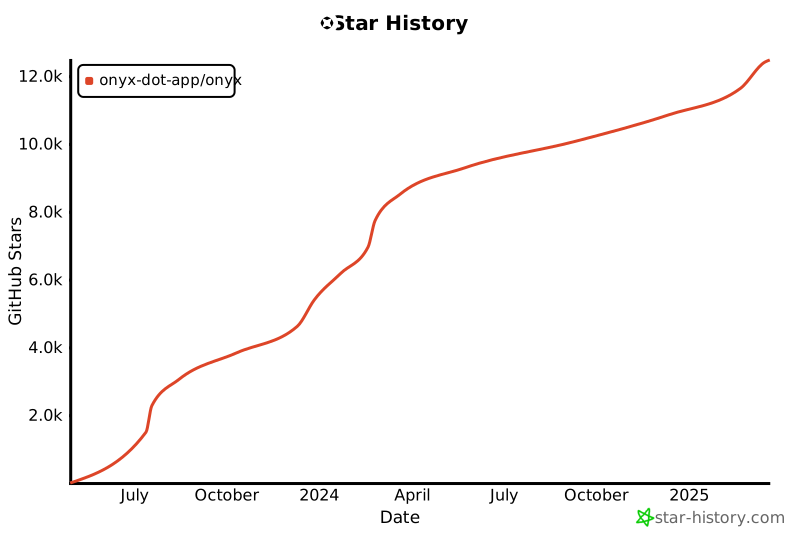](https://star-history.com/#onyx-dot-app/onyx&Date)
|
||||
|
||||
1
backend/.gitignore
vendored
1
backend/.gitignore
vendored
@@ -9,4 +9,3 @@ api_keys.py
|
||||
vespa-app.zip
|
||||
dynamic_config_storage/
|
||||
celerybeat-schedule*
|
||||
onyx/connectors/salesforce/data/
|
||||
@@ -1,19 +1,20 @@
|
||||
FROM python:3.11.7-slim-bookworm
|
||||
|
||||
LABEL com.danswer.maintainer="founders@onyx.app"
|
||||
LABEL com.danswer.description="This image is the web/frontend container of Onyx which \
|
||||
contains code for both the Community and Enterprise editions of Onyx. If you do not \
|
||||
LABEL com.danswer.maintainer="founders@danswer.ai"
|
||||
LABEL com.danswer.description="This image is the web/frontend container of Danswer which \
|
||||
contains code for both the Community and Enterprise editions of Danswer. If you do not \
|
||||
have a contract or agreement with DanswerAI, you are not permitted to use the Enterprise \
|
||||
Edition features outside of personal development or testing purposes. Please reach out to \
|
||||
founders@onyx.app for more information. Please visit https://github.com/onyx-dot-app/onyx"
|
||||
founders@danswer.ai for more information. Please visit https://github.com/danswer-ai/danswer"
|
||||
|
||||
# Default ONYX_VERSION, typically overriden during builds by GitHub Actions.
|
||||
ARG ONYX_VERSION=0.8-dev
|
||||
ENV ONYX_VERSION=${ONYX_VERSION} \
|
||||
# Default DANSWER_VERSION, typically overriden during builds by GitHub Actions.
|
||||
ARG DANSWER_VERSION=0.8-dev
|
||||
ENV DANSWER_VERSION=${DANSWER_VERSION} \
|
||||
DANSWER_RUNNING_IN_DOCKER="true"
|
||||
|
||||
ARG CA_CERT_CONTENT=""
|
||||
|
||||
RUN echo "ONYX_VERSION: ${ONYX_VERSION}"
|
||||
RUN echo "DANSWER_VERSION: ${DANSWER_VERSION}"
|
||||
# Install system dependencies
|
||||
# cmake needed for psycopg (postgres)
|
||||
# libpq-dev needed for psycopg (postgres)
|
||||
@@ -38,6 +39,15 @@ RUN apt-get update && \
|
||||
apt-get clean
|
||||
|
||||
|
||||
# Conditionally write the CA certificate and update certificates
|
||||
RUN if [ -n "$CA_CERT_CONTENT" ]; then \
|
||||
echo "Adding custom CA certificate"; \
|
||||
echo "$CA_CERT_CONTENT" > /usr/local/share/ca-certificates/my-ca.crt && \
|
||||
chmod 644 /usr/local/share/ca-certificates/my-ca.crt && \
|
||||
update-ca-certificates; \
|
||||
else \
|
||||
echo "No custom CA certificate provided"; \
|
||||
fi
|
||||
|
||||
# Install Python dependencies
|
||||
# Remove py which is pulled in by retry, py is not needed and is a CVE
|
||||
@@ -56,7 +66,7 @@ RUN pip install --no-cache-dir --upgrade \
|
||||
# Cleanup for CVEs and size reduction
|
||||
# https://github.com/tornadoweb/tornado/issues/3107
|
||||
# xserver-common and xvfb included by playwright installation but not needed after
|
||||
# perl-base is part of the base Python Debian image but not needed for Onyx functionality
|
||||
# perl-base is part of the base Python Debian image but not needed for Danswer functionality
|
||||
# perl-base could only be removed with --allow-remove-essential
|
||||
RUN apt-get update && \
|
||||
apt-get remove -y --allow-remove-essential \
|
||||
@@ -73,11 +83,11 @@ RUN apt-get update && \
|
||||
rm -rf /var/lib/apt/lists/* && \
|
||||
rm -f /usr/local/lib/python3.11/site-packages/tornado/test/test.key
|
||||
|
||||
|
||||
# Pre-downloading models for setups with limited egress
|
||||
RUN python -c "from tokenizers import Tokenizer; \
|
||||
Tokenizer.from_pretrained('nomic-ai/nomic-embed-text-v1')"
|
||||
|
||||
|
||||
# Pre-downloading NLTK for setups with limited egress
|
||||
RUN python -c "import nltk; \
|
||||
nltk.download('stopwords', quiet=True); \
|
||||
@@ -92,7 +102,7 @@ COPY ./ee /app/ee
|
||||
COPY supervisord.conf /etc/supervisor/conf.d/supervisord.conf
|
||||
|
||||
# Set up application files
|
||||
COPY ./onyx /app/onyx
|
||||
COPY ./danswer /app/danswer
|
||||
COPY ./shared_configs /app/shared_configs
|
||||
COPY ./alembic /app/alembic
|
||||
COPY ./alembic_tenants /app/alembic_tenants
|
||||
|
||||
@@ -1,18 +1,18 @@
|
||||
FROM python:3.11.7-slim-bookworm
|
||||
|
||||
LABEL com.danswer.maintainer="founders@onyx.app"
|
||||
LABEL com.danswer.description="This image is for the Onyx model server which runs all of the \
|
||||
AI models for Onyx. This container and all the code is MIT Licensed and free for all to use. \
|
||||
You can find it at https://hub.docker.com/r/onyx/onyx-model-server. For more details, \
|
||||
visit https://github.com/onyx-dot-app/onyx."
|
||||
LABEL com.danswer.maintainer="founders@danswer.ai"
|
||||
LABEL com.danswer.description="This image is for the Danswer model server which runs all of the \
|
||||
AI models for Danswer. This container and all the code is MIT Licensed and free for all to use. \
|
||||
You can find it at https://hub.docker.com/r/danswer/danswer-model-server. For more details, \
|
||||
visit https://github.com/danswer-ai/danswer."
|
||||
|
||||
# Default ONYX_VERSION, typically overriden during builds by GitHub Actions.
|
||||
ARG ONYX_VERSION=0.8-dev
|
||||
ENV ONYX_VERSION=${ONYX_VERSION} \
|
||||
# Default DANSWER_VERSION, typically overriden during builds by GitHub Actions.
|
||||
ARG DANSWER_VERSION=0.8-dev
|
||||
ENV DANSWER_VERSION=${DANSWER_VERSION} \
|
||||
DANSWER_RUNNING_IN_DOCKER="true"
|
||||
|
||||
|
||||
RUN echo "ONYX_VERSION: ${ONYX_VERSION}"
|
||||
RUN echo "DANSWER_VERSION: ${DANSWER_VERSION}"
|
||||
|
||||
COPY ./requirements/model_server.txt /tmp/requirements.txt
|
||||
RUN pip install --no-cache-dir --upgrade \
|
||||
@@ -20,11 +20,11 @@ RUN pip install --no-cache-dir --upgrade \
|
||||
--timeout 30 \
|
||||
-r /tmp/requirements.txt
|
||||
|
||||
RUN apt-get remove -y --allow-remove-essential perl-base && \
|
||||
RUN apt-get remove -y --allow-remove-essential perl-base && \
|
||||
apt-get autoremove -y
|
||||
|
||||
# Pre-downloading models for setups with limited egress
|
||||
# Download tokenizers, distilbert for the Onyx model
|
||||
# Download tokenizers, distilbert for the Danswer model
|
||||
# Download model weights
|
||||
# Run Nomic to pull in the custom architecture and have it cached locally
|
||||
RUN python -c "from transformers import AutoTokenizer; \
|
||||
@@ -38,18 +38,18 @@ from sentence_transformers import SentenceTransformer; \
|
||||
SentenceTransformer(model_name_or_path='nomic-ai/nomic-embed-text-v1', trust_remote_code=True);"
|
||||
|
||||
# In case the user has volumes mounted to /root/.cache/huggingface that they've downloaded while
|
||||
# running Onyx, don't overwrite it with the built in cache folder
|
||||
# running Danswer, don't overwrite it with the built in cache folder
|
||||
RUN mv /root/.cache/huggingface /root/.cache/temp_huggingface
|
||||
|
||||
WORKDIR /app
|
||||
|
||||
# Utils used by model server
|
||||
COPY ./onyx/utils/logger.py /app/onyx/utils/logger.py
|
||||
COPY ./danswer/utils/logger.py /app/danswer/utils/logger.py
|
||||
|
||||
# Place to fetch version information
|
||||
COPY ./onyx/__init__.py /app/onyx/__init__.py
|
||||
COPY ./danswer/__init__.py /app/danswer/__init__.py
|
||||
|
||||
# Shared between Onyx Backend and Model Server
|
||||
# Shared between Danswer Backend and Model Server
|
||||
COPY ./shared_configs /app/shared_configs
|
||||
|
||||
# Model Server main code
|
||||
|
||||
@@ -1,22 +1,19 @@
|
||||
<!-- DANSWER_METADATA={"link": "https://github.com/onyx-dot-app/onyx/blob/main/backend/alembic/README.md"} -->
|
||||
<!-- DANSWER_METADATA={"link": "https://github.com/danswer-ai/danswer/blob/main/backend/alembic/README.md"} -->
|
||||
|
||||
# Alembic DB Migrations
|
||||
|
||||
These files are for creating/updating the tables in the Relational DB (Postgres).
|
||||
Onyx migrations use a generic single-database configuration with an async dbapi.
|
||||
Danswer migrations use a generic single-database configuration with an async dbapi.
|
||||
|
||||
## To generate new migrations:
|
||||
|
||||
run from onyx/backend:
|
||||
## To generate new migrations:
|
||||
run from danswer/backend:
|
||||
`alembic revision --autogenerate -m <DESCRIPTION_OF_MIGRATION>`
|
||||
|
||||
More info can be found here: https://alembic.sqlalchemy.org/en/latest/autogenerate.html
|
||||
|
||||
## Running migrations
|
||||
|
||||
To run all un-applied migrations:
|
||||
`alembic upgrade head`
|
||||
|
||||
To undo migrations:
|
||||
`alembic downgrade -X`
|
||||
`alembic downgrade -X`
|
||||
where X is the number of migrations you want to undo from the current state
|
||||
|
||||
@@ -1,70 +1,55 @@
|
||||
from typing import Any, Literal
|
||||
from onyx.db.engine import get_iam_auth_token
|
||||
from onyx.configs.app_configs import USE_IAM_AUTH
|
||||
from onyx.configs.app_configs import POSTGRES_HOST
|
||||
from onyx.configs.app_configs import POSTGRES_PORT
|
||||
from onyx.configs.app_configs import POSTGRES_USER
|
||||
from onyx.configs.app_configs import AWS_REGION_NAME
|
||||
from onyx.db.engine import build_connection_string
|
||||
from onyx.db.engine import get_all_tenant_ids
|
||||
from sqlalchemy import event
|
||||
from sqlalchemy import pool
|
||||
from sqlalchemy import text
|
||||
from sqlalchemy.engine.base import Connection
|
||||
import os
|
||||
import ssl
|
||||
from typing import Any
|
||||
import asyncio
|
||||
import logging
|
||||
from logging.config import fileConfig
|
||||
import logging
|
||||
|
||||
from alembic import context
|
||||
from sqlalchemy import pool
|
||||
from sqlalchemy.ext.asyncio import create_async_engine
|
||||
from sqlalchemy.sql.schema import SchemaItem
|
||||
from onyx.configs.constants import SSL_CERT_FILE
|
||||
from shared_configs.configs import MULTI_TENANT, POSTGRES_DEFAULT_SCHEMA
|
||||
from onyx.db.models import Base
|
||||
from sqlalchemy.sql import text
|
||||
|
||||
from danswer.configs.app_configs import MULTI_TENANT
|
||||
from danswer.db.engine import build_connection_string
|
||||
from danswer.db.models import Base
|
||||
from celery.backends.database.session import ResultModelBase # type: ignore
|
||||
from danswer.background.celery.celery_app import get_all_tenant_ids
|
||||
|
||||
# Alembic Config object
|
||||
config = context.config
|
||||
|
||||
# Interpret the config file for Python logging.
|
||||
if config.config_file_name is not None and config.attributes.get(
|
||||
"configure_logger", True
|
||||
):
|
||||
fileConfig(config.config_file_name)
|
||||
|
||||
# Add your model's MetaData object here for 'autogenerate' support
|
||||
target_metadata = [Base.metadata, ResultModelBase.metadata]
|
||||
|
||||
EXCLUDE_TABLES = {"kombu_queue", "kombu_message"}
|
||||
logger = logging.getLogger(__name__)
|
||||
|
||||
ssl_context: ssl.SSLContext | None = None
|
||||
if USE_IAM_AUTH:
|
||||
if not os.path.exists(SSL_CERT_FILE):
|
||||
raise FileNotFoundError(f"Expected {SSL_CERT_FILE} when USE_IAM_AUTH is true.")
|
||||
ssl_context = ssl.create_default_context(cafile=SSL_CERT_FILE)
|
||||
# Set up logging
|
||||
logger = logging.getLogger(__name__)
|
||||
|
||||
|
||||
def include_object(
|
||||
object: SchemaItem,
|
||||
name: str | None,
|
||||
type_: Literal[
|
||||
"schema",
|
||||
"table",
|
||||
"column",
|
||||
"index",
|
||||
"unique_constraint",
|
||||
"foreign_key_constraint",
|
||||
],
|
||||
reflected: bool,
|
||||
compare_to: SchemaItem | None,
|
||||
object: Any, name: str, type_: str, reflected: bool, compare_to: Any
|
||||
) -> bool:
|
||||
"""
|
||||
Determines whether a database object should be included in migrations.
|
||||
Excludes specified tables from migrations.
|
||||
"""
|
||||
if type_ == "table" and name in EXCLUDE_TABLES:
|
||||
return False
|
||||
return True
|
||||
|
||||
|
||||
def get_schema_options() -> tuple[str, bool, bool]:
|
||||
"""
|
||||
Parses command-line options passed via '-x' in Alembic commands.
|
||||
Recognizes 'schema', 'create_schema', and 'upgrade_all_tenants' options.
|
||||
"""
|
||||
x_args_raw = context.get_x_argument()
|
||||
x_args = {}
|
||||
for arg in x_args_raw:
|
||||
@@ -72,15 +57,11 @@ def get_schema_options() -> tuple[str, bool, bool]:
|
||||
if "=" in pair:
|
||||
key, value = pair.split("=", 1)
|
||||
x_args[key.strip()] = value.strip()
|
||||
schema_name = x_args.get("schema", POSTGRES_DEFAULT_SCHEMA)
|
||||
schema_name = x_args.get("schema", "public")
|
||||
create_schema = x_args.get("create_schema", "true").lower() == "true"
|
||||
upgrade_all_tenants = x_args.get("upgrade_all_tenants", "false").lower() == "true"
|
||||
|
||||
if (
|
||||
MULTI_TENANT
|
||||
and schema_name == POSTGRES_DEFAULT_SCHEMA
|
||||
and not upgrade_all_tenants
|
||||
):
|
||||
if MULTI_TENANT and schema_name == "public":
|
||||
raise ValueError(
|
||||
"Cannot run default migrations in public schema when multi-tenancy is enabled. "
|
||||
"Please specify a tenant-specific schema."
|
||||
@@ -92,12 +73,16 @@ def get_schema_options() -> tuple[str, bool, bool]:
|
||||
def do_run_migrations(
|
||||
connection: Connection, schema_name: str, create_schema: bool
|
||||
) -> None:
|
||||
"""
|
||||
Executes migrations in the specified schema.
|
||||
"""
|
||||
logger.info(f"About to migrate schema: {schema_name}")
|
||||
|
||||
if create_schema:
|
||||
connection.execute(text(f'CREATE SCHEMA IF NOT EXISTS "{schema_name}"'))
|
||||
connection.execute(text("COMMIT"))
|
||||
|
||||
# Set search_path to the target schema
|
||||
connection.execute(text(f'SET search_path TO "{schema_name}"'))
|
||||
|
||||
context.configure(
|
||||
@@ -115,25 +100,11 @@ def do_run_migrations(
|
||||
context.run_migrations()
|
||||
|
||||
|
||||
def provide_iam_token_for_alembic(
|
||||
dialect: Any, conn_rec: Any, cargs: Any, cparams: Any
|
||||
) -> None:
|
||||
if USE_IAM_AUTH:
|
||||
# Database connection settings
|
||||
region = AWS_REGION_NAME
|
||||
host = POSTGRES_HOST
|
||||
port = POSTGRES_PORT
|
||||
user = POSTGRES_USER
|
||||
|
||||
# Get IAM authentication token
|
||||
token = get_iam_auth_token(host, port, user, region)
|
||||
|
||||
# For Alembic / SQLAlchemy in this context, set SSL and password
|
||||
cparams["password"] = token
|
||||
cparams["ssl"] = ssl_context
|
||||
|
||||
|
||||
async def run_async_migrations() -> None:
|
||||
"""
|
||||
Determines whether to run migrations for a single schema or all schemas,
|
||||
and executes migrations accordingly.
|
||||
"""
|
||||
schema_name, create_schema, upgrade_all_tenants = get_schema_options()
|
||||
|
||||
engine = create_async_engine(
|
||||
@@ -141,16 +112,10 @@ async def run_async_migrations() -> None:
|
||||
poolclass=pool.NullPool,
|
||||
)
|
||||
|
||||
if USE_IAM_AUTH:
|
||||
|
||||
@event.listens_for(engine.sync_engine, "do_connect")
|
||||
def event_provide_iam_token_for_alembic(
|
||||
dialect: Any, conn_rec: Any, cargs: Any, cparams: Any
|
||||
) -> None:
|
||||
provide_iam_token_for_alembic(dialect, conn_rec, cargs, cparams)
|
||||
|
||||
if upgrade_all_tenants:
|
||||
# Run migrations for all tenant schemas sequentially
|
||||
tenant_schemas = get_all_tenant_ids()
|
||||
|
||||
for schema in tenant_schemas:
|
||||
try:
|
||||
logger.info(f"Migrating schema: {schema}")
|
||||
@@ -180,20 +145,15 @@ async def run_async_migrations() -> None:
|
||||
|
||||
|
||||
def run_migrations_offline() -> None:
|
||||
"""
|
||||
Run migrations in 'offline' mode.
|
||||
"""
|
||||
schema_name, _, upgrade_all_tenants = get_schema_options()
|
||||
url = build_connection_string()
|
||||
|
||||
if upgrade_all_tenants:
|
||||
# Run offline migrations for all tenant schemas
|
||||
engine = create_async_engine(url)
|
||||
|
||||
if USE_IAM_AUTH:
|
||||
|
||||
@event.listens_for(engine.sync_engine, "do_connect")
|
||||
def event_provide_iam_token_for_alembic_offline(
|
||||
dialect: Any, conn_rec: Any, cargs: Any, cparams: Any
|
||||
) -> None:
|
||||
provide_iam_token_for_alembic(dialect, conn_rec, cargs, cparams)
|
||||
|
||||
tenant_schemas = get_all_tenant_ids()
|
||||
engine.sync_engine.dispose()
|
||||
|
||||
@@ -230,6 +190,9 @@ def run_migrations_offline() -> None:
|
||||
|
||||
|
||||
def run_migrations_online() -> None:
|
||||
"""
|
||||
Runs migrations in 'online' mode using an asynchronous engine.
|
||||
"""
|
||||
asyncio.run(run_async_migrations())
|
||||
|
||||
|
||||
|
||||
@@ -11,7 +11,7 @@ from sqlalchemy.sql import table
|
||||
from sqlalchemy.dialects import postgresql
|
||||
import json
|
||||
|
||||
from onyx.utils.encryption import encrypt_string_to_bytes
|
||||
from danswer.utils.encryption import encrypt_string_to_bytes
|
||||
|
||||
# revision identifiers, used by Alembic.
|
||||
revision = "0a98909f2757"
|
||||
|
||||
@@ -1,4 +1,4 @@
|
||||
"""Introduce Onyx APIs
|
||||
"""Introduce Danswer APIs
|
||||
|
||||
Revision ID: 15326fcec57e
|
||||
Revises: 77d07dffae64
|
||||
@@ -8,7 +8,7 @@ Create Date: 2023-11-11 20:51:24.228999
|
||||
from alembic import op
|
||||
import sqlalchemy as sa
|
||||
|
||||
from onyx.configs.constants import DocumentSource
|
||||
from danswer.configs.constants import DocumentSource
|
||||
|
||||
# revision identifiers, used by Alembic.
|
||||
revision = "15326fcec57e"
|
||||
@@ -1,59 +0,0 @@
|
||||
"""display custom llm models
|
||||
|
||||
Revision ID: 177de57c21c9
|
||||
Revises: 4ee1287bd26a
|
||||
Create Date: 2024-11-21 11:49:04.488677
|
||||
|
||||
"""
|
||||
from alembic import op
|
||||
import sqlalchemy as sa
|
||||
from sqlalchemy.dialects import postgresql
|
||||
from sqlalchemy import and_
|
||||
|
||||
revision = "177de57c21c9"
|
||||
down_revision = "4ee1287bd26a"
|
||||
branch_labels = None
|
||||
depends_on = None
|
||||
depends_on = None
|
||||
|
||||
|
||||
def upgrade() -> None:
|
||||
conn = op.get_bind()
|
||||
llm_provider = sa.table(
|
||||
"llm_provider",
|
||||
sa.column("id", sa.Integer),
|
||||
sa.column("provider", sa.String),
|
||||
sa.column("model_names", postgresql.ARRAY(sa.String)),
|
||||
sa.column("display_model_names", postgresql.ARRAY(sa.String)),
|
||||
)
|
||||
|
||||
excluded_providers = ["openai", "bedrock", "anthropic", "azure"]
|
||||
|
||||
providers_to_update = sa.select(
|
||||
llm_provider.c.id,
|
||||
llm_provider.c.model_names,
|
||||
llm_provider.c.display_model_names,
|
||||
).where(
|
||||
and_(
|
||||
~llm_provider.c.provider.in_(excluded_providers),
|
||||
llm_provider.c.model_names.isnot(None),
|
||||
)
|
||||
)
|
||||
|
||||
results = conn.execute(providers_to_update).fetchall()
|
||||
|
||||
for provider_id, model_names, display_model_names in results:
|
||||
if display_model_names is None:
|
||||
display_model_names = []
|
||||
|
||||
combined_model_names = list(set(display_model_names + model_names))
|
||||
update_stmt = (
|
||||
llm_provider.update()
|
||||
.where(llm_provider.c.id == provider_id)
|
||||
.values(display_model_names=combined_model_names)
|
||||
)
|
||||
conn.execute(update_stmt)
|
||||
|
||||
|
||||
def downgrade() -> None:
|
||||
pass
|
||||
@@ -10,7 +10,7 @@ from alembic import op
|
||||
import sqlalchemy as sa
|
||||
from sqlalchemy.dialects import postgresql
|
||||
|
||||
from onyx.configs.chat_configs import NUM_POSTPROCESSED_RESULTS
|
||||
from danswer.configs.chat_configs import NUM_POSTPROCESSED_RESULTS
|
||||
|
||||
# revision identifiers, used by Alembic.
|
||||
revision = "1f60f60c3401"
|
||||
|
||||
@@ -1,68 +0,0 @@
|
||||
"""default chosen assistants to none
|
||||
|
||||
Revision ID: 26b931506ecb
|
||||
Revises: 2daa494a0851
|
||||
Create Date: 2024-11-12 13:23:29.858995
|
||||
|
||||
"""
|
||||
from alembic import op
|
||||
import sqlalchemy as sa
|
||||
from sqlalchemy.dialects import postgresql
|
||||
|
||||
# revision identifiers, used by Alembic.
|
||||
revision = "26b931506ecb"
|
||||
down_revision = "2daa494a0851"
|
||||
branch_labels = None
|
||||
depends_on = None
|
||||
|
||||
|
||||
def upgrade() -> None:
|
||||
op.add_column(
|
||||
"user", sa.Column("chosen_assistants_new", postgresql.JSONB(), nullable=True)
|
||||
)
|
||||
|
||||
op.execute(
|
||||
"""
|
||||
UPDATE "user"
|
||||
SET chosen_assistants_new =
|
||||
CASE
|
||||
WHEN chosen_assistants = '[-2, -1, 0]' THEN NULL
|
||||
ELSE chosen_assistants
|
||||
END
|
||||
"""
|
||||
)
|
||||
|
||||
op.drop_column("user", "chosen_assistants")
|
||||
|
||||
op.alter_column(
|
||||
"user", "chosen_assistants_new", new_column_name="chosen_assistants"
|
||||
)
|
||||
|
||||
|
||||
def downgrade() -> None:
|
||||
op.add_column(
|
||||
"user",
|
||||
sa.Column(
|
||||
"chosen_assistants_old",
|
||||
postgresql.JSONB(),
|
||||
nullable=False,
|
||||
server_default="[-2, -1, 0]",
|
||||
),
|
||||
)
|
||||
|
||||
op.execute(
|
||||
"""
|
||||
UPDATE "user"
|
||||
SET chosen_assistants_old =
|
||||
CASE
|
||||
WHEN chosen_assistants IS NULL THEN '[-2, -1, 0]'::jsonb
|
||||
ELSE chosen_assistants
|
||||
END
|
||||
"""
|
||||
)
|
||||
|
||||
op.drop_column("user", "chosen_assistants")
|
||||
|
||||
op.alter_column(
|
||||
"user", "chosen_assistants_old", new_column_name="chosen_assistants"
|
||||
)
|
||||
@@ -1,24 +0,0 @@
|
||||
"""add chunk count to document
|
||||
|
||||
Revision ID: 2955778aa44c
|
||||
Revises: c0aab6edb6dd
|
||||
Create Date: 2025-01-04 11:39:43.268612
|
||||
|
||||
"""
|
||||
from alembic import op
|
||||
import sqlalchemy as sa
|
||||
|
||||
|
||||
# revision identifiers, used by Alembic.
|
||||
revision = "2955778aa44c"
|
||||
down_revision = "c0aab6edb6dd"
|
||||
branch_labels = None
|
||||
depends_on = None
|
||||
|
||||
|
||||
def upgrade() -> None:
|
||||
op.add_column("document", sa.Column("chunk_count", sa.Integer(), nullable=True))
|
||||
|
||||
|
||||
def downgrade() -> None:
|
||||
op.drop_column("document", "chunk_count")
|
||||
@@ -1,30 +0,0 @@
|
||||
"""add-group-sync-time
|
||||
|
||||
Revision ID: 2daa494a0851
|
||||
Revises: c0fd6e4da83a
|
||||
Create Date: 2024-11-11 10:57:22.991157
|
||||
|
||||
"""
|
||||
from alembic import op
|
||||
import sqlalchemy as sa
|
||||
|
||||
# revision identifiers, used by Alembic.
|
||||
revision = "2daa494a0851"
|
||||
down_revision = "c0fd6e4da83a"
|
||||
branch_labels = None
|
||||
depends_on = None
|
||||
|
||||
|
||||
def upgrade() -> None:
|
||||
op.add_column(
|
||||
"connector_credential_pair",
|
||||
sa.Column(
|
||||
"last_time_external_group_sync",
|
||||
sa.DateTime(timezone=True),
|
||||
nullable=True,
|
||||
),
|
||||
)
|
||||
|
||||
|
||||
def downgrade() -> None:
|
||||
op.drop_column("connector_credential_pair", "last_time_external_group_sync")
|
||||
@@ -1,50 +0,0 @@
|
||||
"""single tool call per message
|
||||
|
||||
Revision ID: 33cb72ea4d80
|
||||
Revises: 5b29123cd710
|
||||
Create Date: 2024-11-01 12:51:01.535003
|
||||
|
||||
"""
|
||||
from alembic import op
|
||||
import sqlalchemy as sa
|
||||
|
||||
|
||||
# revision identifiers, used by Alembic.
|
||||
revision = "33cb72ea4d80"
|
||||
down_revision = "5b29123cd710"
|
||||
branch_labels = None
|
||||
depends_on = None
|
||||
|
||||
|
||||
def upgrade() -> None:
|
||||
# Step 1: Delete extraneous ToolCall entries
|
||||
# Keep only the ToolCall with the smallest 'id' for each 'message_id'
|
||||
op.execute(
|
||||
sa.text(
|
||||
"""
|
||||
DELETE FROM tool_call
|
||||
WHERE id NOT IN (
|
||||
SELECT MIN(id)
|
||||
FROM tool_call
|
||||
WHERE message_id IS NOT NULL
|
||||
GROUP BY message_id
|
||||
);
|
||||
"""
|
||||
)
|
||||
)
|
||||
|
||||
# Step 2: Add a unique constraint on message_id
|
||||
op.create_unique_constraint(
|
||||
constraint_name="uq_tool_call_message_id",
|
||||
table_name="tool_call",
|
||||
columns=["message_id"],
|
||||
)
|
||||
|
||||
|
||||
def downgrade() -> None:
|
||||
# Step 1: Drop the unique constraint on message_id
|
||||
op.drop_constraint(
|
||||
constraint_name="uq_tool_call_message_id",
|
||||
table_name="tool_call",
|
||||
type_="unique",
|
||||
)
|
||||
@@ -1,121 +0,0 @@
|
||||
"""properly_cascade
|
||||
|
||||
Revision ID: 35e518e0ddf4
|
||||
Revises: 91a0a4d62b14
|
||||
Create Date: 2024-09-20 21:24:04.891018
|
||||
|
||||
"""
|
||||
from alembic import op
|
||||
|
||||
|
||||
# revision identifiers, used by Alembic.
|
||||
revision = "35e518e0ddf4"
|
||||
down_revision = "91a0a4d62b14"
|
||||
branch_labels = None
|
||||
depends_on = None
|
||||
|
||||
|
||||
def upgrade() -> None:
|
||||
# Update chat_message foreign key constraint
|
||||
op.drop_constraint(
|
||||
"chat_message_chat_session_id_fkey", "chat_message", type_="foreignkey"
|
||||
)
|
||||
op.create_foreign_key(
|
||||
"chat_message_chat_session_id_fkey",
|
||||
"chat_message",
|
||||
"chat_session",
|
||||
["chat_session_id"],
|
||||
["id"],
|
||||
ondelete="CASCADE",
|
||||
)
|
||||
|
||||
# Update chat_message__search_doc foreign key constraints
|
||||
op.drop_constraint(
|
||||
"chat_message__search_doc_chat_message_id_fkey",
|
||||
"chat_message__search_doc",
|
||||
type_="foreignkey",
|
||||
)
|
||||
op.drop_constraint(
|
||||
"chat_message__search_doc_search_doc_id_fkey",
|
||||
"chat_message__search_doc",
|
||||
type_="foreignkey",
|
||||
)
|
||||
|
||||
op.create_foreign_key(
|
||||
"chat_message__search_doc_chat_message_id_fkey",
|
||||
"chat_message__search_doc",
|
||||
"chat_message",
|
||||
["chat_message_id"],
|
||||
["id"],
|
||||
ondelete="CASCADE",
|
||||
)
|
||||
op.create_foreign_key(
|
||||
"chat_message__search_doc_search_doc_id_fkey",
|
||||
"chat_message__search_doc",
|
||||
"search_doc",
|
||||
["search_doc_id"],
|
||||
["id"],
|
||||
ondelete="CASCADE",
|
||||
)
|
||||
|
||||
# Add CASCADE delete for tool_call foreign key
|
||||
op.drop_constraint("tool_call_message_id_fkey", "tool_call", type_="foreignkey")
|
||||
op.create_foreign_key(
|
||||
"tool_call_message_id_fkey",
|
||||
"tool_call",
|
||||
"chat_message",
|
||||
["message_id"],
|
||||
["id"],
|
||||
ondelete="CASCADE",
|
||||
)
|
||||
|
||||
|
||||
def downgrade() -> None:
|
||||
# Revert chat_message foreign key constraint
|
||||
op.drop_constraint(
|
||||
"chat_message_chat_session_id_fkey", "chat_message", type_="foreignkey"
|
||||
)
|
||||
op.create_foreign_key(
|
||||
"chat_message_chat_session_id_fkey",
|
||||
"chat_message",
|
||||
"chat_session",
|
||||
["chat_session_id"],
|
||||
["id"],
|
||||
)
|
||||
|
||||
# Revert chat_message__search_doc foreign key constraints
|
||||
op.drop_constraint(
|
||||
"chat_message__search_doc_chat_message_id_fkey",
|
||||
"chat_message__search_doc",
|
||||
type_="foreignkey",
|
||||
)
|
||||
op.drop_constraint(
|
||||
"chat_message__search_doc_search_doc_id_fkey",
|
||||
"chat_message__search_doc",
|
||||
type_="foreignkey",
|
||||
)
|
||||
|
||||
op.create_foreign_key(
|
||||
"chat_message__search_doc_chat_message_id_fkey",
|
||||
"chat_message__search_doc",
|
||||
"chat_message",
|
||||
["chat_message_id"],
|
||||
["id"],
|
||||
)
|
||||
op.create_foreign_key(
|
||||
"chat_message__search_doc_search_doc_id_fkey",
|
||||
"chat_message__search_doc",
|
||||
"search_doc",
|
||||
["search_doc_id"],
|
||||
["id"],
|
||||
)
|
||||
|
||||
# Revert tool_call foreign key constraint
|
||||
op.drop_constraint("tool_call_message_id_fkey", "tool_call", type_="foreignkey")
|
||||
op.create_foreign_key(
|
||||
"tool_call_message_id_fkey",
|
||||
"tool_call",
|
||||
"chat_message",
|
||||
["message_id"],
|
||||
["id"],
|
||||
)
|
||||
@@ -17,7 +17,7 @@ depends_on: None = None
|
||||
|
||||
def upgrade() -> None:
|
||||
# At this point, we directly changed some previous migrations,
|
||||
# https://github.com/onyx-dot-app/onyx/pull/637
|
||||
# https://github.com/danswer-ai/danswer/pull/637
|
||||
# Due to using Postgres native Enums, it caused some complications for first time users.
|
||||
# To remove those complications, all Enums are only handled application side moving forward.
|
||||
# This migration exists to ensure that existing users don't run into upgrade issues.
|
||||
|
||||
@@ -1,45 +0,0 @@
|
||||
"""add persona categories
|
||||
|
||||
Revision ID: 47e5bef3a1d7
|
||||
Revises: dfbe9e93d3c7
|
||||
Create Date: 2024-11-05 18:55:02.221064
|
||||
|
||||
"""
|
||||
from alembic import op
|
||||
import sqlalchemy as sa
|
||||
|
||||
|
||||
# revision identifiers, used by Alembic.
|
||||
revision = "47e5bef3a1d7"
|
||||
down_revision = "dfbe9e93d3c7"
|
||||
branch_labels = None
|
||||
depends_on = None
|
||||
|
||||
|
||||
def upgrade() -> None:
|
||||
# Create the persona_category table
|
||||
op.create_table(
|
||||
"persona_category",
|
||||
sa.Column("id", sa.Integer(), nullable=False),
|
||||
sa.Column("name", sa.String(), nullable=False),
|
||||
sa.Column("description", sa.String(), nullable=True),
|
||||
sa.PrimaryKeyConstraint("id"),
|
||||
sa.UniqueConstraint("name"),
|
||||
)
|
||||
|
||||
# Add category_id to persona table
|
||||
op.add_column("persona", sa.Column("category_id", sa.Integer(), nullable=True))
|
||||
op.create_foreign_key(
|
||||
"fk_persona_category",
|
||||
"persona",
|
||||
"persona_category",
|
||||
["category_id"],
|
||||
["id"],
|
||||
ondelete="SET NULL",
|
||||
)
|
||||
|
||||
|
||||
def downgrade() -> None:
|
||||
op.drop_constraint("fk_persona_category", "persona", type_="foreignkey")
|
||||
op.drop_column("persona", "category_id")
|
||||
op.drop_table("persona_category")
|
||||
@@ -1,280 +0,0 @@
|
||||
"""add_multiple_slack_bot_support
|
||||
|
||||
Revision ID: 4ee1287bd26a
|
||||
Revises: 47e5bef3a1d7
|
||||
Create Date: 2024-11-06 13:15:53.302644
|
||||
|
||||
"""
|
||||
import logging
|
||||
from typing import cast
|
||||
from alembic import op
|
||||
import sqlalchemy as sa
|
||||
from sqlalchemy.orm import Session
|
||||
from onyx.key_value_store.factory import get_kv_store
|
||||
from onyx.db.models import SlackBot
|
||||
from sqlalchemy.dialects import postgresql
|
||||
|
||||
# revision identifiers, used by Alembic.
|
||||
revision = "4ee1287bd26a"
|
||||
down_revision = "47e5bef3a1d7"
|
||||
branch_labels: None = None
|
||||
depends_on: None = None
|
||||
|
||||
# Configure logging
|
||||
logger = logging.getLogger("alembic.runtime.migration")
|
||||
logger.setLevel(logging.INFO)
|
||||
|
||||
|
||||
def upgrade() -> None:
|
||||
logger.info(f"{revision}: create_table: slack_bot")
|
||||
# Create new slack_bot table
|
||||
op.create_table(
|
||||
"slack_bot",
|
||||
sa.Column("id", sa.Integer(), nullable=False),
|
||||
sa.Column("name", sa.String(), nullable=False),
|
||||
sa.Column("enabled", sa.Boolean(), nullable=False, server_default="true"),
|
||||
sa.Column("bot_token", sa.LargeBinary(), nullable=False),
|
||||
sa.Column("app_token", sa.LargeBinary(), nullable=False),
|
||||
sa.PrimaryKeyConstraint("id"),
|
||||
sa.UniqueConstraint("bot_token"),
|
||||
sa.UniqueConstraint("app_token"),
|
||||
)
|
||||
|
||||
# # Create new slack_channel_config table
|
||||
op.create_table(
|
||||
"slack_channel_config",
|
||||
sa.Column("id", sa.Integer(), nullable=False),
|
||||
sa.Column("slack_bot_id", sa.Integer(), nullable=True),
|
||||
sa.Column("persona_id", sa.Integer(), nullable=True),
|
||||
sa.Column("channel_config", postgresql.JSONB(), nullable=False),
|
||||
sa.Column("response_type", sa.String(), nullable=False),
|
||||
sa.Column(
|
||||
"enable_auto_filters", sa.Boolean(), nullable=False, server_default="false"
|
||||
),
|
||||
sa.ForeignKeyConstraint(
|
||||
["slack_bot_id"],
|
||||
["slack_bot.id"],
|
||||
),
|
||||
sa.ForeignKeyConstraint(
|
||||
["persona_id"],
|
||||
["persona.id"],
|
||||
),
|
||||
sa.PrimaryKeyConstraint("id"),
|
||||
)
|
||||
|
||||
# Handle existing Slack bot tokens first
|
||||
logger.info(f"{revision}: Checking for existing Slack bot.")
|
||||
bot_token = None
|
||||
app_token = None
|
||||
first_row_id = None
|
||||
|
||||
try:
|
||||
tokens = cast(dict, get_kv_store().load("slack_bot_tokens_config_key"))
|
||||
except Exception:
|
||||
logger.warning("No existing Slack bot tokens found.")
|
||||
tokens = {}
|
||||
|
||||
bot_token = tokens.get("bot_token")
|
||||
app_token = tokens.get("app_token")
|
||||
|
||||
if bot_token and app_token:
|
||||
logger.info(f"{revision}: Found bot and app tokens.")
|
||||
|
||||
session = Session(bind=op.get_bind())
|
||||
new_slack_bot = SlackBot(
|
||||
name="Slack Bot (Migrated)",
|
||||
enabled=True,
|
||||
bot_token=bot_token,
|
||||
app_token=app_token,
|
||||
)
|
||||
session.add(new_slack_bot)
|
||||
session.commit()
|
||||
first_row_id = new_slack_bot.id
|
||||
|
||||
# Create a default bot if none exists
|
||||
# This is in case there are no slack tokens but there are channels configured
|
||||
op.execute(
|
||||
sa.text(
|
||||
"""
|
||||
INSERT INTO slack_bot (name, enabled, bot_token, app_token)
|
||||
SELECT 'Default Bot', true, '', ''
|
||||
WHERE NOT EXISTS (SELECT 1 FROM slack_bot)
|
||||
RETURNING id;
|
||||
"""
|
||||
)
|
||||
)
|
||||
|
||||
# Get the bot ID to use (either from existing migration or newly created)
|
||||
bot_id_query = sa.text(
|
||||
"""
|
||||
SELECT COALESCE(
|
||||
:first_row_id,
|
||||
(SELECT id FROM slack_bot ORDER BY id ASC LIMIT 1)
|
||||
) as bot_id;
|
||||
"""
|
||||
)
|
||||
result = op.get_bind().execute(bot_id_query, {"first_row_id": first_row_id})
|
||||
bot_id = result.scalar()
|
||||
|
||||
# CTE (Common Table Expression) that transforms the old slack_bot_config table data
|
||||
# This splits up the channel_names into their own rows
|
||||
channel_names_cte = """
|
||||
WITH channel_names AS (
|
||||
SELECT
|
||||
sbc.id as config_id,
|
||||
sbc.persona_id,
|
||||
sbc.response_type,
|
||||
sbc.enable_auto_filters,
|
||||
jsonb_array_elements_text(sbc.channel_config->'channel_names') as channel_name,
|
||||
sbc.channel_config->>'respond_tag_only' as respond_tag_only,
|
||||
sbc.channel_config->>'respond_to_bots' as respond_to_bots,
|
||||
sbc.channel_config->'respond_member_group_list' as respond_member_group_list,
|
||||
sbc.channel_config->'answer_filters' as answer_filters,
|
||||
sbc.channel_config->'follow_up_tags' as follow_up_tags
|
||||
FROM slack_bot_config sbc
|
||||
)
|
||||
"""
|
||||
|
||||
# Insert the channel names into the new slack_channel_config table
|
||||
insert_statement = """
|
||||
INSERT INTO slack_channel_config (
|
||||
slack_bot_id,
|
||||
persona_id,
|
||||
channel_config,
|
||||
response_type,
|
||||
enable_auto_filters
|
||||
)
|
||||
SELECT
|
||||
:bot_id,
|
||||
channel_name.persona_id,
|
||||
jsonb_build_object(
|
||||
'channel_name', channel_name.channel_name,
|
||||
'respond_tag_only',
|
||||
COALESCE((channel_name.respond_tag_only)::boolean, false),
|
||||
'respond_to_bots',
|
||||
COALESCE((channel_name.respond_to_bots)::boolean, false),
|
||||
'respond_member_group_list',
|
||||
COALESCE(channel_name.respond_member_group_list, '[]'::jsonb),
|
||||
'answer_filters',
|
||||
COALESCE(channel_name.answer_filters, '[]'::jsonb),
|
||||
'follow_up_tags',
|
||||
COALESCE(channel_name.follow_up_tags, '[]'::jsonb)
|
||||
),
|
||||
channel_name.response_type,
|
||||
channel_name.enable_auto_filters
|
||||
FROM channel_names channel_name;
|
||||
"""
|
||||
|
||||
op.execute(sa.text(channel_names_cte + insert_statement).bindparams(bot_id=bot_id))
|
||||
|
||||
# Clean up old tokens if they existed
|
||||
try:
|
||||
if bot_token and app_token:
|
||||
logger.info(f"{revision}: Removing old bot and app tokens.")
|
||||
get_kv_store().delete("slack_bot_tokens_config_key")
|
||||
except Exception:
|
||||
logger.warning("tried to delete tokens in dynamic config but failed")
|
||||
# Rename the table
|
||||
op.rename_table(
|
||||
"slack_bot_config__standard_answer_category",
|
||||
"slack_channel_config__standard_answer_category",
|
||||
)
|
||||
|
||||
# Rename the column
|
||||
op.alter_column(
|
||||
"slack_channel_config__standard_answer_category",
|
||||
"slack_bot_config_id",
|
||||
new_column_name="slack_channel_config_id",
|
||||
)
|
||||
|
||||
# Drop the table with CASCADE to handle dependent objects
|
||||
op.execute("DROP TABLE slack_bot_config CASCADE")
|
||||
|
||||
logger.info(f"{revision}: Migration complete.")
|
||||
|
||||
|
||||
def downgrade() -> None:
|
||||
# Recreate the old slack_bot_config table
|
||||
op.create_table(
|
||||
"slack_bot_config",
|
||||
sa.Column("id", sa.Integer(), nullable=False),
|
||||
sa.Column("persona_id", sa.Integer(), nullable=True),
|
||||
sa.Column("channel_config", postgresql.JSONB(), nullable=False),
|
||||
sa.Column("response_type", sa.String(), nullable=False),
|
||||
sa.Column("enable_auto_filters", sa.Boolean(), nullable=False),
|
||||
sa.ForeignKeyConstraint(
|
||||
["persona_id"],
|
||||
["persona.id"],
|
||||
),
|
||||
sa.PrimaryKeyConstraint("id"),
|
||||
)
|
||||
|
||||
# Migrate data back to the old format
|
||||
# Group by persona_id to combine channel names back into arrays
|
||||
op.execute(
|
||||
sa.text(
|
||||
"""
|
||||
INSERT INTO slack_bot_config (
|
||||
persona_id,
|
||||
channel_config,
|
||||
response_type,
|
||||
enable_auto_filters
|
||||
)
|
||||
SELECT DISTINCT ON (persona_id)
|
||||
persona_id,
|
||||
jsonb_build_object(
|
||||
'channel_names', (
|
||||
SELECT jsonb_agg(c.channel_config->>'channel_name')
|
||||
FROM slack_channel_config c
|
||||
WHERE c.persona_id = scc.persona_id
|
||||
),
|
||||
'respond_tag_only', (channel_config->>'respond_tag_only')::boolean,
|
||||
'respond_to_bots', (channel_config->>'respond_to_bots')::boolean,
|
||||
'respond_member_group_list', channel_config->'respond_member_group_list',
|
||||
'answer_filters', channel_config->'answer_filters',
|
||||
'follow_up_tags', channel_config->'follow_up_tags'
|
||||
),
|
||||
response_type,
|
||||
enable_auto_filters
|
||||
FROM slack_channel_config scc
|
||||
WHERE persona_id IS NOT NULL;
|
||||
"""
|
||||
)
|
||||
)
|
||||
|
||||
# Rename the table back
|
||||
op.rename_table(
|
||||
"slack_channel_config__standard_answer_category",
|
||||
"slack_bot_config__standard_answer_category",
|
||||
)
|
||||
|
||||
# Rename the column back
|
||||
op.alter_column(
|
||||
"slack_bot_config__standard_answer_category",
|
||||
"slack_channel_config_id",
|
||||
new_column_name="slack_bot_config_id",
|
||||
)
|
||||
|
||||
# Try to save the first bot's tokens back to KV store
|
||||
try:
|
||||
first_bot = (
|
||||
op.get_bind()
|
||||
.execute(
|
||||
sa.text(
|
||||
"SELECT bot_token, app_token FROM slack_bot ORDER BY id LIMIT 1"
|
||||
)
|
||||
)
|
||||
.first()
|
||||
)
|
||||
if first_bot and first_bot.bot_token and first_bot.app_token:
|
||||
tokens = {
|
||||
"bot_token": first_bot.bot_token,
|
||||
"app_token": first_bot.app_token,
|
||||
}
|
||||
get_kv_store().store("slack_bot_tokens_config_key", tokens)
|
||||
except Exception:
|
||||
logger.warning("Failed to save tokens back to KV store")
|
||||
|
||||
# Drop the new tables in reverse order
|
||||
op.drop_table("slack_channel_config")
|
||||
op.drop_table("slack_bot")
|
||||
@@ -1,23 +0,0 @@
|
||||
"""danswerbot -> onyxbot
|
||||
|
||||
Revision ID: 54a74a0417fc
|
||||
Revises: 94dc3d0236f8
|
||||
Create Date: 2024-12-11 18:05:05.490737
|
||||
|
||||
"""
|
||||
from alembic import op
|
||||
|
||||
|
||||
# revision identifiers, used by Alembic.
|
||||
revision = "54a74a0417fc"
|
||||
down_revision = "94dc3d0236f8"
|
||||
branch_labels = None
|
||||
depends_on = None
|
||||
|
||||
|
||||
def upgrade() -> None:
|
||||
op.alter_column("chat_session", "danswerbot_flow", new_column_name="onyxbot_flow")
|
||||
|
||||
|
||||
def downgrade() -> None:
|
||||
op.alter_column("chat_session", "onyxbot_flow", new_column_name="danswerbot_flow")
|
||||
@@ -1,4 +1,4 @@
|
||||
"""Track Onyxbot Explicitly
|
||||
"""Track Danswerbot Explicitly
|
||||
|
||||
Revision ID: 570282d33c49
|
||||
Revises: 7547d982db8f
|
||||
@@ -1,70 +0,0 @@
|
||||
"""nullable search settings for historic index attempts
|
||||
|
||||
Revision ID: 5b29123cd710
|
||||
Revises: 949b4a92a401
|
||||
Create Date: 2024-10-30 19:37:59.630704
|
||||
|
||||
"""
|
||||
from alembic import op
|
||||
import sqlalchemy as sa
|
||||
|
||||
|
||||
# revision identifiers, used by Alembic.
|
||||
revision = "5b29123cd710"
|
||||
down_revision = "949b4a92a401"
|
||||
branch_labels = None
|
||||
depends_on = None
|
||||
|
||||
|
||||
def upgrade() -> None:
|
||||
# Drop the existing foreign key constraint
|
||||
op.drop_constraint(
|
||||
"fk_index_attempt_search_settings", "index_attempt", type_="foreignkey"
|
||||
)
|
||||
|
||||
# Modify the column to be nullable
|
||||
op.alter_column(
|
||||
"index_attempt", "search_settings_id", existing_type=sa.INTEGER(), nullable=True
|
||||
)
|
||||
|
||||
# Add back the foreign key with ON DELETE SET NULL
|
||||
op.create_foreign_key(
|
||||
"fk_index_attempt_search_settings",
|
||||
"index_attempt",
|
||||
"search_settings",
|
||||
["search_settings_id"],
|
||||
["id"],
|
||||
ondelete="SET NULL",
|
||||
)
|
||||
|
||||
|
||||
def downgrade() -> None:
|
||||
# Warning: This will delete all index attempts that don't have search settings
|
||||
op.execute(
|
||||
"""
|
||||
DELETE FROM index_attempt
|
||||
WHERE search_settings_id IS NULL
|
||||
"""
|
||||
)
|
||||
|
||||
# Drop foreign key constraint
|
||||
op.drop_constraint(
|
||||
"fk_index_attempt_search_settings", "index_attempt", type_="foreignkey"
|
||||
)
|
||||
|
||||
# Modify the column to be not nullable
|
||||
op.alter_column(
|
||||
"index_attempt",
|
||||
"search_settings_id",
|
||||
existing_type=sa.INTEGER(),
|
||||
nullable=False,
|
||||
)
|
||||
|
||||
# Add back the foreign key without ON DELETE SET NULL
|
||||
op.create_foreign_key(
|
||||
"fk_index_attempt_search_settings",
|
||||
"index_attempt",
|
||||
"search_settings",
|
||||
["search_settings_id"],
|
||||
["id"],
|
||||
)
|
||||
@@ -1,9 +1,7 @@
|
||||
"""Migrate chat_session and chat_message tables to use UUID primary keys
|
||||
|
||||
"""
|
||||
Revision ID: 6756efa39ada
|
||||
Revises: 5d12a446f5c0
|
||||
Create Date: 2024-10-15 17:47:44.108537
|
||||
|
||||
"""
|
||||
from alembic import op
|
||||
import sqlalchemy as sa
|
||||
@@ -14,6 +12,8 @@ branch_labels = None
|
||||
depends_on = None
|
||||
|
||||
"""
|
||||
Migrate chat_session and chat_message tables to use UUID primary keys.
|
||||
|
||||
This script:
|
||||
1. Adds UUID columns to chat_session and chat_message
|
||||
2. Populates new columns with UUIDs
|
||||
|
||||
@@ -1,45 +0,0 @@
|
||||
"""remove default bot
|
||||
|
||||
Revision ID: 6d562f86c78b
|
||||
Revises: 177de57c21c9
|
||||
Create Date: 2024-11-22 11:51:29.331336
|
||||
|
||||
"""
|
||||
from alembic import op
|
||||
import sqlalchemy as sa
|
||||
|
||||
# revision identifiers, used by Alembic.
|
||||
revision = "6d562f86c78b"
|
||||
down_revision = "177de57c21c9"
|
||||
branch_labels = None
|
||||
depends_on = None
|
||||
|
||||
|
||||
def upgrade() -> None:
|
||||
op.execute(
|
||||
sa.text(
|
||||
"""
|
||||
DELETE FROM slack_bot
|
||||
WHERE name = 'Default Bot'
|
||||
AND bot_token = ''
|
||||
AND app_token = ''
|
||||
AND NOT EXISTS (
|
||||
SELECT 1 FROM slack_channel_config
|
||||
WHERE slack_channel_config.slack_bot_id = slack_bot.id
|
||||
)
|
||||
"""
|
||||
)
|
||||
)
|
||||
|
||||
|
||||
def downgrade() -> None:
|
||||
op.execute(
|
||||
sa.text(
|
||||
"""
|
||||
INSERT INTO slack_bot (name, enabled, bot_token, app_token)
|
||||
SELECT 'Default Bot', true, '', ''
|
||||
WHERE NOT EXISTS (SELECT 1 FROM slack_bot)
|
||||
RETURNING id;
|
||||
"""
|
||||
)
|
||||
)
|
||||
@@ -9,7 +9,7 @@ import json
|
||||
from typing import cast
|
||||
from alembic import op
|
||||
import sqlalchemy as sa
|
||||
from onyx.key_value_store.factory import get_kv_store
|
||||
from danswer.key_value_store.factory import get_kv_store
|
||||
|
||||
# revision identifiers, used by Alembic.
|
||||
revision = "703313b75876"
|
||||
|
||||
@@ -8,9 +8,9 @@ Create Date: 2024-03-22 21:34:27.629444
|
||||
from alembic import op
|
||||
import sqlalchemy as sa
|
||||
|
||||
from onyx.db.models import IndexModelStatus
|
||||
from onyx.context.search.enums import RecencyBiasSetting
|
||||
from onyx.context.search.enums import SearchType
|
||||
from danswer.db.models import IndexModelStatus
|
||||
from danswer.search.enums import RecencyBiasSetting
|
||||
from danswer.search.enums import SearchType
|
||||
|
||||
# revision identifiers, used by Alembic.
|
||||
revision = "776b3bbe9092"
|
||||
|
||||
@@ -18,7 +18,7 @@ depends_on: None = None
|
||||
|
||||
def upgrade() -> None:
|
||||
# In a PR:
|
||||
# https://github.com/onyx-dot-app/onyx/pull/397/files#diff-f05fb341f6373790b91852579631b64ca7645797a190837156a282b67e5b19c2
|
||||
# https://github.com/danswer-ai/danswer/pull/397/files#diff-f05fb341f6373790b91852579631b64ca7645797a190837156a282b67e5b19c2
|
||||
# we directly changed some previous migrations. This caused some users to have native enums
|
||||
# while others wouldn't. This has caused some issues when adding new fields to these enums.
|
||||
# This migration manually changes the enum types to ensure that nobody uses native enums.
|
||||
|
||||
@@ -1,45 +0,0 @@
|
||||
"""Milestone
|
||||
|
||||
Revision ID: 91a0a4d62b14
|
||||
Revises: dab04867cd88
|
||||
Create Date: 2024-12-13 19:03:30.947551
|
||||
|
||||
"""
|
||||
from alembic import op
|
||||
import sqlalchemy as sa
|
||||
import fastapi_users_db_sqlalchemy
|
||||
from sqlalchemy.dialects import postgresql
|
||||
|
||||
# revision identifiers, used by Alembic.
|
||||
revision = "91a0a4d62b14"
|
||||
down_revision = "dab04867cd88"
|
||||
branch_labels = None
|
||||
depends_on = None
|
||||
|
||||
|
||||
def upgrade() -> None:
|
||||
op.create_table(
|
||||
"milestone",
|
||||
sa.Column("id", sa.UUID(), nullable=False),
|
||||
sa.Column("tenant_id", sa.String(), nullable=True),
|
||||
sa.Column(
|
||||
"user_id",
|
||||
fastapi_users_db_sqlalchemy.generics.GUID(),
|
||||
nullable=True,
|
||||
),
|
||||
sa.Column("event_type", sa.String(), nullable=False),
|
||||
sa.Column(
|
||||
"time_created",
|
||||
sa.DateTime(timezone=True),
|
||||
server_default=sa.text("now()"),
|
||||
nullable=False,
|
||||
),
|
||||
sa.Column("event_tracker", postgresql.JSONB(), nullable=True),
|
||||
sa.ForeignKeyConstraint(["user_id"], ["user.id"], ondelete="CASCADE"),
|
||||
sa.PrimaryKeyConstraint("id"),
|
||||
sa.UniqueConstraint("event_type", name="uq_milestone_event_type"),
|
||||
)
|
||||
|
||||
|
||||
def downgrade() -> None:
|
||||
op.drop_table("milestone")
|
||||
@@ -7,7 +7,7 @@ Create Date: 2024-03-21 12:05:23.956734
|
||||
"""
|
||||
from alembic import op
|
||||
import sqlalchemy as sa
|
||||
from onyx.configs.constants import DocumentSource
|
||||
from danswer.configs.constants import DocumentSource
|
||||
|
||||
# revision identifiers, used by Alembic.
|
||||
revision = "91fd3b470d1a"
|
||||
|
||||
@@ -1,35 +0,0 @@
|
||||
"""add web ui option to slack config
|
||||
|
||||
Revision ID: 93560ba1b118
|
||||
Revises: 6d562f86c78b
|
||||
Create Date: 2024-11-24 06:36:17.490612
|
||||
|
||||
"""
|
||||
from alembic import op
|
||||
|
||||
# revision identifiers, used by Alembic.
|
||||
revision = "93560ba1b118"
|
||||
down_revision = "6d562f86c78b"
|
||||
branch_labels = None
|
||||
depends_on = None
|
||||
|
||||
|
||||
def upgrade() -> None:
|
||||
# Add show_continue_in_web_ui with default False to all existing channel_configs
|
||||
op.execute(
|
||||
"""
|
||||
UPDATE slack_channel_config
|
||||
SET channel_config = channel_config || '{"show_continue_in_web_ui": false}'::jsonb
|
||||
WHERE NOT channel_config ? 'show_continue_in_web_ui'
|
||||
"""
|
||||
)
|
||||
|
||||
|
||||
def downgrade() -> None:
|
||||
# Remove show_continue_in_web_ui from all channel_configs
|
||||
op.execute(
|
||||
"""
|
||||
UPDATE slack_channel_config
|
||||
SET channel_config = channel_config - 'show_continue_in_web_ui'
|
||||
"""
|
||||
)
|
||||
@@ -1,72 +0,0 @@
|
||||
"""remove rt
|
||||
|
||||
Revision ID: 949b4a92a401
|
||||
Revises: 1b10e1fda030
|
||||
Create Date: 2024-10-26 13:06:06.937969
|
||||
|
||||
"""
|
||||
from alembic import op
|
||||
from sqlalchemy.orm import Session
|
||||
from sqlalchemy import text
|
||||
|
||||
# Import your models and constants
|
||||
from onyx.db.models import (
|
||||
Connector,
|
||||
ConnectorCredentialPair,
|
||||
Credential,
|
||||
IndexAttempt,
|
||||
)
|
||||
|
||||
|
||||
# revision identifiers, used by Alembic.
|
||||
revision = "949b4a92a401"
|
||||
down_revision = "1b10e1fda030"
|
||||
branch_labels = None
|
||||
depends_on = None
|
||||
|
||||
|
||||
def upgrade() -> None:
|
||||
# Deletes all RequestTracker connectors and associated data
|
||||
bind = op.get_bind()
|
||||
session = Session(bind=bind)
|
||||
|
||||
# Get connectors using raw SQL
|
||||
result = bind.execute(
|
||||
text("SELECT id FROM connector WHERE source = 'requesttracker'")
|
||||
)
|
||||
connector_ids = [row[0] for row in result]
|
||||
|
||||
if connector_ids:
|
||||
cc_pairs_to_delete = (
|
||||
session.query(ConnectorCredentialPair)
|
||||
.filter(ConnectorCredentialPair.connector_id.in_(connector_ids))
|
||||
.all()
|
||||
)
|
||||
|
||||
cc_pair_ids = [cc_pair.id for cc_pair in cc_pairs_to_delete]
|
||||
|
||||
if cc_pair_ids:
|
||||
session.query(IndexAttempt).filter(
|
||||
IndexAttempt.connector_credential_pair_id.in_(cc_pair_ids)
|
||||
).delete(synchronize_session=False)
|
||||
|
||||
session.query(ConnectorCredentialPair).filter(
|
||||
ConnectorCredentialPair.id.in_(cc_pair_ids)
|
||||
).delete(synchronize_session=False)
|
||||
|
||||
credential_ids = [cc_pair.credential_id for cc_pair in cc_pairs_to_delete]
|
||||
if credential_ids:
|
||||
session.query(Credential).filter(Credential.id.in_(credential_ids)).delete(
|
||||
synchronize_session=False
|
||||
)
|
||||
|
||||
session.query(Connector).filter(Connector.id.in_(connector_ids)).delete(
|
||||
synchronize_session=False
|
||||
)
|
||||
|
||||
session.commit()
|
||||
|
||||
|
||||
def downgrade() -> None:
|
||||
# No-op downgrade as we cannot restore deleted data
|
||||
pass
|
||||
@@ -1,30 +0,0 @@
|
||||
"""make document set description optional
|
||||
|
||||
Revision ID: 94dc3d0236f8
|
||||
Revises: bf7a81109301
|
||||
Create Date: 2024-12-11 11:26:10.616722
|
||||
|
||||
"""
|
||||
from alembic import op
|
||||
import sqlalchemy as sa
|
||||
|
||||
|
||||
# revision identifiers, used by Alembic.
|
||||
revision = "94dc3d0236f8"
|
||||
down_revision = "bf7a81109301"
|
||||
branch_labels = None
|
||||
depends_on = None
|
||||
|
||||
|
||||
def upgrade() -> None:
|
||||
# Make document_set.description column nullable
|
||||
op.alter_column(
|
||||
"document_set", "description", existing_type=sa.String(), nullable=True
|
||||
)
|
||||
|
||||
|
||||
def downgrade() -> None:
|
||||
# Revert document_set.description column to non-nullable
|
||||
op.alter_column(
|
||||
"document_set", "description", existing_type=sa.String(), nullable=False
|
||||
)
|
||||
@@ -1,30 +0,0 @@
|
||||
"""add creator to cc pair
|
||||
|
||||
Revision ID: 9cf5c00f72fe
|
||||
Revises: 26b931506ecb
|
||||
Create Date: 2024-11-12 15:16:42.682902
|
||||
|
||||
"""
|
||||
from alembic import op
|
||||
import sqlalchemy as sa
|
||||
|
||||
# revision identifiers, used by Alembic.
|
||||
revision = "9cf5c00f72fe"
|
||||
down_revision = "26b931506ecb"
|
||||
branch_labels = None
|
||||
depends_on = None
|
||||
|
||||
|
||||
def upgrade() -> None:
|
||||
op.add_column(
|
||||
"connector_credential_pair",
|
||||
sa.Column(
|
||||
"creator_id",
|
||||
sa.UUID(as_uuid=True),
|
||||
nullable=True,
|
||||
),
|
||||
)
|
||||
|
||||
|
||||
def downgrade() -> None:
|
||||
op.drop_column("connector_credential_pair", "creator_id")
|
||||
@@ -1,36 +0,0 @@
|
||||
"""Combine Search and Chat
|
||||
|
||||
Revision ID: 9f696734098f
|
||||
Revises: a8c2065484e6
|
||||
Create Date: 2024-11-27 15:32:19.694972
|
||||
|
||||
"""
|
||||
from alembic import op
|
||||
import sqlalchemy as sa
|
||||
|
||||
# revision identifiers, used by Alembic.
|
||||
revision = "9f696734098f"
|
||||
down_revision = "a8c2065484e6"
|
||||
branch_labels = None
|
||||
depends_on = None
|
||||
|
||||
|
||||
def upgrade() -> None:
|
||||
op.alter_column("chat_session", "description", nullable=True)
|
||||
op.drop_column("chat_session", "one_shot")
|
||||
op.drop_column("slack_channel_config", "response_type")
|
||||
|
||||
|
||||
def downgrade() -> None:
|
||||
op.execute("UPDATE chat_session SET description = '' WHERE description IS NULL")
|
||||
op.alter_column("chat_session", "description", nullable=False)
|
||||
op.add_column(
|
||||
"chat_session",
|
||||
sa.Column("one_shot", sa.Boolean(), nullable=False, server_default=sa.false()),
|
||||
)
|
||||
op.add_column(
|
||||
"slack_channel_config",
|
||||
sa.Column(
|
||||
"response_type", sa.String(), nullable=False, server_default="citations"
|
||||
),
|
||||
)
|
||||
@@ -1,27 +0,0 @@
|
||||
"""add auto scroll to user model
|
||||
|
||||
Revision ID: a8c2065484e6
|
||||
Revises: abe7378b8217
|
||||
Create Date: 2024-11-22 17:34:09.690295
|
||||
|
||||
"""
|
||||
from alembic import op
|
||||
import sqlalchemy as sa
|
||||
|
||||
|
||||
# revision identifiers, used by Alembic.
|
||||
revision = "a8c2065484e6"
|
||||
down_revision = "abe7378b8217"
|
||||
branch_labels = None
|
||||
depends_on = None
|
||||
|
||||
|
||||
def upgrade() -> None:
|
||||
op.add_column(
|
||||
"user",
|
||||
sa.Column("auto_scroll", sa.Boolean(), nullable=True, server_default=None),
|
||||
)
|
||||
|
||||
|
||||
def downgrade() -> None:
|
||||
op.drop_column("user", "auto_scroll")
|
||||
@@ -1,30 +0,0 @@
|
||||
"""add indexing trigger to cc_pair
|
||||
|
||||
Revision ID: abe7378b8217
|
||||
Revises: 6d562f86c78b
|
||||
Create Date: 2024-11-26 19:09:53.481171
|
||||
|
||||
"""
|
||||
from alembic import op
|
||||
import sqlalchemy as sa
|
||||
|
||||
# revision identifiers, used by Alembic.
|
||||
revision = "abe7378b8217"
|
||||
down_revision = "93560ba1b118"
|
||||
branch_labels = None
|
||||
depends_on = None
|
||||
|
||||
|
||||
def upgrade() -> None:
|
||||
op.add_column(
|
||||
"connector_credential_pair",
|
||||
sa.Column(
|
||||
"indexing_trigger",
|
||||
sa.Enum("UPDATE", "REINDEX", name="indexingmode", native_enum=False),
|
||||
nullable=True,
|
||||
),
|
||||
)
|
||||
|
||||
|
||||
def downgrade() -> None:
|
||||
op.drop_column("connector_credential_pair", "indexing_trigger")
|
||||
@@ -31,12 +31,6 @@ def upgrade() -> None:
|
||||
|
||||
|
||||
def downgrade() -> None:
|
||||
# First, update any null values to a default value
|
||||
op.execute(
|
||||
"UPDATE connector_credential_pair SET last_attempt_status = 'NOT_STARTED' WHERE last_attempt_status IS NULL"
|
||||
)
|
||||
|
||||
# Then, make the column non-nullable
|
||||
op.alter_column(
|
||||
"connector_credential_pair",
|
||||
"last_attempt_status",
|
||||
|
||||
@@ -10,7 +10,7 @@ from alembic import op
|
||||
import sqlalchemy as sa
|
||||
from sqlalchemy.dialects import postgresql
|
||||
from sqlalchemy.dialects.postgresql import ENUM
|
||||
from onyx.configs.constants import DocumentSource
|
||||
from danswer.configs.constants import DocumentSource
|
||||
|
||||
# revision identifiers, used by Alembic.
|
||||
revision = "b156fa702355"
|
||||
@@ -288,15 +288,6 @@ def upgrade() -> None:
|
||||
|
||||
|
||||
def downgrade() -> None:
|
||||
# NOTE: you will lose all chat history. This is to satisfy the non-nullable constraints
|
||||
# below
|
||||
op.execute("DELETE FROM chat_feedback")
|
||||
op.execute("DELETE FROM chat_message__search_doc")
|
||||
op.execute("DELETE FROM document_retrieval_feedback")
|
||||
op.execute("DELETE FROM document_retrieval_feedback")
|
||||
op.execute("DELETE FROM chat_message")
|
||||
op.execute("DELETE FROM chat_session")
|
||||
|
||||
op.drop_constraint(
|
||||
"chat_feedback__chat_message_fk", "chat_feedback", type_="foreignkey"
|
||||
)
|
||||
|
||||
@@ -1,48 +0,0 @@
|
||||
"""remove description from starter messages
|
||||
|
||||
Revision ID: b72ed7a5db0e
|
||||
Revises: 33cb72ea4d80
|
||||
Create Date: 2024-11-03 15:55:28.944408
|
||||
|
||||
"""
|
||||
from alembic import op
|
||||
import sqlalchemy as sa
|
||||
|
||||
|
||||
# revision identifiers, used by Alembic.
|
||||
revision = "b72ed7a5db0e"
|
||||
down_revision = "33cb72ea4d80"
|
||||
branch_labels = None
|
||||
depends_on = None
|
||||
|
||||
|
||||
def upgrade() -> None:
|
||||
op.execute(
|
||||
sa.text(
|
||||
"""
|
||||
UPDATE persona
|
||||
SET starter_messages = (
|
||||
SELECT jsonb_agg(elem - 'description')
|
||||
FROM jsonb_array_elements(starter_messages) elem
|
||||
)
|
||||
WHERE starter_messages IS NOT NULL
|
||||
AND jsonb_typeof(starter_messages) = 'array'
|
||||
"""
|
||||
)
|
||||
)
|
||||
|
||||
|
||||
def downgrade() -> None:
|
||||
op.execute(
|
||||
sa.text(
|
||||
"""
|
||||
UPDATE persona
|
||||
SET starter_messages = (
|
||||
SELECT jsonb_agg(elem || '{"description": ""}')
|
||||
FROM jsonb_array_elements(starter_messages) elem
|
||||
)
|
||||
WHERE starter_messages IS NOT NULL
|
||||
AND jsonb_typeof(starter_messages) = 'array'
|
||||
"""
|
||||
)
|
||||
)
|
||||
@@ -1,57 +0,0 @@
|
||||
"""delete_input_prompts
|
||||
|
||||
Revision ID: bf7a81109301
|
||||
Revises: f7a894b06d02
|
||||
Create Date: 2024-12-09 12:00:49.884228
|
||||
|
||||
"""
|
||||
from alembic import op
|
||||
import sqlalchemy as sa
|
||||
import fastapi_users_db_sqlalchemy
|
||||
|
||||
|
||||
# revision identifiers, used by Alembic.
|
||||
revision = "bf7a81109301"
|
||||
down_revision = "f7a894b06d02"
|
||||
branch_labels = None
|
||||
depends_on = None
|
||||
|
||||
|
||||
def upgrade() -> None:
|
||||
op.drop_table("inputprompt__user")
|
||||
op.drop_table("inputprompt")
|
||||
|
||||
|
||||
def downgrade() -> None:
|
||||
op.create_table(
|
||||
"inputprompt",
|
||||
sa.Column("id", sa.Integer(), autoincrement=True, nullable=False),
|
||||
sa.Column("prompt", sa.String(), nullable=False),
|
||||
sa.Column("content", sa.String(), nullable=False),
|
||||
sa.Column("active", sa.Boolean(), nullable=False),
|
||||
sa.Column("is_public", sa.Boolean(), nullable=False),
|
||||
sa.Column(
|
||||
"user_id",
|
||||
fastapi_users_db_sqlalchemy.generics.GUID(),
|
||||
nullable=True,
|
||||
),
|
||||
sa.ForeignKeyConstraint(
|
||||
["user_id"],
|
||||
["user.id"],
|
||||
),
|
||||
sa.PrimaryKeyConstraint("id"),
|
||||
)
|
||||
op.create_table(
|
||||
"inputprompt__user",
|
||||
sa.Column("input_prompt_id", sa.Integer(), nullable=False),
|
||||
sa.Column("user_id", sa.Integer(), nullable=False),
|
||||
sa.ForeignKeyConstraint(
|
||||
["input_prompt_id"],
|
||||
["inputprompt.id"],
|
||||
),
|
||||
sa.ForeignKeyConstraint(
|
||||
["user_id"],
|
||||
["inputprompt.id"],
|
||||
),
|
||||
sa.PrimaryKeyConstraint("input_prompt_id", "user_id"),
|
||||
)
|
||||
@@ -1,87 +0,0 @@
|
||||
"""delete workspace
|
||||
|
||||
Revision ID: c0aab6edb6dd
|
||||
Revises: 35e518e0ddf4
|
||||
Create Date: 2024-12-17 14:37:07.660631
|
||||
|
||||
"""
|
||||
|
||||
from alembic import op
|
||||
|
||||
|
||||
# revision identifiers, used by Alembic.
|
||||
revision = "c0aab6edb6dd"
|
||||
down_revision = "35e518e0ddf4"
|
||||
branch_labels = None
|
||||
depends_on = None
|
||||
|
||||
|
||||
def upgrade() -> None:
|
||||
op.execute(
|
||||
"""
|
||||
UPDATE connector
|
||||
SET connector_specific_config = connector_specific_config - 'workspace'
|
||||
WHERE source = 'SLACK'
|
||||
"""
|
||||
)
|
||||
|
||||
|
||||
def downgrade() -> None:
|
||||
import json
|
||||
from sqlalchemy import text
|
||||
from slack_sdk import WebClient
|
||||
|
||||
conn = op.get_bind()
|
||||
|
||||
# Fetch all Slack credentials
|
||||
creds_result = conn.execute(
|
||||
text("SELECT id, credential_json FROM credential WHERE source = 'SLACK'")
|
||||
)
|
||||
all_slack_creds = creds_result.fetchall()
|
||||
if not all_slack_creds:
|
||||
return
|
||||
|
||||
for cred_row in all_slack_creds:
|
||||
credential_id, credential_json = cred_row
|
||||
|
||||
credential_json = (
|
||||
credential_json.tobytes().decode("utf-8")
|
||||
if isinstance(credential_json, memoryview)
|
||||
else credential_json.decode("utf-8")
|
||||
)
|
||||
credential_data = json.loads(credential_json)
|
||||
slack_bot_token = credential_data.get("slack_bot_token")
|
||||
if not slack_bot_token:
|
||||
print(
|
||||
f"No slack_bot_token found for credential {credential_id}. "
|
||||
"Your Slack connector will not function until you upgrade and provide a valid token."
|
||||
)
|
||||
continue
|
||||
|
||||
client = WebClient(token=slack_bot_token)
|
||||
try:
|
||||
auth_response = client.auth_test()
|
||||
workspace = auth_response["url"].split("//")[1].split(".")[0]
|
||||
|
||||
# Update only the connectors linked to this credential
|
||||
# (and which are Slack connectors).
|
||||
op.execute(
|
||||
f"""
|
||||
UPDATE connector AS c
|
||||
SET connector_specific_config = jsonb_set(
|
||||
connector_specific_config,
|
||||
'{{workspace}}',
|
||||
to_jsonb('{workspace}'::text)
|
||||
)
|
||||
FROM connector_credential_pair AS ccp
|
||||
WHERE ccp.connector_id = c.id
|
||||
AND c.source = 'SLACK'
|
||||
AND ccp.credential_id = {credential_id}
|
||||
"""
|
||||
)
|
||||
except Exception:
|
||||
print(
|
||||
f"We were unable to get the workspace url for your Slack Connector with id {credential_id}."
|
||||
)
|
||||
print("This connector will no longer work until you upgrade.")
|
||||
continue
|
||||
@@ -1,29 +0,0 @@
|
||||
"""add recent assistants
|
||||
|
||||
Revision ID: c0fd6e4da83a
|
||||
Revises: b72ed7a5db0e
|
||||
Create Date: 2024-11-03 17:28:54.916618
|
||||
|
||||
"""
|
||||
from alembic import op
|
||||
import sqlalchemy as sa
|
||||
from sqlalchemy.dialects import postgresql
|
||||
|
||||
# revision identifiers, used by Alembic.
|
||||
revision = "c0fd6e4da83a"
|
||||
down_revision = "b72ed7a5db0e"
|
||||
branch_labels = None
|
||||
depends_on = None
|
||||
|
||||
|
||||
def upgrade() -> None:
|
||||
op.add_column(
|
||||
"user",
|
||||
sa.Column(
|
||||
"recent_assistants", postgresql.JSONB(), server_default="[]", nullable=False
|
||||
),
|
||||
)
|
||||
|
||||
|
||||
def downgrade() -> None:
|
||||
op.drop_column("user", "recent_assistants")
|
||||
@@ -23,56 +23,6 @@ def upgrade() -> None:
|
||||
|
||||
|
||||
def downgrade() -> None:
|
||||
# Delete chat messages and feedback first since they reference chat sessions
|
||||
# Get chat messages from sessions with null persona_id
|
||||
chat_messages_query = """
|
||||
SELECT id
|
||||
FROM chat_message
|
||||
WHERE chat_session_id IN (
|
||||
SELECT id
|
||||
FROM chat_session
|
||||
WHERE persona_id IS NULL
|
||||
)
|
||||
"""
|
||||
|
||||
# Delete dependent records first
|
||||
op.execute(
|
||||
f"""
|
||||
DELETE FROM document_retrieval_feedback
|
||||
WHERE chat_message_id IN (
|
||||
{chat_messages_query}
|
||||
)
|
||||
"""
|
||||
)
|
||||
op.execute(
|
||||
f"""
|
||||
DELETE FROM chat_message__search_doc
|
||||
WHERE chat_message_id IN (
|
||||
{chat_messages_query}
|
||||
)
|
||||
"""
|
||||
)
|
||||
|
||||
# Delete chat messages
|
||||
op.execute(
|
||||
"""
|
||||
DELETE FROM chat_message
|
||||
WHERE chat_session_id IN (
|
||||
SELECT id
|
||||
FROM chat_session
|
||||
WHERE persona_id IS NULL
|
||||
)
|
||||
"""
|
||||
)
|
||||
|
||||
# Now we can safely delete the chat sessions
|
||||
op.execute(
|
||||
"""
|
||||
DELETE FROM chat_session
|
||||
WHERE persona_id IS NULL
|
||||
"""
|
||||
)
|
||||
|
||||
op.alter_column(
|
||||
"chat_session",
|
||||
"persona_id",
|
||||
|
||||
@@ -1,32 +0,0 @@
|
||||
"""Add composite index to document_by_connector_credential_pair
|
||||
|
||||
Revision ID: dab04867cd88
|
||||
Revises: 54a74a0417fc
|
||||
Create Date: 2024-12-13 22:43:20.119990
|
||||
|
||||
"""
|
||||
from alembic import op
|
||||
|
||||
|
||||
# revision identifiers, used by Alembic.
|
||||
revision = "dab04867cd88"
|
||||
down_revision = "54a74a0417fc"
|
||||
branch_labels = None
|
||||
depends_on = None
|
||||
|
||||
|
||||
def upgrade() -> None:
|
||||
# Composite index on (connector_id, credential_id)
|
||||
op.create_index(
|
||||
"idx_document_cc_pair_connector_credential",
|
||||
"document_by_connector_credential_pair",
|
||||
["connector_id", "credential_id"],
|
||||
unique=False,
|
||||
)
|
||||
|
||||
|
||||
def downgrade() -> None:
|
||||
op.drop_index(
|
||||
"idx_document_cc_pair_connector_credential",
|
||||
table_name="document_by_connector_credential_pair",
|
||||
)
|
||||
@@ -1,4 +1,4 @@
|
||||
"""Onyx Custom Tool Flow
|
||||
"""Danswer Custom Tool Flow
|
||||
|
||||
Revision ID: dba7f71618f5
|
||||
Revises: d5645c915d0e
|
||||
@@ -9,12 +9,12 @@ from alembic import op
|
||||
import sqlalchemy as sa
|
||||
from sqlalchemy import table, column, String, Integer, Boolean
|
||||
|
||||
from onyx.db.search_settings import (
|
||||
from danswer.db.search_settings import (
|
||||
get_new_default_embedding_model,
|
||||
get_old_default_embedding_model,
|
||||
user_has_overridden_embedding_model,
|
||||
)
|
||||
from onyx.db.models import IndexModelStatus
|
||||
from danswer.db.models import IndexModelStatus
|
||||
|
||||
# revision identifiers, used by Alembic.
|
||||
revision = "dbaa756c2ccf"
|
||||
|
||||
@@ -1,42 +0,0 @@
|
||||
"""extended_role_for_non_web
|
||||
|
||||
Revision ID: dfbe9e93d3c7
|
||||
Revises: 9cf5c00f72fe
|
||||
Create Date: 2024-11-16 07:54:18.727906
|
||||
|
||||
"""
|
||||
from alembic import op
|
||||
import sqlalchemy as sa
|
||||
|
||||
# revision identifiers, used by Alembic.
|
||||
revision = "dfbe9e93d3c7"
|
||||
down_revision = "9cf5c00f72fe"
|
||||
branch_labels = None
|
||||
depends_on = None
|
||||
|
||||
|
||||
def upgrade() -> None:
|
||||
op.execute(
|
||||
"""
|
||||
UPDATE "user"
|
||||
SET role = 'EXT_PERM_USER'
|
||||
WHERE has_web_login = false
|
||||
"""
|
||||
)
|
||||
op.drop_column("user", "has_web_login")
|
||||
|
||||
|
||||
def downgrade() -> None:
|
||||
op.add_column(
|
||||
"user",
|
||||
sa.Column("has_web_login", sa.Boolean(), nullable=False, server_default="true"),
|
||||
)
|
||||
|
||||
op.execute(
|
||||
"""
|
||||
UPDATE "user"
|
||||
SET has_web_login = false,
|
||||
role = 'BASIC'
|
||||
WHERE role IN ('SLACK_USER', 'EXT_PERM_USER')
|
||||
"""
|
||||
)
|
||||
@@ -8,7 +8,7 @@ Create Date: 2024-03-14 18:06:08.523106
|
||||
from alembic import op
|
||||
import sqlalchemy as sa
|
||||
|
||||
from onyx.configs.constants import DocumentSource
|
||||
from danswer.configs.constants import DocumentSource
|
||||
|
||||
# revision identifiers, used by Alembic.
|
||||
revision = "e50154680a5c"
|
||||
|
||||
@@ -1,40 +0,0 @@
|
||||
"""non-nullbale slack bot id in channel config
|
||||
|
||||
Revision ID: f7a894b06d02
|
||||
Revises: 9f696734098f
|
||||
Create Date: 2024-12-06 12:55:42.845723
|
||||
|
||||
"""
|
||||
|
||||
from alembic import op
|
||||
import sqlalchemy as sa
|
||||
|
||||
|
||||
# revision identifiers, used by Alembic.
|
||||
revision = "f7a894b06d02"
|
||||
down_revision = "9f696734098f"
|
||||
branch_labels = None
|
||||
depends_on = None
|
||||
|
||||
|
||||
def upgrade() -> None:
|
||||
# Delete all rows with null slack_bot_id
|
||||
op.execute("DELETE FROM slack_channel_config WHERE slack_bot_id IS NULL")
|
||||
|
||||
# Make slack_bot_id non-nullable
|
||||
op.alter_column(
|
||||
"slack_channel_config",
|
||||
"slack_bot_id",
|
||||
existing_type=sa.Integer(),
|
||||
nullable=False,
|
||||
)
|
||||
|
||||
|
||||
def downgrade() -> None:
|
||||
# Make slack_bot_id nullable again
|
||||
op.alter_column(
|
||||
"slack_channel_config",
|
||||
"slack_bot_id",
|
||||
existing_type=sa.Integer(),
|
||||
nullable=True,
|
||||
)
|
||||
@@ -1,3 +1,3 @@
|
||||
These files are for public table migrations when operating with multi tenancy.
|
||||
|
||||
If you are not a Onyx developer, you can ignore this directory entirely.
|
||||
If you are not a Danswer developer, you can ignore this directory entirely.
|
||||
@@ -1,6 +1,5 @@
|
||||
import asyncio
|
||||
from logging.config import fileConfig
|
||||
from typing import Literal
|
||||
|
||||
from sqlalchemy import pool
|
||||
from sqlalchemy.engine import Connection
|
||||
@@ -8,8 +7,8 @@ from sqlalchemy.ext.asyncio import create_async_engine
|
||||
from sqlalchemy.schema import SchemaItem
|
||||
|
||||
from alembic import context
|
||||
from onyx.db.engine import build_connection_string
|
||||
from onyx.db.models import PublicBase
|
||||
from danswer.db.engine import build_connection_string
|
||||
from danswer.db.models import PublicBase
|
||||
|
||||
# this is the Alembic Config object, which provides
|
||||
# access to the values within the .ini file in use.
|
||||
@@ -38,15 +37,8 @@ EXCLUDE_TABLES = {"kombu_queue", "kombu_message"}
|
||||
|
||||
def include_object(
|
||||
object: SchemaItem,
|
||||
name: str | None,
|
||||
type_: Literal[
|
||||
"schema",
|
||||
"table",
|
||||
"column",
|
||||
"index",
|
||||
"unique_constraint",
|
||||
"foreign_key_constraint",
|
||||
],
|
||||
name: str,
|
||||
type_: str,
|
||||
reflected: bool,
|
||||
compare_to: SchemaItem | None,
|
||||
) -> bool:
|
||||
|
||||
3
backend/danswer/__init__.py
Normal file
3
backend/danswer/__init__.py
Normal file
@@ -0,0 +1,3 @@
|
||||
import os
|
||||
|
||||
__version__ = os.environ.get("DANSWER_VERSION", "") or "0.3-dev"
|
||||
@@ -1,12 +1,12 @@
|
||||
from sqlalchemy.orm import Session
|
||||
|
||||
from onyx.access.models import DocumentAccess
|
||||
from onyx.access.utils import prefix_user_email
|
||||
from onyx.configs.constants import PUBLIC_DOC_PAT
|
||||
from onyx.db.document import get_access_info_for_document
|
||||
from onyx.db.document import get_access_info_for_documents
|
||||
from onyx.db.models import User
|
||||
from onyx.utils.variable_functionality import fetch_versioned_implementation
|
||||
from danswer.access.models import DocumentAccess
|
||||
from danswer.access.utils import prefix_user_email
|
||||
from danswer.configs.constants import PUBLIC_DOC_PAT
|
||||
from danswer.db.document import get_access_info_for_document
|
||||
from danswer.db.document import get_access_info_for_documents
|
||||
from danswer.db.models import User
|
||||
from danswer.utils.variable_functionality import fetch_versioned_implementation
|
||||
|
||||
|
||||
def _get_access_for_document(
|
||||
@@ -32,7 +32,7 @@ def get_access_for_document(
|
||||
db_session: Session,
|
||||
) -> DocumentAccess:
|
||||
versioned_get_access_for_document_fn = fetch_versioned_implementation(
|
||||
"onyx.access.access", "_get_access_for_document"
|
||||
"danswer.access.access", "_get_access_for_document"
|
||||
)
|
||||
return versioned_get_access_for_document_fn(document_id, db_session) # type: ignore
|
||||
|
||||
@@ -83,7 +83,7 @@ def get_access_for_documents(
|
||||
) -> dict[str, DocumentAccess]:
|
||||
"""Fetches all access information for the given documents."""
|
||||
versioned_get_access_for_documents_fn = fetch_versioned_implementation(
|
||||
"onyx.access.access", "_get_access_for_documents"
|
||||
"danswer.access.access", "_get_access_for_documents"
|
||||
)
|
||||
return versioned_get_access_for_documents_fn(
|
||||
document_ids, db_session
|
||||
@@ -103,6 +103,6 @@ def _get_acl_for_user(user: User | None, db_session: Session) -> set[str]:
|
||||
|
||||
def get_acl_for_user(user: User | None, db_session: Session | None = None) -> set[str]:
|
||||
versioned_acl_for_user_fn = fetch_versioned_implementation(
|
||||
"onyx.access.access", "_get_acl_for_user"
|
||||
"danswer.access.access", "_get_acl_for_user"
|
||||
)
|
||||
return versioned_acl_for_user_fn(user, db_session) # type: ignore
|
||||
@@ -1,9 +1,9 @@
|
||||
from dataclasses import dataclass
|
||||
|
||||
from onyx.access.utils import prefix_external_group
|
||||
from onyx.access.utils import prefix_user_email
|
||||
from onyx.access.utils import prefix_user_group
|
||||
from onyx.configs.constants import PUBLIC_DOC_PAT
|
||||
from danswer.access.utils import prefix_external_group
|
||||
from danswer.access.utils import prefix_user_email
|
||||
from danswer.access.utils import prefix_user_group
|
||||
from danswer.configs.constants import PUBLIC_DOC_PAT
|
||||
|
||||
|
||||
@dataclass(frozen=True)
|
||||
@@ -12,53 +12,13 @@ class ExternalAccess:
|
||||
external_user_emails: set[str]
|
||||
# Names or external IDs of groups with access to the doc
|
||||
external_user_group_ids: set[str]
|
||||
# Whether the document is public in the external system or Onyx
|
||||
# Whether the document is public in the external system or Danswer
|
||||
is_public: bool
|
||||
|
||||
|
||||
@dataclass(frozen=True)
|
||||
class DocExternalAccess:
|
||||
"""
|
||||
This is just a class to wrap the external access and the document ID
|
||||
together. It's used for syncing document permissions to Redis.
|
||||
"""
|
||||
|
||||
external_access: ExternalAccess
|
||||
# The document ID
|
||||
doc_id: str
|
||||
|
||||
def to_dict(self) -> dict:
|
||||
return {
|
||||
"external_access": {
|
||||
"external_user_emails": list(self.external_access.external_user_emails),
|
||||
"external_user_group_ids": list(
|
||||
self.external_access.external_user_group_ids
|
||||
),
|
||||
"is_public": self.external_access.is_public,
|
||||
},
|
||||
"doc_id": self.doc_id,
|
||||
}
|
||||
|
||||
@classmethod
|
||||
def from_dict(cls, data: dict) -> "DocExternalAccess":
|
||||
external_access = ExternalAccess(
|
||||
external_user_emails=set(
|
||||
data["external_access"].get("external_user_emails", [])
|
||||
),
|
||||
external_user_group_ids=set(
|
||||
data["external_access"].get("external_user_group_ids", [])
|
||||
),
|
||||
is_public=data["external_access"]["is_public"],
|
||||
)
|
||||
return cls(
|
||||
external_access=external_access,
|
||||
doc_id=data["doc_id"],
|
||||
)
|
||||
|
||||
|
||||
@dataclass(frozen=True)
|
||||
class DocumentAccess(ExternalAccess):
|
||||
# User emails for Onyx users, None indicates admin
|
||||
# User emails for Danswer users, None indicates admin
|
||||
user_emails: set[str | None]
|
||||
# Names of user groups associated with this document
|
||||
user_groups: set[str]
|
||||
@@ -110,12 +70,3 @@ class DocumentAccess(ExternalAccess):
|
||||
user_groups=set(user_groups),
|
||||
is_public=is_public,
|
||||
)
|
||||
|
||||
|
||||
default_public_access = DocumentAccess(
|
||||
external_user_emails=set(),
|
||||
external_user_group_ids=set(),
|
||||
user_emails=set(),
|
||||
user_groups=set(),
|
||||
is_public=True,
|
||||
)
|
||||
@@ -1,9 +1,9 @@
|
||||
from onyx.configs.constants import DocumentSource
|
||||
from danswer.configs.constants import DocumentSource
|
||||
|
||||
|
||||
def prefix_user_email(user_email: str) -> str:
|
||||
"""Prefixes a user email to eliminate collision with group names.
|
||||
This applies to both a Onyx user and an External user, this is to make the query time
|
||||
This applies to both a Danswer user and an External user, this is to make the query time
|
||||
more efficient"""
|
||||
return f"user_email:{user_email}"
|
||||
|
||||
@@ -15,7 +15,7 @@ def prefix_user_group(user_group_name: str) -> str:
|
||||
|
||||
|
||||
def prefix_external_group(ext_group_name: str) -> str:
|
||||
"""Prefixes an external group name to eliminate collision with user emails / Onyx groups."""
|
||||
"""Prefixes an external group name to eliminate collision with user emails / Danswer groups."""
|
||||
return f"external_group:{ext_group_name}"
|
||||
|
||||
|
||||
@@ -1,9 +1,9 @@
|
||||
from typing import cast
|
||||
|
||||
from onyx.configs.constants import KV_USER_STORE_KEY
|
||||
from onyx.key_value_store.factory import get_kv_store
|
||||
from onyx.key_value_store.interface import KvKeyNotFoundError
|
||||
from onyx.utils.special_types import JSON_ro
|
||||
from danswer.configs.constants import KV_USER_STORE_KEY
|
||||
from danswer.key_value_store.factory import get_kv_store
|
||||
from danswer.key_value_store.interface import JSON_ro
|
||||
from danswer.key_value_store.interface import KvKeyNotFoundError
|
||||
|
||||
|
||||
def get_invited_users() -> list[str]:
|
||||
38
backend/danswer/auth/noauth_user.py
Normal file
38
backend/danswer/auth/noauth_user.py
Normal file
@@ -0,0 +1,38 @@
|
||||
from collections.abc import Mapping
|
||||
from typing import Any
|
||||
from typing import cast
|
||||
|
||||
from danswer.auth.schemas import UserRole
|
||||
from danswer.configs.constants import KV_NO_AUTH_USER_PREFERENCES_KEY
|
||||
from danswer.key_value_store.store import KeyValueStore
|
||||
from danswer.key_value_store.store import KvKeyNotFoundError
|
||||
from danswer.server.manage.models import UserInfo
|
||||
from danswer.server.manage.models import UserPreferences
|
||||
|
||||
|
||||
def set_no_auth_user_preferences(
|
||||
store: KeyValueStore, preferences: UserPreferences
|
||||
) -> None:
|
||||
store.store(KV_NO_AUTH_USER_PREFERENCES_KEY, preferences.model_dump())
|
||||
|
||||
|
||||
def load_no_auth_user_preferences(store: KeyValueStore) -> UserPreferences:
|
||||
try:
|
||||
preferences_data = cast(
|
||||
Mapping[str, Any], store.load(KV_NO_AUTH_USER_PREFERENCES_KEY)
|
||||
)
|
||||
return UserPreferences(**preferences_data)
|
||||
except KvKeyNotFoundError:
|
||||
return UserPreferences(chosen_assistants=None, default_model=None)
|
||||
|
||||
|
||||
def fetch_no_auth_user(store: KeyValueStore) -> UserInfo:
|
||||
return UserInfo(
|
||||
id="__no_auth_user__",
|
||||
email="anonymous@danswer.ai",
|
||||
is_active=True,
|
||||
is_superuser=False,
|
||||
is_verified=True,
|
||||
role=UserRole.ADMIN,
|
||||
preferences=load_no_auth_user_preferences(store),
|
||||
)
|
||||
@@ -13,24 +13,18 @@ class UserRole(str, Enum):
|
||||
groups they are curators of
|
||||
- Global Curator can perform admin actions
|
||||
for all groups they are a member of
|
||||
- Limited can access a limited set of basic api endpoints
|
||||
- Slack are users that have used onyx via slack but dont have a web login
|
||||
- External permissioned users that have been picked up during the external permissions sync process but don't have a web login
|
||||
"""
|
||||
|
||||
LIMITED = "limited"
|
||||
BASIC = "basic"
|
||||
ADMIN = "admin"
|
||||
CURATOR = "curator"
|
||||
GLOBAL_CURATOR = "global_curator"
|
||||
SLACK_USER = "slack_user"
|
||||
EXT_PERM_USER = "ext_perm_user"
|
||||
|
||||
def is_web_login(self) -> bool:
|
||||
return self not in [
|
||||
UserRole.SLACK_USER,
|
||||
UserRole.EXT_PERM_USER,
|
||||
]
|
||||
|
||||
class UserStatus(str, Enum):
|
||||
LIVE = "live"
|
||||
INVITED = "invited"
|
||||
DEACTIVATED = "deactivated"
|
||||
|
||||
|
||||
class UserRead(schemas.BaseUser[uuid.UUID]):
|
||||
@@ -39,11 +33,10 @@ class UserRead(schemas.BaseUser[uuid.UUID]):
|
||||
|
||||
class UserCreate(schemas.BaseUserCreate):
|
||||
role: UserRole = UserRole.BASIC
|
||||
has_web_login: bool | None = True
|
||||
tenant_id: str | None = None
|
||||
|
||||
|
||||
class UserUpdate(schemas.BaseUserUpdate):
|
||||
"""
|
||||
Role updates are not allowed through the user update endpoint for security reasons
|
||||
Role changes should be handled through a separate, admin-only process
|
||||
"""
|
||||
role: UserRole
|
||||
has_web_login: bool | None = True
|
||||
@@ -1,10 +1,10 @@
|
||||
import json
|
||||
import secrets
|
||||
import smtplib
|
||||
import uuid
|
||||
from collections.abc import AsyncGenerator
|
||||
from datetime import datetime
|
||||
from datetime import timezone
|
||||
from typing import cast
|
||||
from email.mime.multipart import MIMEMultipart
|
||||
from email.mime.text import MIMEText
|
||||
from typing import Dict
|
||||
from typing import List
|
||||
from typing import Optional
|
||||
@@ -31,8 +31,10 @@ from fastapi_users import schemas
|
||||
from fastapi_users import UUIDIDMixin
|
||||
from fastapi_users.authentication import AuthenticationBackend
|
||||
from fastapi_users.authentication import CookieTransport
|
||||
from fastapi_users.authentication import RedisStrategy
|
||||
from fastapi_users.authentication import JWTStrategy
|
||||
from fastapi_users.authentication import Strategy
|
||||
from fastapi_users.authentication.strategy.db import AccessTokenDatabase
|
||||
from fastapi_users.authentication.strategy.db import DatabaseStrategy
|
||||
from fastapi_users.exceptions import UserAlreadyExists
|
||||
from fastapi_users.jwt import decode_jwt
|
||||
from fastapi_users.jwt import generate_jwt
|
||||
@@ -46,64 +48,56 @@ from httpx_oauth.integrations.fastapi import OAuth2AuthorizeCallback
|
||||
from httpx_oauth.oauth2 import BaseOAuth2
|
||||
from httpx_oauth.oauth2 import OAuth2Token
|
||||
from pydantic import BaseModel
|
||||
from sqlalchemy.ext.asyncio import AsyncSession
|
||||
from sqlalchemy import select
|
||||
from sqlalchemy.orm import attributes
|
||||
from sqlalchemy.orm import Session
|
||||
|
||||
from onyx.auth.api_key import get_hashed_api_key_from_request
|
||||
from onyx.auth.email_utils import send_forgot_password_email
|
||||
from onyx.auth.email_utils import send_user_verification_email
|
||||
from onyx.auth.invited_users import get_invited_users
|
||||
from onyx.auth.schemas import UserCreate
|
||||
from onyx.auth.schemas import UserRole
|
||||
from onyx.auth.schemas import UserUpdate
|
||||
from onyx.configs.app_configs import AUTH_TYPE
|
||||
from onyx.configs.app_configs import DISABLE_AUTH
|
||||
from onyx.configs.app_configs import EMAIL_CONFIGURED
|
||||
from onyx.configs.app_configs import REDIS_AUTH_EXPIRE_TIME_SECONDS
|
||||
from onyx.configs.app_configs import REDIS_AUTH_KEY_PREFIX
|
||||
from onyx.configs.app_configs import REQUIRE_EMAIL_VERIFICATION
|
||||
from onyx.configs.app_configs import SESSION_EXPIRE_TIME_SECONDS
|
||||
from onyx.configs.app_configs import TRACK_EXTERNAL_IDP_EXPIRY
|
||||
from onyx.configs.app_configs import USER_AUTH_SECRET
|
||||
from onyx.configs.app_configs import VALID_EMAIL_DOMAINS
|
||||
from onyx.configs.app_configs import WEB_DOMAIN
|
||||
from onyx.configs.constants import AuthType
|
||||
from onyx.configs.constants import DANSWER_API_KEY_DUMMY_EMAIL_DOMAIN
|
||||
from onyx.configs.constants import DANSWER_API_KEY_PREFIX
|
||||
from onyx.configs.constants import MilestoneRecordType
|
||||
from onyx.configs.constants import OnyxRedisLocks
|
||||
from onyx.configs.constants import PASSWORD_SPECIAL_CHARS
|
||||
from onyx.configs.constants import UNNAMED_KEY_PLACEHOLDER
|
||||
from onyx.db.api_key import fetch_user_for_api_key
|
||||
from onyx.db.auth import get_default_admin_user_emails
|
||||
from onyx.db.auth import get_user_count
|
||||
from onyx.db.auth import get_user_db
|
||||
from onyx.db.auth import SQLAlchemyUserAdminDB
|
||||
from onyx.db.engine import get_async_session
|
||||
from onyx.db.engine import get_async_session_with_tenant
|
||||
from onyx.db.engine import get_session_with_tenant
|
||||
from onyx.db.models import OAuthAccount
|
||||
from onyx.db.models import User
|
||||
from onyx.db.users import get_user_by_email
|
||||
from onyx.redis.redis_pool import get_async_redis_connection
|
||||
from onyx.redis.redis_pool import get_redis_client
|
||||
from onyx.utils.logger import setup_logger
|
||||
from onyx.utils.telemetry import create_milestone_and_report
|
||||
from onyx.utils.telemetry import optional_telemetry
|
||||
from onyx.utils.telemetry import RecordType
|
||||
from onyx.utils.variable_functionality import fetch_ee_implementation_or_noop
|
||||
from onyx.utils.variable_functionality import fetch_versioned_implementation
|
||||
from shared_configs.configs import async_return_default_schema
|
||||
from shared_configs.configs import MULTI_TENANT
|
||||
from shared_configs.contextvars import CURRENT_TENANT_ID_CONTEXTVAR
|
||||
from danswer.auth.invited_users import get_invited_users
|
||||
from danswer.auth.schemas import UserCreate
|
||||
from danswer.auth.schemas import UserRole
|
||||
from danswer.auth.schemas import UserUpdate
|
||||
from danswer.configs.app_configs import AUTH_TYPE
|
||||
from danswer.configs.app_configs import DISABLE_AUTH
|
||||
from danswer.configs.app_configs import EMAIL_FROM
|
||||
from danswer.configs.app_configs import MULTI_TENANT
|
||||
from danswer.configs.app_configs import REQUIRE_EMAIL_VERIFICATION
|
||||
from danswer.configs.app_configs import SECRET_JWT_KEY
|
||||
from danswer.configs.app_configs import SESSION_EXPIRE_TIME_SECONDS
|
||||
from danswer.configs.app_configs import SMTP_PASS
|
||||
from danswer.configs.app_configs import SMTP_PORT
|
||||
from danswer.configs.app_configs import SMTP_SERVER
|
||||
from danswer.configs.app_configs import SMTP_USER
|
||||
from danswer.configs.app_configs import TRACK_EXTERNAL_IDP_EXPIRY
|
||||
from danswer.configs.app_configs import USER_AUTH_SECRET
|
||||
from danswer.configs.app_configs import VALID_EMAIL_DOMAINS
|
||||
from danswer.configs.app_configs import WEB_DOMAIN
|
||||
from danswer.configs.constants import AuthType
|
||||
from danswer.configs.constants import DANSWER_API_KEY_DUMMY_EMAIL_DOMAIN
|
||||
from danswer.configs.constants import DANSWER_API_KEY_PREFIX
|
||||
from danswer.configs.constants import UNNAMED_KEY_PLACEHOLDER
|
||||
from danswer.db.auth import get_access_token_db
|
||||
from danswer.db.auth import get_default_admin_user_emails
|
||||
from danswer.db.auth import get_user_count
|
||||
from danswer.db.auth import get_user_db
|
||||
from danswer.db.auth import SQLAlchemyUserAdminDB
|
||||
from danswer.db.engine import get_async_session_with_tenant
|
||||
from danswer.db.engine import get_session
|
||||
from danswer.db.engine import get_session_with_tenant
|
||||
from danswer.db.engine import get_sqlalchemy_engine
|
||||
from danswer.db.models import AccessToken
|
||||
from danswer.db.models import OAuthAccount
|
||||
from danswer.db.models import User
|
||||
from danswer.db.models import UserTenantMapping
|
||||
from danswer.db.users import get_user_by_email
|
||||
from danswer.utils.logger import setup_logger
|
||||
from danswer.utils.telemetry import optional_telemetry
|
||||
from danswer.utils.telemetry import RecordType
|
||||
from danswer.utils.variable_functionality import fetch_versioned_implementation
|
||||
from shared_configs.configs import current_tenant_id
|
||||
|
||||
logger = setup_logger()
|
||||
|
||||
|
||||
class BasicAuthenticationError(HTTPException):
|
||||
def __init__(self, detail: str):
|
||||
super().__init__(status_code=status.HTTP_403_FORBIDDEN, detail=detail)
|
||||
|
||||
|
||||
def is_user_admin(user: User | None) -> bool:
|
||||
if AUTH_TYPE == AuthType.DISABLED:
|
||||
return True
|
||||
@@ -136,26 +130,9 @@ def get_display_email(email: str | None, space_less: bool = False) -> str:
|
||||
|
||||
|
||||
def user_needs_to_be_verified() -> bool:
|
||||
if AUTH_TYPE == AuthType.BASIC or AUTH_TYPE == AuthType.CLOUD:
|
||||
return REQUIRE_EMAIL_VERIFICATION
|
||||
|
||||
# For other auth types, if the user is authenticated it's assumed that
|
||||
# the user is already verified via the external IDP
|
||||
return False
|
||||
|
||||
|
||||
def anonymous_user_enabled() -> bool:
|
||||
if MULTI_TENANT:
|
||||
return False
|
||||
|
||||
redis_client = get_redis_client(tenant_id=None)
|
||||
value = redis_client.get(OnyxRedisLocks.ANONYMOUS_USER_ENABLED)
|
||||
|
||||
if value is None:
|
||||
return False
|
||||
|
||||
assert isinstance(value, bytes)
|
||||
return int(value.decode("utf-8")) == 1
|
||||
# all other auth types besides basic should require users to be
|
||||
# verified
|
||||
return AUTH_TYPE != AuthType.BASIC or REQUIRE_EMAIL_VERIFICATION
|
||||
|
||||
|
||||
def verify_email_is_invited(email: str) -> None:
|
||||
@@ -208,49 +185,73 @@ def verify_email_domain(email: str) -> None:
|
||||
)
|
||||
|
||||
|
||||
def get_tenant_id_for_email(email: str) -> str:
|
||||
if not MULTI_TENANT:
|
||||
return "public"
|
||||
# Implement logic to get tenant_id from the mapping table
|
||||
with Session(get_sqlalchemy_engine()) as db_session:
|
||||
result = db_session.execute(
|
||||
select(UserTenantMapping.tenant_id).where(UserTenantMapping.email == email)
|
||||
)
|
||||
tenant_id = result.scalar_one_or_none()
|
||||
if tenant_id is None:
|
||||
raise exceptions.UserNotExists()
|
||||
return tenant_id
|
||||
|
||||
|
||||
def send_user_verification_email(
|
||||
user_email: str,
|
||||
token: str,
|
||||
mail_from: str = EMAIL_FROM,
|
||||
) -> None:
|
||||
msg = MIMEMultipart()
|
||||
msg["Subject"] = "Danswer Email Verification"
|
||||
msg["To"] = user_email
|
||||
if mail_from:
|
||||
msg["From"] = mail_from
|
||||
|
||||
link = f"{WEB_DOMAIN}/auth/verify-email?token={token}"
|
||||
|
||||
body = MIMEText(f"Click the following link to verify your email address: {link}")
|
||||
msg.attach(body)
|
||||
|
||||
with smtplib.SMTP(SMTP_SERVER, SMTP_PORT) as s:
|
||||
s.starttls()
|
||||
# If credentials fails with gmail, check (You need an app password, not just the basic email password)
|
||||
# https://support.google.com/accounts/answer/185833?sjid=8512343437447396151-NA
|
||||
s.login(SMTP_USER, SMTP_PASS)
|
||||
s.send_message(msg)
|
||||
|
||||
|
||||
class UserManager(UUIDIDMixin, BaseUserManager[User, uuid.UUID]):
|
||||
reset_password_token_secret = USER_AUTH_SECRET
|
||||
verification_token_secret = USER_AUTH_SECRET
|
||||
|
||||
user_db: SQLAlchemyUserDatabase[User, uuid.UUID]
|
||||
|
||||
async def create(
|
||||
self,
|
||||
user_create: schemas.UC | UserCreate,
|
||||
safe: bool = False,
|
||||
request: Optional[Request] = None,
|
||||
) -> User:
|
||||
# We verify the password here to make sure it's valid before we proceed
|
||||
await self.validate_password(
|
||||
user_create.password, cast(schemas.UC, user_create)
|
||||
)
|
||||
try:
|
||||
tenant_id = (
|
||||
get_tenant_id_for_email(user_create.email) if MULTI_TENANT else "public"
|
||||
)
|
||||
except exceptions.UserNotExists:
|
||||
raise HTTPException(status_code=401, detail="User not found")
|
||||
|
||||
user_count: int | None = None
|
||||
referral_source = (
|
||||
request.cookies.get("referral_source", None)
|
||||
if request is not None
|
||||
else None
|
||||
)
|
||||
|
||||
tenant_id = await fetch_ee_implementation_or_noop(
|
||||
"onyx.server.tenants.provisioning",
|
||||
"get_or_provision_tenant",
|
||||
async_return_default_schema,
|
||||
)(
|
||||
email=user_create.email,
|
||||
referral_source=referral_source,
|
||||
request=request,
|
||||
)
|
||||
if not tenant_id:
|
||||
raise HTTPException(
|
||||
status_code=401, detail="User does not belong to an organization"
|
||||
)
|
||||
|
||||
async with get_async_session_with_tenant(tenant_id) as db_session:
|
||||
token = CURRENT_TENANT_ID_CONTEXTVAR.set(tenant_id)
|
||||
token = current_tenant_id.set(tenant_id)
|
||||
|
||||
verify_email_is_invited(user_create.email)
|
||||
verify_email_domain(user_create.email)
|
||||
if MULTI_TENANT:
|
||||
tenant_user_db = SQLAlchemyUserAdminDB[User, uuid.UUID](
|
||||
db_session, User, OAuthAccount
|
||||
)
|
||||
tenant_user_db = SQLAlchemyUserAdminDB(db_session, User, OAuthAccount)
|
||||
self.user_db = tenant_user_db
|
||||
self.database = tenant_user_db
|
||||
|
||||
@@ -263,58 +264,55 @@ class UserManager(UUIDIDMixin, BaseUserManager[User, uuid.UUID]):
|
||||
user_create.role = UserRole.ADMIN
|
||||
else:
|
||||
user_create.role = UserRole.BASIC
|
||||
|
||||
user = None
|
||||
try:
|
||||
user = await super().create(user_create, safe=safe, request=request) # type: ignore
|
||||
except exceptions.UserAlreadyExists:
|
||||
user = await self.get_by_email(user_create.email)
|
||||
# Handle case where user has used product outside of web and is now creating an account through web
|
||||
if not user.role.is_web_login() and user_create.role.is_web_login():
|
||||
if (
|
||||
not user.has_web_login
|
||||
and hasattr(user_create, "has_web_login")
|
||||
and user_create.has_web_login
|
||||
):
|
||||
user_update = UserUpdate(
|
||||
password=user_create.password,
|
||||
has_web_login=True,
|
||||
role=user_create.role,
|
||||
is_verified=user_create.is_verified,
|
||||
)
|
||||
user = await self.update(user_update, user)
|
||||
else:
|
||||
raise exceptions.UserAlreadyExists()
|
||||
|
||||
finally:
|
||||
CURRENT_TENANT_ID_CONTEXTVAR.reset(token)
|
||||
current_tenant_id.reset(token)
|
||||
return user
|
||||
|
||||
return user
|
||||
async def on_after_login(
|
||||
self,
|
||||
user: User,
|
||||
request: Request | None = None,
|
||||
response: Response | None = None,
|
||||
) -> None:
|
||||
if response is None or not MULTI_TENANT:
|
||||
return
|
||||
|
||||
async def validate_password(self, password: str, _: schemas.UC | models.UP) -> None:
|
||||
# Validate password according to basic security guidelines
|
||||
if len(password) < 12:
|
||||
raise exceptions.InvalidPasswordException(
|
||||
reason="Password must be at least 12 characters long."
|
||||
)
|
||||
if len(password) > 64:
|
||||
raise exceptions.InvalidPasswordException(
|
||||
reason="Password must not exceed 64 characters."
|
||||
)
|
||||
if not any(char.isupper() for char in password):
|
||||
raise exceptions.InvalidPasswordException(
|
||||
reason="Password must contain at least one uppercase letter."
|
||||
)
|
||||
if not any(char.islower() for char in password):
|
||||
raise exceptions.InvalidPasswordException(
|
||||
reason="Password must contain at least one lowercase letter."
|
||||
)
|
||||
if not any(char.isdigit() for char in password):
|
||||
raise exceptions.InvalidPasswordException(
|
||||
reason="Password must contain at least one number."
|
||||
)
|
||||
if not any(char in PASSWORD_SPECIAL_CHARS for char in password):
|
||||
raise exceptions.InvalidPasswordException(
|
||||
reason="Password must contain at least one special character from the following set: "
|
||||
f"{PASSWORD_SPECIAL_CHARS}."
|
||||
)
|
||||
tenant_id = get_tenant_id_for_email(user.email)
|
||||
|
||||
return
|
||||
tenant_token = jwt.encode(
|
||||
{"tenant_id": tenant_id}, SECRET_JWT_KEY, algorithm="HS256"
|
||||
)
|
||||
|
||||
response.set_cookie(
|
||||
key="tenant_details",
|
||||
value=tenant_token,
|
||||
httponly=True,
|
||||
secure=WEB_DOMAIN.startswith("https"),
|
||||
samesite="lax",
|
||||
)
|
||||
|
||||
async def oauth_callback(
|
||||
self,
|
||||
self: "BaseUserManager[models.UOAP, models.ID]",
|
||||
oauth_name: str,
|
||||
access_token: str,
|
||||
account_id: str,
|
||||
@@ -325,38 +323,28 @@ class UserManager(UUIDIDMixin, BaseUserManager[User, uuid.UUID]):
|
||||
*,
|
||||
associate_by_email: bool = False,
|
||||
is_verified_by_default: bool = False,
|
||||
) -> User:
|
||||
referral_source = (
|
||||
getattr(request.state, "referral_source", None) if request else None
|
||||
)
|
||||
|
||||
tenant_id = await fetch_ee_implementation_or_noop(
|
||||
"onyx.server.tenants.provisioning",
|
||||
"get_or_provision_tenant",
|
||||
async_return_default_schema,
|
||||
)(
|
||||
email=account_email,
|
||||
referral_source=referral_source,
|
||||
request=request,
|
||||
)
|
||||
) -> models.UOAP:
|
||||
# Get tenant_id from mapping table
|
||||
try:
|
||||
tenant_id = (
|
||||
get_tenant_id_for_email(account_email) if MULTI_TENANT else "public"
|
||||
)
|
||||
except exceptions.UserNotExists:
|
||||
raise HTTPException(status_code=401, detail="User not found")
|
||||
|
||||
if not tenant_id:
|
||||
raise HTTPException(status_code=401, detail="User not found")
|
||||
|
||||
# Proceed with the tenant context
|
||||
token = None
|
||||
async with get_async_session_with_tenant(tenant_id) as db_session:
|
||||
token = CURRENT_TENANT_ID_CONTEXTVAR.set(tenant_id)
|
||||
token = current_tenant_id.set(tenant_id)
|
||||
|
||||
verify_email_in_whitelist(account_email, tenant_id)
|
||||
verify_email_domain(account_email)
|
||||
|
||||
if MULTI_TENANT:
|
||||
tenant_user_db = SQLAlchemyUserAdminDB[User, uuid.UUID](
|
||||
db_session, User, OAuthAccount
|
||||
)
|
||||
tenant_user_db = SQLAlchemyUserAdminDB(db_session, User, OAuthAccount)
|
||||
self.user_db = tenant_user_db
|
||||
self.database = tenant_user_db
|
||||
self.database = tenant_user_db # type: ignore
|
||||
|
||||
oauth_account_dict = {
|
||||
"oauth_name": oauth_name,
|
||||
@@ -392,12 +380,9 @@ class UserManager(UUIDIDMixin, BaseUserManager[User, uuid.UUID]):
|
||||
}
|
||||
|
||||
user = await self.user_db.create(user_dict)
|
||||
|
||||
# Explicitly set the Postgres schema for this session to ensure
|
||||
# OAuth account creation happens in the correct tenant schema
|
||||
|
||||
# Add OAuth account
|
||||
await self.user_db.add_oauth_account(user, oauth_account_dict)
|
||||
user = await self.user_db.add_oauth_account(
|
||||
user, oauth_account_dict
|
||||
)
|
||||
await self.on_after_register(user, request)
|
||||
|
||||
else:
|
||||
@@ -407,15 +392,12 @@ class UserManager(UUIDIDMixin, BaseUserManager[User, uuid.UUID]):
|
||||
and existing_oauth_account.oauth_name == oauth_name
|
||||
):
|
||||
user = await self.user_db.update_oauth_account(
|
||||
user,
|
||||
# NOTE: OAuthAccount DOES implement the OAuthAccountProtocol
|
||||
# but the type checker doesn't know that :(
|
||||
existing_oauth_account, # type: ignore
|
||||
oauth_account_dict,
|
||||
user, existing_oauth_account, oauth_account_dict
|
||||
)
|
||||
|
||||
# NOTE: Most IdPs have very short expiry times, and we don't want to force the user to
|
||||
# re-authenticate that frequently, so by default this is disabled
|
||||
|
||||
if expires_at and TRACK_EXTERNAL_IDP_EXPIRY:
|
||||
oidc_expiry = datetime.fromtimestamp(expires_at, tz=timezone.utc)
|
||||
await self.user_db.update(
|
||||
@@ -423,15 +405,16 @@ class UserManager(UUIDIDMixin, BaseUserManager[User, uuid.UUID]):
|
||||
)
|
||||
|
||||
# Handle case where user has used product outside of web and is now creating an account through web
|
||||
if not user.role.is_web_login():
|
||||
if not user.has_web_login: # type: ignore
|
||||
await self.user_db.update(
|
||||
user,
|
||||
{
|
||||
"is_verified": is_verified_by_default,
|
||||
"role": UserRole.BASIC,
|
||||
"has_web_login": True,
|
||||
},
|
||||
)
|
||||
user.is_verified = is_verified_by_default
|
||||
user.has_web_login = True # type: ignore
|
||||
|
||||
# this is needed if an organization goes from `TRACK_EXTERNAL_IDP_EXPIRY=true` to `false`
|
||||
# otherwise, the oidc expiry will always be old, and the user will never be able to login
|
||||
@@ -443,46 +426,13 @@ class UserManager(UUIDIDMixin, BaseUserManager[User, uuid.UUID]):
|
||||
user.oidc_expiry = None # type: ignore
|
||||
|
||||
if token:
|
||||
CURRENT_TENANT_ID_CONTEXTVAR.reset(token)
|
||||
current_tenant_id.reset(token)
|
||||
|
||||
return user
|
||||
|
||||
async def on_after_register(
|
||||
self, user: User, request: Optional[Request] = None
|
||||
) -> None:
|
||||
tenant_id = await fetch_ee_implementation_or_noop(
|
||||
"onyx.server.tenants.provisioning",
|
||||
"get_or_provision_tenant",
|
||||
async_return_default_schema,
|
||||
)(
|
||||
email=user.email,
|
||||
request=request,
|
||||
)
|
||||
|
||||
token = CURRENT_TENANT_ID_CONTEXTVAR.set(tenant_id)
|
||||
try:
|
||||
user_count = await get_user_count()
|
||||
|
||||
with get_session_with_tenant(tenant_id=tenant_id) as db_session:
|
||||
if user_count == 1:
|
||||
create_milestone_and_report(
|
||||
user=user,
|
||||
distinct_id=user.email,
|
||||
event_type=MilestoneRecordType.USER_SIGNED_UP,
|
||||
properties=None,
|
||||
db_session=db_session,
|
||||
)
|
||||
else:
|
||||
create_milestone_and_report(
|
||||
user=user,
|
||||
distinct_id=user.email,
|
||||
event_type=MilestoneRecordType.MULTIPLE_USERS,
|
||||
properties=None,
|
||||
db_session=db_session,
|
||||
)
|
||||
finally:
|
||||
CURRENT_TENANT_ID_CONTEXTVAR.reset(token)
|
||||
|
||||
logger.notice(f"User {user.id} has registered.")
|
||||
optional_telemetry(
|
||||
record_type=RecordType.SIGN_UP,
|
||||
@@ -493,15 +443,7 @@ class UserManager(UUIDIDMixin, BaseUserManager[User, uuid.UUID]):
|
||||
async def on_after_forgot_password(
|
||||
self, user: User, token: str, request: Optional[Request] = None
|
||||
) -> None:
|
||||
if not EMAIL_CONFIGURED:
|
||||
logger.error(
|
||||
"Email is not configured. Please configure email in the admin panel"
|
||||
)
|
||||
raise HTTPException(
|
||||
status.HTTP_500_INTERNAL_SERVER_ERROR,
|
||||
"Your admin has not enbaled this feature.",
|
||||
)
|
||||
send_forgot_password_email(user.email, token)
|
||||
logger.notice(f"User {user.id} has forgot their password. Reset token: {token}")
|
||||
|
||||
async def on_after_request_verify(
|
||||
self, user: User, token: str, request: Optional[Request] = None
|
||||
@@ -520,13 +462,7 @@ class UserManager(UUIDIDMixin, BaseUserManager[User, uuid.UUID]):
|
||||
email = credentials.username
|
||||
|
||||
# Get tenant_id from mapping table
|
||||
tenant_id = await fetch_ee_implementation_or_noop(
|
||||
"onyx.server.tenants.provisioning",
|
||||
"get_or_provision_tenant",
|
||||
async_return_default_schema,
|
||||
)(
|
||||
email=email,
|
||||
)
|
||||
tenant_id = get_tenant_id_for_email(email)
|
||||
if not tenant_id:
|
||||
# User not found in mapping
|
||||
self.password_helper.hash(credentials.password)
|
||||
@@ -547,8 +483,11 @@ class UserManager(UUIDIDMixin, BaseUserManager[User, uuid.UUID]):
|
||||
self.password_helper.hash(credentials.password)
|
||||
return None
|
||||
|
||||
if not user.role.is_web_login():
|
||||
raise BasicAuthenticationError(
|
||||
has_web_login = attributes.get_attribute(user, "has_web_login")
|
||||
|
||||
if not has_web_login:
|
||||
raise HTTPException(
|
||||
status_code=status.HTTP_403_FORBIDDEN,
|
||||
detail="NO_WEB_LOGIN_AND_HAS_NO_PASSWORD",
|
||||
)
|
||||
|
||||
@@ -578,70 +517,26 @@ cookie_transport = CookieTransport(
|
||||
)
|
||||
|
||||
|
||||
def get_redis_strategy() -> RedisStrategy:
|
||||
return TenantAwareRedisStrategy()
|
||||
def get_jwt_strategy() -> JWTStrategy:
|
||||
return JWTStrategy(
|
||||
secret=USER_AUTH_SECRET,
|
||||
lifetime_seconds=SESSION_EXPIRE_TIME_SECONDS,
|
||||
)
|
||||
|
||||
|
||||
class TenantAwareRedisStrategy(RedisStrategy[User, uuid.UUID]):
|
||||
"""
|
||||
A custom strategy that fetches the actual async Redis connection inside each method.
|
||||
We do NOT pass a synchronous or "coroutine" redis object to the constructor.
|
||||
"""
|
||||
|
||||
def __init__(
|
||||
self,
|
||||
lifetime_seconds: Optional[int] = REDIS_AUTH_EXPIRE_TIME_SECONDS,
|
||||
key_prefix: str = REDIS_AUTH_KEY_PREFIX,
|
||||
):
|
||||
self.lifetime_seconds = lifetime_seconds
|
||||
self.key_prefix = key_prefix
|
||||
|
||||
async def write_token(self, user: User) -> str:
|
||||
redis = await get_async_redis_connection()
|
||||
|
||||
tenant_id = await fetch_ee_implementation_or_noop(
|
||||
"onyx.server.tenants.provisioning",
|
||||
"get_or_provision_tenant",
|
||||
async_return_default_schema,
|
||||
)(email=user.email)
|
||||
|
||||
token_data = {
|
||||
"sub": str(user.id),
|
||||
"tenant_id": tenant_id,
|
||||
}
|
||||
token = secrets.token_urlsafe()
|
||||
await redis.set(
|
||||
f"{self.key_prefix}{token}",
|
||||
json.dumps(token_data),
|
||||
ex=self.lifetime_seconds,
|
||||
)
|
||||
return token
|
||||
|
||||
async def read_token(
|
||||
self, token: Optional[str], user_manager: BaseUserManager[User, uuid.UUID]
|
||||
) -> Optional[User]:
|
||||
redis = await get_async_redis_connection()
|
||||
token_data_str = await redis.get(f"{self.key_prefix}{token}")
|
||||
if not token_data_str:
|
||||
return None
|
||||
|
||||
try:
|
||||
token_data = json.loads(token_data_str)
|
||||
user_id = token_data["sub"]
|
||||
parsed_id = user_manager.parse_id(user_id)
|
||||
return await user_manager.get(parsed_id)
|
||||
except (exceptions.UserNotExists, exceptions.InvalidID, KeyError):
|
||||
return None
|
||||
|
||||
async def destroy_token(self, token: str, user: User) -> None:
|
||||
"""Properly delete the token from async redis."""
|
||||
redis = await get_async_redis_connection()
|
||||
await redis.delete(f"{self.key_prefix}{token}")
|
||||
def get_database_strategy(
|
||||
access_token_db: AccessTokenDatabase[AccessToken] = Depends(get_access_token_db),
|
||||
) -> DatabaseStrategy:
|
||||
return DatabaseStrategy(
|
||||
access_token_db, lifetime_seconds=SESSION_EXPIRE_TIME_SECONDS # type: ignore
|
||||
)
|
||||
|
||||
|
||||
auth_backend = AuthenticationBackend(
|
||||
name="redis", transport=cookie_transport, get_strategy=get_redis_strategy
|
||||
)
|
||||
name="jwt" if MULTI_TENANT else "database",
|
||||
transport=cookie_transport,
|
||||
get_strategy=get_jwt_strategy if MULTI_TENANT else get_database_strategy, # type: ignore
|
||||
) # type: ignore
|
||||
|
||||
|
||||
class FastAPIUserWithLogoutRouter(FastAPIUsers[models.UP, models.ID]):
|
||||
@@ -697,7 +592,7 @@ optional_fastapi_current_user = fastapi_users.current_user(active=True, optional
|
||||
async def optional_user_(
|
||||
request: Request,
|
||||
user: User | None,
|
||||
async_db_session: AsyncSession,
|
||||
db_session: Session,
|
||||
) -> User | None:
|
||||
"""NOTE: `request` and `db_session` are not used here, but are included
|
||||
for the EE version of this function."""
|
||||
@@ -706,57 +601,46 @@ async def optional_user_(
|
||||
|
||||
async def optional_user(
|
||||
request: Request,
|
||||
async_db_session: AsyncSession = Depends(get_async_session),
|
||||
db_session: Session = Depends(get_session),
|
||||
user: User | None = Depends(optional_fastapi_current_user),
|
||||
) -> User | None:
|
||||
versioned_fetch_user = fetch_versioned_implementation(
|
||||
"onyx.auth.users", "optional_user_"
|
||||
"danswer.auth.users", "optional_user_"
|
||||
)
|
||||
user = await versioned_fetch_user(request, user, async_db_session)
|
||||
|
||||
# check if an API key is present
|
||||
if user is None:
|
||||
hashed_api_key = get_hashed_api_key_from_request(request)
|
||||
if hashed_api_key:
|
||||
user = await fetch_user_for_api_key(hashed_api_key, async_db_session)
|
||||
|
||||
return user
|
||||
return await versioned_fetch_user(request, user, db_session)
|
||||
|
||||
|
||||
async def double_check_user(
|
||||
user: User | None,
|
||||
optional: bool = DISABLE_AUTH,
|
||||
include_expired: bool = False,
|
||||
allow_anonymous_access: bool = False,
|
||||
) -> User | None:
|
||||
if optional:
|
||||
return user
|
||||
|
||||
if user is not None:
|
||||
# If user attempted to authenticate, verify them, do not default
|
||||
# to anonymous access if it fails.
|
||||
if user_needs_to_be_verified() and not user.is_verified:
|
||||
raise BasicAuthenticationError(
|
||||
detail="Access denied. User is not verified.",
|
||||
)
|
||||
|
||||
if (
|
||||
user.oidc_expiry
|
||||
and user.oidc_expiry < datetime.now(timezone.utc)
|
||||
and not include_expired
|
||||
):
|
||||
raise BasicAuthenticationError(
|
||||
detail="Access denied. User's OIDC token has expired.",
|
||||
)
|
||||
|
||||
return user
|
||||
|
||||
if allow_anonymous_access:
|
||||
return None
|
||||
|
||||
raise BasicAuthenticationError(
|
||||
detail="Access denied. User is not authenticated.",
|
||||
)
|
||||
if user is None:
|
||||
raise HTTPException(
|
||||
status_code=status.HTTP_403_FORBIDDEN,
|
||||
detail="Access denied. User is not authenticated.",
|
||||
)
|
||||
|
||||
if user_needs_to_be_verified() and not user.is_verified:
|
||||
raise HTTPException(
|
||||
status_code=status.HTTP_403_FORBIDDEN,
|
||||
detail="Access denied. User is not verified.",
|
||||
)
|
||||
|
||||
if (
|
||||
user.oidc_expiry
|
||||
and user.oidc_expiry < datetime.now(timezone.utc)
|
||||
and not include_expired
|
||||
):
|
||||
raise HTTPException(
|
||||
status_code=status.HTTP_403_FORBIDDEN,
|
||||
detail="Access denied. User's OIDC token has expired.",
|
||||
)
|
||||
|
||||
return user
|
||||
|
||||
|
||||
async def current_user_with_expired_token(
|
||||
@@ -765,32 +649,10 @@ async def current_user_with_expired_token(
|
||||
return await double_check_user(user, include_expired=True)
|
||||
|
||||
|
||||
async def current_limited_user(
|
||||
user: User | None = Depends(optional_user),
|
||||
) -> User | None:
|
||||
return await double_check_user(user)
|
||||
|
||||
|
||||
async def current_chat_accesssible_user(
|
||||
user: User | None = Depends(optional_user),
|
||||
) -> User | None:
|
||||
return await double_check_user(
|
||||
user, allow_anonymous_access=anonymous_user_enabled()
|
||||
)
|
||||
|
||||
|
||||
async def current_user(
|
||||
user: User | None = Depends(optional_user),
|
||||
) -> User | None:
|
||||
user = await double_check_user(user)
|
||||
if not user:
|
||||
return None
|
||||
|
||||
if user.role == UserRole.LIMITED:
|
||||
raise BasicAuthenticationError(
|
||||
detail="Access denied. User role is LIMITED. BASIC or higher permissions are required.",
|
||||
)
|
||||
return user
|
||||
return await double_check_user(user)
|
||||
|
||||
|
||||
async def current_curator_or_admin_user(
|
||||
@@ -800,13 +662,15 @@ async def current_curator_or_admin_user(
|
||||
return None
|
||||
|
||||
if not user or not hasattr(user, "role"):
|
||||
raise BasicAuthenticationError(
|
||||
raise HTTPException(
|
||||
status_code=status.HTTP_403_FORBIDDEN,
|
||||
detail="Access denied. User is not authenticated or lacks role information.",
|
||||
)
|
||||
|
||||
allowed_roles = {UserRole.GLOBAL_CURATOR, UserRole.CURATOR, UserRole.ADMIN}
|
||||
if user.role not in allowed_roles:
|
||||
raise BasicAuthenticationError(
|
||||
raise HTTPException(
|
||||
status_code=status.HTTP_403_FORBIDDEN,
|
||||
detail="Access denied. User is not a curator or admin.",
|
||||
)
|
||||
|
||||
@@ -818,7 +682,8 @@ async def current_admin_user(user: User | None = Depends(current_user)) -> User
|
||||
return None
|
||||
|
||||
if not user or not hasattr(user, "role") or user.role != UserRole.ADMIN:
|
||||
raise BasicAuthenticationError(
|
||||
raise HTTPException(
|
||||
status_code=status.HTTP_403_FORBIDDEN,
|
||||
detail="Access denied. User must be an admin to perform this action.",
|
||||
)
|
||||
|
||||
@@ -826,7 +691,7 @@ async def current_admin_user(user: User | None = Depends(current_user)) -> User
|
||||
|
||||
|
||||
def get_default_admin_user_emails_() -> list[str]:
|
||||
# No default seeding available for Onyx MIT
|
||||
# No default seeding available for Danswer MIT
|
||||
return []
|
||||
|
||||
|
||||
@@ -846,7 +711,9 @@ def generate_state_token(
|
||||
|
||||
|
||||
# refer to https://github.com/fastapi-users/fastapi-users/blob/42ddc241b965475390e2bce887b084152ae1a2cd/fastapi_users/fastapi_users.py#L91
|
||||
def create_onyx_oauth_router(
|
||||
|
||||
|
||||
def create_danswer_oauth_router(
|
||||
oauth_client: BaseOAuth2,
|
||||
backend: AuthenticationBackend,
|
||||
state_secret: SecretType,
|
||||
@@ -895,22 +762,15 @@ def get_oauth_router(
|
||||
response_model=OAuth2AuthorizeResponse,
|
||||
)
|
||||
async def authorize(
|
||||
request: Request,
|
||||
scopes: List[str] = Query(None),
|
||||
request: Request, scopes: List[str] = Query(None)
|
||||
) -> OAuth2AuthorizeResponse:
|
||||
referral_source = request.cookies.get("referral_source", None)
|
||||
|
||||
if redirect_url is not None:
|
||||
authorize_redirect_url = redirect_url
|
||||
else:
|
||||
authorize_redirect_url = str(request.url_for(callback_route_name))
|
||||
|
||||
next_url = request.query_params.get("next", "/")
|
||||
|
||||
state_data: Dict[str, str] = {
|
||||
"next_url": next_url,
|
||||
"referral_source": referral_source or "default_referral",
|
||||
}
|
||||
state_data: Dict[str, str] = {"next_url": next_url}
|
||||
state = generate_state_token(state_data, state_secret)
|
||||
authorization_url = await oauth_client.get_authorization_url(
|
||||
authorize_redirect_url,
|
||||
@@ -969,11 +829,8 @@ def get_oauth_router(
|
||||
raise HTTPException(status_code=status.HTTP_400_BAD_REQUEST)
|
||||
|
||||
next_url = state_data.get("next_url", "/")
|
||||
referral_source = state_data.get("referral_source", None)
|
||||
|
||||
request.state.referral_source = referral_source
|
||||
|
||||
# Proceed to authenticate or create the user
|
||||
# Authenticate user
|
||||
try:
|
||||
user = await user_manager.oauth_callback(
|
||||
oauth_client.name,
|
||||
@@ -1015,25 +872,7 @@ def get_oauth_router(
|
||||
redirect_response.status_code = response.status_code
|
||||
if hasattr(response, "media_type"):
|
||||
redirect_response.media_type = response.media_type
|
||||
|
||||
return redirect_response
|
||||
|
||||
return router
|
||||
|
||||
|
||||
async def api_key_dep(
|
||||
request: Request, async_db_session: AsyncSession = Depends(get_async_session)
|
||||
) -> User | None:
|
||||
if AUTH_TYPE == AuthType.DISABLED:
|
||||
return None
|
||||
|
||||
hashed_api_key = get_hashed_api_key_from_request(request)
|
||||
if not hashed_api_key:
|
||||
raise HTTPException(status_code=401, detail="Missing API key")
|
||||
|
||||
if hashed_api_key:
|
||||
user = await fetch_user_for_api_key(hashed_api_key, async_db_session)
|
||||
|
||||
if user is None:
|
||||
raise HTTPException(status_code=401, detail="Invalid API key")
|
||||
|
||||
return user
|
||||
619
backend/danswer/background/celery/celery_app.py
Normal file
619
backend/danswer/background/celery/celery_app.py
Normal file
@@ -0,0 +1,619 @@
|
||||
import logging
|
||||
import multiprocessing
|
||||
import time
|
||||
from datetime import timedelta
|
||||
from typing import Any
|
||||
|
||||
import sentry_sdk
|
||||
from celery import bootsteps # type: ignore
|
||||
from celery import Celery
|
||||
from celery import current_task
|
||||
from celery import signals
|
||||
from celery import Task
|
||||
from celery.exceptions import WorkerShutdown
|
||||
from celery.signals import beat_init
|
||||
from celery.signals import celeryd_init
|
||||
from celery.signals import worker_init
|
||||
from celery.signals import worker_ready
|
||||
from celery.signals import worker_shutdown
|
||||
from celery.states import READY_STATES
|
||||
from celery.utils.log import get_task_logger
|
||||
from sentry_sdk.integrations.celery import CeleryIntegration
|
||||
|
||||
from danswer.background.celery.celery_redis import RedisConnectorCredentialPair
|
||||
from danswer.background.celery.celery_redis import RedisConnectorDeletion
|
||||
from danswer.background.celery.celery_redis import RedisConnectorIndexing
|
||||
from danswer.background.celery.celery_redis import RedisConnectorPruning
|
||||
from danswer.background.celery.celery_redis import RedisDocumentSet
|
||||
from danswer.background.celery.celery_redis import RedisUserGroup
|
||||
from danswer.background.celery.celery_utils import celery_is_worker_primary
|
||||
from danswer.background.celery.celery_utils import get_all_tenant_ids
|
||||
from danswer.configs.constants import CELERY_PRIMARY_WORKER_LOCK_TIMEOUT
|
||||
from danswer.configs.constants import DanswerCeleryPriority
|
||||
from danswer.configs.constants import DanswerRedisLocks
|
||||
from danswer.configs.constants import POSTGRES_CELERY_BEAT_APP_NAME
|
||||
from danswer.configs.constants import POSTGRES_CELERY_WORKER_HEAVY_APP_NAME
|
||||
from danswer.configs.constants import POSTGRES_CELERY_WORKER_INDEXING_APP_NAME
|
||||
from danswer.configs.constants import POSTGRES_CELERY_WORKER_LIGHT_APP_NAME
|
||||
from danswer.configs.constants import POSTGRES_CELERY_WORKER_PRIMARY_APP_NAME
|
||||
from danswer.db.engine import get_session_with_tenant
|
||||
from danswer.db.engine import SqlEngine
|
||||
from danswer.db.search_settings import get_current_search_settings
|
||||
from danswer.db.swap_index import check_index_swap
|
||||
from danswer.natural_language_processing.search_nlp_models import EmbeddingModel
|
||||
from danswer.natural_language_processing.search_nlp_models import warm_up_bi_encoder
|
||||
from danswer.redis.redis_pool import get_redis_client
|
||||
from danswer.utils.logger import ColoredFormatter
|
||||
from danswer.utils.logger import PlainFormatter
|
||||
from danswer.utils.logger import setup_logger
|
||||
from shared_configs.configs import INDEXING_MODEL_SERVER_HOST
|
||||
from shared_configs.configs import MODEL_SERVER_PORT
|
||||
from shared_configs.configs import SENTRY_DSN
|
||||
|
||||
logger = setup_logger()
|
||||
|
||||
# use this within celery tasks to get celery task specific logging
|
||||
task_logger = get_task_logger(__name__)
|
||||
|
||||
if SENTRY_DSN:
|
||||
sentry_sdk.init(
|
||||
dsn=SENTRY_DSN,
|
||||
integrations=[CeleryIntegration()],
|
||||
traces_sample_rate=0.5,
|
||||
)
|
||||
logger.info("Sentry initialized")
|
||||
else:
|
||||
logger.debug("Sentry DSN not provided, skipping Sentry initialization")
|
||||
|
||||
|
||||
celery_app = Celery(__name__)
|
||||
celery_app.config_from_object(
|
||||
"danswer.background.celery.celeryconfig"
|
||||
) # Load configuration from 'celeryconfig.py'
|
||||
|
||||
|
||||
@signals.task_prerun.connect
|
||||
def on_task_prerun(
|
||||
sender: Any | None = None,
|
||||
task_id: str | None = None,
|
||||
task: Task | None = None,
|
||||
args: tuple | None = None,
|
||||
tenant_id: str | None = None,
|
||||
kwargs: dict | None = None,
|
||||
**kwds: Any,
|
||||
) -> None:
|
||||
pass
|
||||
|
||||
|
||||
@signals.task_postrun.connect
|
||||
def on_task_postrun(
|
||||
sender: Any | None = None,
|
||||
task_id: str | None = None,
|
||||
task: Task | None = None,
|
||||
args: tuple | None = None,
|
||||
kwargs: dict[str, Any] | None = None,
|
||||
retval: Any | None = None,
|
||||
state: str | None = None,
|
||||
**kwds: Any,
|
||||
) -> None:
|
||||
"""We handle this signal in order to remove completed tasks
|
||||
from their respective tasksets. This allows us to track the progress of document set
|
||||
and user group syncs.
|
||||
|
||||
This function runs after any task completes (both success and failure)
|
||||
Note that this signal does not fire on a task that failed to complete and is going
|
||||
to be retried.
|
||||
|
||||
This also does not fire if a worker with acks_late=False crashes (which all of our
|
||||
long running workers are)
|
||||
"""
|
||||
if not task:
|
||||
return
|
||||
|
||||
# Get tenant_id directly from kwargs- each celery task has a tenant_id kwarg
|
||||
if not kwargs:
|
||||
logger.error(f"Task {task.name} (ID: {task_id}) is missing kwargs")
|
||||
tenant_id = None
|
||||
else:
|
||||
tenant_id = kwargs.get("tenant_id")
|
||||
|
||||
task_logger.debug(
|
||||
f"Task {task.name} (ID: {task_id}) completed with state: {state} "
|
||||
f"{f'for tenant_id={tenant_id}' if tenant_id else ''}"
|
||||
)
|
||||
|
||||
if state not in READY_STATES:
|
||||
return
|
||||
|
||||
if not task_id:
|
||||
return
|
||||
|
||||
r = get_redis_client(tenant_id=tenant_id)
|
||||
|
||||
if task_id.startswith(RedisConnectorCredentialPair.PREFIX):
|
||||
r.srem(RedisConnectorCredentialPair.get_taskset_key(), task_id)
|
||||
return
|
||||
|
||||
if task_id.startswith(RedisDocumentSet.PREFIX):
|
||||
document_set_id = RedisDocumentSet.get_id_from_task_id(task_id)
|
||||
if document_set_id is not None:
|
||||
rds = RedisDocumentSet(int(document_set_id))
|
||||
r.srem(rds.taskset_key, task_id)
|
||||
return
|
||||
|
||||
if task_id.startswith(RedisUserGroup.PREFIX):
|
||||
usergroup_id = RedisUserGroup.get_id_from_task_id(task_id)
|
||||
if usergroup_id is not None:
|
||||
rug = RedisUserGroup(int(usergroup_id))
|
||||
r.srem(rug.taskset_key, task_id)
|
||||
return
|
||||
|
||||
if task_id.startswith(RedisConnectorDeletion.PREFIX):
|
||||
cc_pair_id = RedisConnectorDeletion.get_id_from_task_id(task_id)
|
||||
if cc_pair_id is not None:
|
||||
rcd = RedisConnectorDeletion(int(cc_pair_id))
|
||||
r.srem(rcd.taskset_key, task_id)
|
||||
return
|
||||
|
||||
if task_id.startswith(RedisConnectorPruning.SUBTASK_PREFIX):
|
||||
cc_pair_id = RedisConnectorPruning.get_id_from_task_id(task_id)
|
||||
if cc_pair_id is not None:
|
||||
rcp = RedisConnectorPruning(int(cc_pair_id))
|
||||
r.srem(rcp.taskset_key, task_id)
|
||||
return
|
||||
|
||||
|
||||
@celeryd_init.connect
|
||||
def on_celeryd_init(sender: Any = None, conf: Any = None, **kwargs: Any) -> None:
|
||||
"""The first signal sent on celery worker startup"""
|
||||
multiprocessing.set_start_method("spawn") # fork is unsafe, set to spawn
|
||||
|
||||
|
||||
@beat_init.connect
|
||||
def on_beat_init(sender: Any, **kwargs: Any) -> None:
|
||||
SqlEngine.set_app_name(POSTGRES_CELERY_BEAT_APP_NAME)
|
||||
SqlEngine.init_engine(pool_size=2, max_overflow=0)
|
||||
|
||||
|
||||
@worker_init.connect
|
||||
def on_worker_init(sender: Any, **kwargs: Any) -> None:
|
||||
logger.info("worker_init signal received.")
|
||||
logger.info(f"Multiprocessing start method: {multiprocessing.get_start_method()}")
|
||||
|
||||
# decide some initial startup settings based on the celery worker's hostname
|
||||
# (set at the command line)'
|
||||
|
||||
hostname = sender.hostname
|
||||
if hostname.startswith("light"):
|
||||
SqlEngine.set_app_name(POSTGRES_CELERY_WORKER_LIGHT_APP_NAME)
|
||||
SqlEngine.init_engine(pool_size=sender.concurrency, max_overflow=8)
|
||||
elif hostname.startswith("heavy"):
|
||||
SqlEngine.set_app_name(POSTGRES_CELERY_WORKER_HEAVY_APP_NAME)
|
||||
SqlEngine.init_engine(pool_size=8, max_overflow=0)
|
||||
elif hostname.startswith("indexing"):
|
||||
SqlEngine.set_app_name(POSTGRES_CELERY_WORKER_INDEXING_APP_NAME)
|
||||
SqlEngine.init_engine(pool_size=8, max_overflow=0)
|
||||
tenant_ids = get_all_tenant_ids()
|
||||
|
||||
for tenant_id in tenant_ids:
|
||||
# TODO: why is this necessary for the indexer to do?
|
||||
with get_session_with_tenant(tenant_id) as db_session:
|
||||
check_index_swap(db_session=db_session)
|
||||
search_settings = get_current_search_settings(db_session)
|
||||
|
||||
# So that the first time users aren't surprised by really slow speed of first
|
||||
# batch of documents indexed
|
||||
|
||||
if search_settings.provider_type is None:
|
||||
logger.notice(
|
||||
"Running a first inference to warm up embedding model"
|
||||
)
|
||||
embedding_model = EmbeddingModel.from_db_model(
|
||||
search_settings=search_settings,
|
||||
server_host=INDEXING_MODEL_SERVER_HOST,
|
||||
server_port=MODEL_SERVER_PORT,
|
||||
)
|
||||
|
||||
warm_up_bi_encoder(
|
||||
embedding_model=embedding_model,
|
||||
)
|
||||
logger.notice("First inference complete.")
|
||||
else:
|
||||
SqlEngine.set_app_name(POSTGRES_CELERY_WORKER_PRIMARY_APP_NAME)
|
||||
SqlEngine.init_engine(pool_size=8, max_overflow=0)
|
||||
|
||||
if not hasattr(sender, "primary_worker_locks"):
|
||||
sender.primary_worker_locks = {}
|
||||
|
||||
tenant_ids = get_all_tenant_ids()
|
||||
|
||||
if not celery_is_worker_primary(sender):
|
||||
logger.info("Running as a secondary celery worker.")
|
||||
for tenant_id in tenant_ids:
|
||||
r = get_redis_client(tenant_id=tenant_id)
|
||||
WAIT_INTERVAL = 5
|
||||
WAIT_LIMIT = 60
|
||||
time_start = time.monotonic()
|
||||
logger.notice("Redis: Readiness check starting.")
|
||||
while True:
|
||||
# Log all the locks in Redis
|
||||
all_locks = r.keys("*")
|
||||
logger.notice(f"Current Redis locks: {all_locks}")
|
||||
if r.exists(DanswerRedisLocks.PRIMARY_WORKER):
|
||||
break
|
||||
time_elapsed = time.monotonic() - time_start
|
||||
logger.info(
|
||||
f"Redis: Ping failed. elapsed={time_elapsed:.1f} timeout={WAIT_LIMIT:.1f}"
|
||||
)
|
||||
if time_elapsed > WAIT_LIMIT:
|
||||
msg = (
|
||||
"Redis: Readiness check did not succeed within the timeout "
|
||||
f"({WAIT_LIMIT} seconds). Exiting..."
|
||||
)
|
||||
logger.error(msg)
|
||||
raise WorkerShutdown(msg)
|
||||
time.sleep(WAIT_INTERVAL)
|
||||
logger.info("Wait for primary worker completed successfully. Continuing...")
|
||||
return # Exit the function for secondary workers
|
||||
|
||||
for tenant_id in tenant_ids:
|
||||
r = get_redis_client(tenant_id=tenant_id)
|
||||
|
||||
WAIT_INTERVAL = 5
|
||||
WAIT_LIMIT = 60
|
||||
|
||||
time_start = time.monotonic()
|
||||
logger.info("Running as the primary celery worker.")
|
||||
|
||||
# This is singleton work that should be done on startup exactly once
|
||||
# by the primary worker
|
||||
r = get_redis_client(tenant_id=tenant_id)
|
||||
|
||||
# For the moment, we're assuming that we are the only primary worker
|
||||
# that should be running.
|
||||
# TODO: maybe check for or clean up another zombie primary worker if we detect it
|
||||
r.delete(DanswerRedisLocks.PRIMARY_WORKER)
|
||||
|
||||
# this process wide lock is taken to help other workers start up in order.
|
||||
# it is planned to use this lock to enforce singleton behavior on the primary
|
||||
# worker, since the primary worker does redis cleanup on startup, but this isn't
|
||||
# implemented yet.
|
||||
lock = r.lock(
|
||||
DanswerRedisLocks.PRIMARY_WORKER,
|
||||
timeout=CELERY_PRIMARY_WORKER_LOCK_TIMEOUT,
|
||||
)
|
||||
|
||||
logger.info("Primary worker lock: Acquire starting.")
|
||||
acquired = lock.acquire(blocking_timeout=CELERY_PRIMARY_WORKER_LOCK_TIMEOUT / 2)
|
||||
if acquired:
|
||||
logger.info("Primary worker lock: Acquire succeeded.")
|
||||
else:
|
||||
logger.error("Primary worker lock: Acquire failed!")
|
||||
raise WorkerShutdown("Primary worker lock could not be acquired!")
|
||||
|
||||
sender.primary_worker_locks[tenant_id] = lock
|
||||
|
||||
# As currently designed, when this worker starts as "primary", we reinitialize redis
|
||||
# to a clean state (for our purposes, anyway)
|
||||
r.delete(DanswerRedisLocks.CHECK_VESPA_SYNC_BEAT_LOCK)
|
||||
r.delete(DanswerRedisLocks.MONITOR_VESPA_SYNC_BEAT_LOCK)
|
||||
|
||||
r.delete(RedisConnectorCredentialPair.get_taskset_key())
|
||||
r.delete(RedisConnectorCredentialPair.get_fence_key())
|
||||
|
||||
for key in r.scan_iter(RedisDocumentSet.TASKSET_PREFIX + "*"):
|
||||
r.delete(key)
|
||||
|
||||
for key in r.scan_iter(RedisDocumentSet.FENCE_PREFIX + "*"):
|
||||
r.delete(key)
|
||||
|
||||
for key in r.scan_iter(RedisUserGroup.TASKSET_PREFIX + "*"):
|
||||
r.delete(key)
|
||||
|
||||
for key in r.scan_iter(RedisUserGroup.FENCE_PREFIX + "*"):
|
||||
r.delete(key)
|
||||
|
||||
for key in r.scan_iter(RedisConnectorDeletion.TASKSET_PREFIX + "*"):
|
||||
r.delete(key)
|
||||
|
||||
for key in r.scan_iter(RedisConnectorDeletion.FENCE_PREFIX + "*"):
|
||||
r.delete(key)
|
||||
|
||||
for key in r.scan_iter(RedisConnectorPruning.TASKSET_PREFIX + "*"):
|
||||
r.delete(key)
|
||||
|
||||
for key in r.scan_iter(RedisConnectorPruning.GENERATOR_COMPLETE_PREFIX + "*"):
|
||||
r.delete(key)
|
||||
|
||||
for key in r.scan_iter(RedisConnectorPruning.GENERATOR_PROGRESS_PREFIX + "*"):
|
||||
r.delete(key)
|
||||
|
||||
for key in r.scan_iter(RedisConnectorPruning.FENCE_PREFIX + "*"):
|
||||
r.delete(key)
|
||||
|
||||
for key in r.scan_iter(RedisConnectorIndexing.TASKSET_PREFIX + "*"):
|
||||
r.delete(key)
|
||||
|
||||
for key in r.scan_iter(RedisConnectorIndexing.GENERATOR_COMPLETE_PREFIX + "*"):
|
||||
r.delete(key)
|
||||
|
||||
for key in r.scan_iter(RedisConnectorIndexing.GENERATOR_PROGRESS_PREFIX + "*"):
|
||||
r.delete(key)
|
||||
|
||||
for key in r.scan_iter(RedisConnectorIndexing.FENCE_PREFIX + "*"):
|
||||
r.delete(key)
|
||||
|
||||
|
||||
# @worker_process_init.connect
|
||||
# def on_worker_process_init(sender: Any, **kwargs: Any) -> None:
|
||||
# """This only runs inside child processes when the worker is in pool=prefork mode.
|
||||
# This may be technically unnecessary since we're finding prefork pools to be
|
||||
# unstable and currently aren't planning on using them."""
|
||||
# logger.info("worker_process_init signal received.")
|
||||
# SqlEngine.set_app_name(POSTGRES_CELERY_WORKER_INDEXING_CHILD_APP_NAME)
|
||||
# SqlEngine.init_engine(pool_size=5, max_overflow=0)
|
||||
|
||||
# # https://stackoverflow.com/questions/43944787/sqlalchemy-celery-with-scoped-session-error
|
||||
# SqlEngine.get_engine().dispose(close=False)
|
||||
|
||||
|
||||
@worker_ready.connect
|
||||
def on_worker_ready(sender: Any, **kwargs: Any) -> None:
|
||||
task_logger.info("worker_ready signal received.")
|
||||
|
||||
|
||||
@worker_shutdown.connect
|
||||
def on_worker_shutdown(sender: Any, **kwargs: Any) -> None:
|
||||
if not celery_is_worker_primary(sender):
|
||||
return
|
||||
|
||||
if not hasattr(sender, "primary_worker_locks"):
|
||||
return
|
||||
|
||||
logger.info("Releasing primary worker lock.")
|
||||
for tenant_id, lock in sender.primary_worker_locks.items():
|
||||
logger.info(f"Releasing primary worker lock for tenant {tenant_id}.")
|
||||
if lock.owned():
|
||||
lock.release()
|
||||
sender.primary_worker_locks = {}
|
||||
|
||||
|
||||
class CeleryTaskPlainFormatter(PlainFormatter):
|
||||
def format(self, record: logging.LogRecord) -> str:
|
||||
task = current_task
|
||||
if task and task.request:
|
||||
record.__dict__.update(task_id=task.request.id, task_name=task.name)
|
||||
record.msg = f"[{task.name}({task.request.id})] {record.msg}"
|
||||
|
||||
return super().format(record)
|
||||
|
||||
|
||||
class CeleryTaskColoredFormatter(ColoredFormatter):
|
||||
def format(self, record: logging.LogRecord) -> str:
|
||||
task = current_task
|
||||
if task and task.request:
|
||||
record.__dict__.update(task_id=task.request.id, task_name=task.name)
|
||||
record.msg = f"[{task.name}({task.request.id})] {record.msg}"
|
||||
|
||||
return super().format(record)
|
||||
|
||||
|
||||
@signals.setup_logging.connect
|
||||
def on_setup_logging(
|
||||
loglevel: Any, logfile: Any, format: Any, colorize: Any, **kwargs: Any
|
||||
) -> None:
|
||||
# TODO: could unhardcode format and colorize and accept these as options from
|
||||
# celery's config
|
||||
|
||||
# reformats the root logger
|
||||
root_logger = logging.getLogger()
|
||||
|
||||
root_handler = logging.StreamHandler() # Set up a handler for the root logger
|
||||
root_formatter = ColoredFormatter(
|
||||
"%(asctime)s %(filename)30s %(lineno)4s: %(message)s",
|
||||
datefmt="%m/%d/%Y %I:%M:%S %p",
|
||||
)
|
||||
root_handler.setFormatter(root_formatter)
|
||||
root_logger.addHandler(root_handler) # Apply the handler to the root logger
|
||||
|
||||
if logfile:
|
||||
root_file_handler = logging.FileHandler(logfile)
|
||||
root_file_formatter = PlainFormatter(
|
||||
"%(asctime)s %(filename)30s %(lineno)4s: %(message)s",
|
||||
datefmt="%m/%d/%Y %I:%M:%S %p",
|
||||
)
|
||||
root_file_handler.setFormatter(root_file_formatter)
|
||||
root_logger.addHandler(root_file_handler)
|
||||
|
||||
root_logger.setLevel(loglevel)
|
||||
|
||||
# reformats celery's task logger
|
||||
task_formatter = CeleryTaskColoredFormatter(
|
||||
"%(asctime)s %(filename)30s %(lineno)4s: %(message)s",
|
||||
datefmt="%m/%d/%Y %I:%M:%S %p",
|
||||
)
|
||||
task_handler = logging.StreamHandler() # Set up a handler for the task logger
|
||||
task_handler.setFormatter(task_formatter)
|
||||
task_logger.addHandler(task_handler) # Apply the handler to the task logger
|
||||
|
||||
if logfile:
|
||||
task_file_handler = logging.FileHandler(logfile)
|
||||
task_file_formatter = CeleryTaskPlainFormatter(
|
||||
"%(asctime)s %(filename)30s %(lineno)4s: %(message)s",
|
||||
datefmt="%m/%d/%Y %I:%M:%S %p",
|
||||
)
|
||||
task_file_handler.setFormatter(task_file_formatter)
|
||||
task_logger.addHandler(task_file_handler)
|
||||
|
||||
task_logger.setLevel(loglevel)
|
||||
task_logger.propagate = False
|
||||
|
||||
|
||||
class HubPeriodicTask(bootsteps.StartStopStep):
|
||||
"""Regularly reacquires the primary worker locks for all tenants outside of the task queue.
|
||||
Use the task_logger in this class to avoid double logging.
|
||||
|
||||
This cannot be done inside a regular beat task because it must run on schedule and
|
||||
a queue of existing work would starve the task from running.
|
||||
"""
|
||||
|
||||
# Requires the Hub component
|
||||
requires = {"celery.worker.components:Hub"}
|
||||
|
||||
def __init__(self, worker: Any, **kwargs: Any) -> None:
|
||||
super().__init__(worker, **kwargs)
|
||||
self.interval = CELERY_PRIMARY_WORKER_LOCK_TIMEOUT / 8 # Interval in seconds
|
||||
self.task_tref = None
|
||||
|
||||
def start(self, worker: Any) -> None:
|
||||
if not celery_is_worker_primary(worker):
|
||||
return
|
||||
|
||||
# Access the worker's event loop (hub)
|
||||
hub = worker.consumer.controller.hub
|
||||
|
||||
# Schedule the periodic task
|
||||
self.task_tref = hub.call_repeatedly(
|
||||
self.interval, self.run_periodic_task, worker
|
||||
)
|
||||
task_logger.info("Scheduled periodic task with hub.")
|
||||
|
||||
def run_periodic_task(self, worker: Any) -> None:
|
||||
try:
|
||||
if not celery_is_worker_primary(worker):
|
||||
return
|
||||
|
||||
if not hasattr(worker, "primary_worker_locks"):
|
||||
return
|
||||
|
||||
# Retrieve all tenant IDs
|
||||
tenant_ids = get_all_tenant_ids()
|
||||
|
||||
for tenant_id in tenant_ids:
|
||||
lock = worker.primary_worker_locks.get(tenant_id)
|
||||
if not lock:
|
||||
continue # Skip if no lock for this tenant
|
||||
|
||||
r = get_redis_client(tenant_id=tenant_id)
|
||||
|
||||
if lock.owned():
|
||||
task_logger.debug(
|
||||
f"Reacquiring primary worker lock for tenant {tenant_id}."
|
||||
)
|
||||
lock.reacquire()
|
||||
else:
|
||||
task_logger.warning(
|
||||
f"Full acquisition of primary worker lock for tenant {tenant_id}. "
|
||||
"Reasons could be worker restart or lock expiration."
|
||||
)
|
||||
lock = r.lock(
|
||||
DanswerRedisLocks.PRIMARY_WORKER,
|
||||
timeout=CELERY_PRIMARY_WORKER_LOCK_TIMEOUT,
|
||||
)
|
||||
|
||||
task_logger.info(
|
||||
f"Primary worker lock for tenant {tenant_id}: Acquire starting."
|
||||
)
|
||||
acquired = lock.acquire(
|
||||
blocking_timeout=CELERY_PRIMARY_WORKER_LOCK_TIMEOUT / 2
|
||||
)
|
||||
if acquired:
|
||||
task_logger.info(
|
||||
f"Primary worker lock for tenant {tenant_id}: Acquire succeeded."
|
||||
)
|
||||
worker.primary_worker_locks[tenant_id] = lock
|
||||
else:
|
||||
task_logger.error(
|
||||
f"Primary worker lock for tenant {tenant_id}: Acquire failed!"
|
||||
)
|
||||
raise TimeoutError(
|
||||
f"Primary worker lock for tenant {tenant_id} could not be acquired!"
|
||||
)
|
||||
|
||||
except Exception as e:
|
||||
task_logger.error(f"Error in periodic task: {e}")
|
||||
|
||||
def stop(self, worker: Any) -> None:
|
||||
# Cancel the scheduled task when the worker stops
|
||||
if self.task_tref:
|
||||
self.task_tref.cancel()
|
||||
task_logger.info("Canceled periodic task with hub.")
|
||||
|
||||
|
||||
celery_app.steps["worker"].add(HubPeriodicTask)
|
||||
|
||||
celery_app.autodiscover_tasks(
|
||||
[
|
||||
"danswer.background.celery.tasks.connector_deletion",
|
||||
"danswer.background.celery.tasks.indexing",
|
||||
"danswer.background.celery.tasks.periodic",
|
||||
"danswer.background.celery.tasks.pruning",
|
||||
"danswer.background.celery.tasks.shared",
|
||||
"danswer.background.celery.tasks.vespa",
|
||||
]
|
||||
)
|
||||
|
||||
#####
|
||||
# Celery Beat (Periodic Tasks) Settings
|
||||
#####
|
||||
|
||||
tenant_ids = get_all_tenant_ids()
|
||||
|
||||
tasks_to_schedule = [
|
||||
{
|
||||
"name": "check-for-vespa-sync",
|
||||
"task": "check_for_vespa_sync_task",
|
||||
"schedule": timedelta(seconds=5),
|
||||
"options": {"priority": DanswerCeleryPriority.HIGH},
|
||||
},
|
||||
{
|
||||
"name": "check-for-connector-deletion",
|
||||
"task": "check_for_connector_deletion_task",
|
||||
"schedule": timedelta(seconds=60),
|
||||
"options": {"priority": DanswerCeleryPriority.HIGH},
|
||||
},
|
||||
{
|
||||
"name": "check-for-indexing",
|
||||
"task": "check_for_indexing",
|
||||
"schedule": timedelta(seconds=10),
|
||||
"options": {"priority": DanswerCeleryPriority.HIGH},
|
||||
},
|
||||
{
|
||||
"name": "check-for-prune",
|
||||
"task": "check_for_pruning",
|
||||
"schedule": timedelta(seconds=10),
|
||||
"options": {"priority": DanswerCeleryPriority.HIGH},
|
||||
},
|
||||
{
|
||||
"name": "kombu-message-cleanup",
|
||||
"task": "kombu_message_cleanup_task",
|
||||
"schedule": timedelta(seconds=3600),
|
||||
"options": {"priority": DanswerCeleryPriority.LOWEST},
|
||||
},
|
||||
{
|
||||
"name": "monitor-vespa-sync",
|
||||
"task": "monitor_vespa_sync",
|
||||
"schedule": timedelta(seconds=5),
|
||||
"options": {"priority": DanswerCeleryPriority.HIGH},
|
||||
},
|
||||
]
|
||||
|
||||
# Build the celery beat schedule dynamically
|
||||
beat_schedule = {}
|
||||
|
||||
for id in tenant_ids:
|
||||
for task in tasks_to_schedule:
|
||||
task_name = f"{task['name']}-{id}" # Unique name for each scheduled task
|
||||
beat_schedule[task_name] = {
|
||||
"task": task["task"],
|
||||
"schedule": task["schedule"],
|
||||
"options": task["options"],
|
||||
"kwargs": {"tenant_id": id}, # Must pass tenant_id as an argument
|
||||
}
|
||||
|
||||
# Include any existing beat schedules
|
||||
existing_beat_schedule = celery_app.conf.beat_schedule or {}
|
||||
beat_schedule.update(existing_beat_schedule)
|
||||
|
||||
# Update the Celery app configuration once
|
||||
celery_app.conf.beat_schedule = beat_schedule
|
||||
557
backend/danswer/background/celery/celery_redis.py
Normal file
557
backend/danswer/background/celery/celery_redis.py
Normal file
@@ -0,0 +1,557 @@
|
||||
# These are helper objects for tracking the keys we need to write in redis
|
||||
import time
|
||||
from abc import ABC
|
||||
from abc import abstractmethod
|
||||
from typing import cast
|
||||
from uuid import uuid4
|
||||
|
||||
import redis
|
||||
from celery import Celery
|
||||
from redis import Redis
|
||||
from sqlalchemy.orm import Session
|
||||
|
||||
from danswer.background.celery.celeryconfig import CELERY_SEPARATOR
|
||||
from danswer.configs.constants import CELERY_VESPA_SYNC_BEAT_LOCK_TIMEOUT
|
||||
from danswer.configs.constants import DanswerCeleryPriority
|
||||
from danswer.configs.constants import DanswerCeleryQueues
|
||||
from danswer.db.connector_credential_pair import get_connector_credential_pair_from_id
|
||||
from danswer.db.document import construct_document_select_for_connector_credential_pair
|
||||
from danswer.db.document import (
|
||||
construct_document_select_for_connector_credential_pair_by_needs_sync,
|
||||
)
|
||||
from danswer.db.document_set import construct_document_select_by_docset
|
||||
from danswer.utils.variable_functionality import fetch_versioned_implementation
|
||||
from danswer.utils.variable_functionality import global_version
|
||||
|
||||
|
||||
class RedisObjectHelper(ABC):
|
||||
PREFIX = "base"
|
||||
FENCE_PREFIX = PREFIX + "_fence"
|
||||
TASKSET_PREFIX = PREFIX + "_taskset"
|
||||
|
||||
def __init__(self, id: str):
|
||||
self._id: str = id
|
||||
|
||||
@property
|
||||
def task_id_prefix(self) -> str:
|
||||
return f"{self.PREFIX}_{self._id}"
|
||||
|
||||
@property
|
||||
def fence_key(self) -> str:
|
||||
# example: documentset_fence_1
|
||||
return f"{self.FENCE_PREFIX}_{self._id}"
|
||||
|
||||
@property
|
||||
def taskset_key(self) -> str:
|
||||
# example: documentset_taskset_1
|
||||
return f"{self.TASKSET_PREFIX}_{self._id}"
|
||||
|
||||
@staticmethod
|
||||
def get_id_from_fence_key(key: str) -> str | None:
|
||||
"""
|
||||
Extracts the object ID from a fence key in the format `PREFIX_fence_X`.
|
||||
|
||||
Args:
|
||||
key (str): The fence key string.
|
||||
|
||||
Returns:
|
||||
Optional[int]: The extracted ID if the key is in the correct format, otherwise None.
|
||||
"""
|
||||
parts = key.split("_")
|
||||
if len(parts) != 3:
|
||||
return None
|
||||
|
||||
object_id = parts[2]
|
||||
return object_id
|
||||
|
||||
@staticmethod
|
||||
def get_id_from_task_id(task_id: str) -> str | None:
|
||||
"""
|
||||
Extracts the object ID from a task ID string.
|
||||
|
||||
This method assumes the task ID is formatted as `prefix_objectid_suffix`, where:
|
||||
- `prefix` is an arbitrary string (e.g., the name of the task or entity),
|
||||
- `objectid` is the ID you want to extract,
|
||||
- `suffix` is another arbitrary string (e.g., a UUID).
|
||||
|
||||
Example:
|
||||
If the input `task_id` is `documentset_1_cbfdc96a-80ca-4312-a242-0bb68da3c1dc`,
|
||||
this method will return the string `"1"`.
|
||||
|
||||
Args:
|
||||
task_id (str): The task ID string from which to extract the object ID.
|
||||
|
||||
Returns:
|
||||
str | None: The extracted object ID if the task ID is in the correct format, otherwise None.
|
||||
"""
|
||||
# example: task_id=documentset_1_cbfdc96a-80ca-4312-a242-0bb68da3c1dc
|
||||
parts = task_id.split("_")
|
||||
if len(parts) != 3:
|
||||
return None
|
||||
|
||||
object_id = parts[1]
|
||||
return object_id
|
||||
|
||||
@abstractmethod
|
||||
def generate_tasks(
|
||||
self,
|
||||
celery_app: Celery,
|
||||
db_session: Session,
|
||||
redis_client: Redis,
|
||||
lock: redis.lock.Lock,
|
||||
tenant_id: str | None,
|
||||
) -> int | None:
|
||||
pass
|
||||
|
||||
|
||||
class RedisDocumentSet(RedisObjectHelper):
|
||||
PREFIX = "documentset"
|
||||
FENCE_PREFIX = PREFIX + "_fence"
|
||||
TASKSET_PREFIX = PREFIX + "_taskset"
|
||||
|
||||
def __init__(self, id: int) -> None:
|
||||
super().__init__(str(id))
|
||||
|
||||
def generate_tasks(
|
||||
self,
|
||||
celery_app: Celery,
|
||||
db_session: Session,
|
||||
redis_client: Redis,
|
||||
lock: redis.lock.Lock,
|
||||
tenant_id: str | None,
|
||||
) -> int | None:
|
||||
last_lock_time = time.monotonic()
|
||||
|
||||
async_results = []
|
||||
stmt = construct_document_select_by_docset(int(self._id), current_only=False)
|
||||
for doc in db_session.scalars(stmt).yield_per(1):
|
||||
current_time = time.monotonic()
|
||||
if current_time - last_lock_time >= (
|
||||
CELERY_VESPA_SYNC_BEAT_LOCK_TIMEOUT / 4
|
||||
):
|
||||
lock.reacquire()
|
||||
last_lock_time = current_time
|
||||
|
||||
# celery's default task id format is "dd32ded3-00aa-4884-8b21-42f8332e7fac"
|
||||
# the key for the result is "celery-task-meta-dd32ded3-00aa-4884-8b21-42f8332e7fac"
|
||||
# we prefix the task id so it's easier to keep track of who created the task
|
||||
# aka "documentset_1_6dd32ded3-00aa-4884-8b21-42f8332e7fac"
|
||||
custom_task_id = f"{self.task_id_prefix}_{uuid4()}"
|
||||
|
||||
# add to the set BEFORE creating the task.
|
||||
redis_client.sadd(self.taskset_key, custom_task_id)
|
||||
|
||||
result = celery_app.send_task(
|
||||
"vespa_metadata_sync_task",
|
||||
kwargs=dict(document_id=doc.id, tenant_id=tenant_id),
|
||||
queue=DanswerCeleryQueues.VESPA_METADATA_SYNC,
|
||||
task_id=custom_task_id,
|
||||
priority=DanswerCeleryPriority.LOW,
|
||||
)
|
||||
|
||||
async_results.append(result)
|
||||
|
||||
return len(async_results)
|
||||
|
||||
|
||||
class RedisUserGroup(RedisObjectHelper):
|
||||
PREFIX = "usergroup"
|
||||
FENCE_PREFIX = PREFIX + "_fence"
|
||||
TASKSET_PREFIX = PREFIX + "_taskset"
|
||||
|
||||
def __init__(self, id: int) -> None:
|
||||
super().__init__(str(id))
|
||||
|
||||
def generate_tasks(
|
||||
self,
|
||||
celery_app: Celery,
|
||||
db_session: Session,
|
||||
redis_client: Redis,
|
||||
lock: redis.lock.Lock,
|
||||
tenant_id: str | None,
|
||||
) -> int | None:
|
||||
last_lock_time = time.monotonic()
|
||||
|
||||
async_results = []
|
||||
|
||||
if not global_version.is_ee_version():
|
||||
return 0
|
||||
|
||||
try:
|
||||
construct_document_select_by_usergroup = fetch_versioned_implementation(
|
||||
"danswer.db.user_group",
|
||||
"construct_document_select_by_usergroup",
|
||||
)
|
||||
except ModuleNotFoundError:
|
||||
return 0
|
||||
|
||||
stmt = construct_document_select_by_usergroup(int(self._id))
|
||||
for doc in db_session.scalars(stmt).yield_per(1):
|
||||
current_time = time.monotonic()
|
||||
if current_time - last_lock_time >= (
|
||||
CELERY_VESPA_SYNC_BEAT_LOCK_TIMEOUT / 4
|
||||
):
|
||||
lock.reacquire()
|
||||
last_lock_time = current_time
|
||||
|
||||
# celery's default task id format is "dd32ded3-00aa-4884-8b21-42f8332e7fac"
|
||||
# the key for the result is "celery-task-meta-dd32ded3-00aa-4884-8b21-42f8332e7fac"
|
||||
# we prefix the task id so it's easier to keep track of who created the task
|
||||
# aka "documentset_1_6dd32ded3-00aa-4884-8b21-42f8332e7fac"
|
||||
custom_task_id = f"{self.task_id_prefix}_{uuid4()}"
|
||||
|
||||
# add to the set BEFORE creating the task.
|
||||
redis_client.sadd(self.taskset_key, custom_task_id)
|
||||
|
||||
result = celery_app.send_task(
|
||||
"vespa_metadata_sync_task",
|
||||
kwargs=dict(document_id=doc.id, tenant_id=tenant_id),
|
||||
queue=DanswerCeleryQueues.VESPA_METADATA_SYNC,
|
||||
task_id=custom_task_id,
|
||||
priority=DanswerCeleryPriority.LOW,
|
||||
)
|
||||
|
||||
async_results.append(result)
|
||||
|
||||
return len(async_results)
|
||||
|
||||
|
||||
class RedisConnectorCredentialPair(RedisObjectHelper):
|
||||
"""This class is used to scan documents by cc_pair in the db and collect them into
|
||||
a unified set for syncing.
|
||||
|
||||
It differs from the other redis helpers in that the taskset used spans
|
||||
all connectors and is not per connector."""
|
||||
|
||||
PREFIX = "connectorsync"
|
||||
FENCE_PREFIX = PREFIX + "_fence"
|
||||
TASKSET_PREFIX = PREFIX + "_taskset"
|
||||
|
||||
def __init__(self, id: int) -> None:
|
||||
super().__init__(str(id))
|
||||
|
||||
@classmethod
|
||||
def get_fence_key(cls) -> str:
|
||||
return RedisConnectorCredentialPair.FENCE_PREFIX
|
||||
|
||||
@classmethod
|
||||
def get_taskset_key(cls) -> str:
|
||||
return RedisConnectorCredentialPair.TASKSET_PREFIX
|
||||
|
||||
@property
|
||||
def taskset_key(self) -> str:
|
||||
"""Notice that this is intentionally reusing the same taskset for all
|
||||
connector syncs"""
|
||||
# example: connector_taskset
|
||||
return f"{self.TASKSET_PREFIX}"
|
||||
|
||||
def generate_tasks(
|
||||
self,
|
||||
celery_app: Celery,
|
||||
db_session: Session,
|
||||
redis_client: Redis,
|
||||
lock: redis.lock.Lock,
|
||||
tenant_id: str | None,
|
||||
) -> int | None:
|
||||
last_lock_time = time.monotonic()
|
||||
|
||||
async_results = []
|
||||
cc_pair = get_connector_credential_pair_from_id(int(self._id), db_session)
|
||||
if not cc_pair:
|
||||
return None
|
||||
|
||||
stmt = construct_document_select_for_connector_credential_pair_by_needs_sync(
|
||||
cc_pair.connector_id, cc_pair.credential_id
|
||||
)
|
||||
for doc in db_session.scalars(stmt).yield_per(1):
|
||||
current_time = time.monotonic()
|
||||
if current_time - last_lock_time >= (
|
||||
CELERY_VESPA_SYNC_BEAT_LOCK_TIMEOUT / 4
|
||||
):
|
||||
lock.reacquire()
|
||||
last_lock_time = current_time
|
||||
|
||||
# celery's default task id format is "dd32ded3-00aa-4884-8b21-42f8332e7fac"
|
||||
# the key for the result is "celery-task-meta-dd32ded3-00aa-4884-8b21-42f8332e7fac"
|
||||
# we prefix the task id so it's easier to keep track of who created the task
|
||||
# aka "documentset_1_6dd32ded3-00aa-4884-8b21-42f8332e7fac"
|
||||
custom_task_id = f"{self.task_id_prefix}_{uuid4()}"
|
||||
|
||||
# add to the tracking taskset in redis BEFORE creating the celery task.
|
||||
# note that for the moment we are using a single taskset key, not differentiated by cc_pair id
|
||||
redis_client.sadd(
|
||||
RedisConnectorCredentialPair.get_taskset_key(), custom_task_id
|
||||
)
|
||||
|
||||
# Priority on sync's triggered by new indexing should be medium
|
||||
result = celery_app.send_task(
|
||||
"vespa_metadata_sync_task",
|
||||
kwargs=dict(document_id=doc.id, tenant_id=tenant_id),
|
||||
queue=DanswerCeleryQueues.VESPA_METADATA_SYNC,
|
||||
task_id=custom_task_id,
|
||||
priority=DanswerCeleryPriority.MEDIUM,
|
||||
)
|
||||
|
||||
async_results.append(result)
|
||||
|
||||
return len(async_results)
|
||||
|
||||
|
||||
class RedisConnectorDeletion(RedisObjectHelper):
|
||||
PREFIX = "connectordeletion"
|
||||
FENCE_PREFIX = PREFIX + "_fence"
|
||||
TASKSET_PREFIX = PREFIX + "_taskset"
|
||||
|
||||
def __init__(self, id: int) -> None:
|
||||
super().__init__(str(id))
|
||||
|
||||
def generate_tasks(
|
||||
self,
|
||||
celery_app: Celery,
|
||||
db_session: Session,
|
||||
redis_client: Redis,
|
||||
lock: redis.lock.Lock,
|
||||
tenant_id: str | None,
|
||||
) -> int | None:
|
||||
last_lock_time = time.monotonic()
|
||||
|
||||
async_results = []
|
||||
cc_pair = get_connector_credential_pair_from_id(int(self._id), db_session)
|
||||
if not cc_pair:
|
||||
return None
|
||||
|
||||
stmt = construct_document_select_for_connector_credential_pair(
|
||||
cc_pair.connector_id, cc_pair.credential_id
|
||||
)
|
||||
for doc in db_session.scalars(stmt).yield_per(1):
|
||||
current_time = time.monotonic()
|
||||
if current_time - last_lock_time >= (
|
||||
CELERY_VESPA_SYNC_BEAT_LOCK_TIMEOUT / 4
|
||||
):
|
||||
lock.reacquire()
|
||||
last_lock_time = current_time
|
||||
|
||||
# celery's default task id format is "dd32ded3-00aa-4884-8b21-42f8332e7fac"
|
||||
# the actual redis key is "celery-task-meta-dd32ded3-00aa-4884-8b21-42f8332e7fac"
|
||||
# we prefix the task id so it's easier to keep track of who created the task
|
||||
# aka "documentset_1_6dd32ded3-00aa-4884-8b21-42f8332e7fac"
|
||||
custom_task_id = f"{self.task_id_prefix}_{uuid4()}"
|
||||
|
||||
# add to the tracking taskset in redis BEFORE creating the celery task.
|
||||
# note that for the moment we are using a single taskset key, not differentiated by cc_pair id
|
||||
redis_client.sadd(self.taskset_key, custom_task_id)
|
||||
|
||||
# Priority on sync's triggered by new indexing should be medium
|
||||
result = celery_app.send_task(
|
||||
"document_by_cc_pair_cleanup_task",
|
||||
kwargs=dict(
|
||||
document_id=doc.id,
|
||||
connector_id=cc_pair.connector_id,
|
||||
credential_id=cc_pair.credential_id,
|
||||
tenant_id=tenant_id,
|
||||
),
|
||||
queue=DanswerCeleryQueues.CONNECTOR_DELETION,
|
||||
task_id=custom_task_id,
|
||||
priority=DanswerCeleryPriority.MEDIUM,
|
||||
)
|
||||
|
||||
async_results.append(result)
|
||||
|
||||
return len(async_results)
|
||||
|
||||
|
||||
class RedisConnectorPruning(RedisObjectHelper):
|
||||
"""Celery will kick off a long running generator task to crawl the connector and
|
||||
find any missing docs, which will each then get a new cleanup task. The progress of
|
||||
those tasks will then be monitored to completion.
|
||||
|
||||
Example rough happy path order:
|
||||
Check connectorpruning_fence_1
|
||||
Send generator task with id connectorpruning+generator_1_{uuid}
|
||||
|
||||
generator runs connector with callbacks that increment connectorpruning_generator_progress_1
|
||||
generator creates many subtasks with id connectorpruning+sub_1_{uuid}
|
||||
in taskset connectorpruning_taskset_1
|
||||
on completion, generator sets connectorpruning_generator_complete_1
|
||||
|
||||
celery postrun removes subtasks from taskset
|
||||
monitor beat task cleans up when taskset reaches 0 items
|
||||
"""
|
||||
|
||||
PREFIX = "connectorpruning"
|
||||
FENCE_PREFIX = PREFIX + "_fence" # a fence for the entire pruning process
|
||||
GENERATOR_TASK_PREFIX = PREFIX + "+generator"
|
||||
|
||||
TASKSET_PREFIX = PREFIX + "_taskset" # stores a list of prune tasks id's
|
||||
SUBTASK_PREFIX = PREFIX + "+sub"
|
||||
|
||||
GENERATOR_PROGRESS_PREFIX = (
|
||||
PREFIX + "_generator_progress"
|
||||
) # a signal that contains generator progress
|
||||
GENERATOR_COMPLETE_PREFIX = (
|
||||
PREFIX + "_generator_complete"
|
||||
) # a signal that the generator has finished
|
||||
|
||||
def __init__(self, id: int) -> None:
|
||||
super().__init__(str(id))
|
||||
self.documents_to_prune: set[str] = set()
|
||||
|
||||
@property
|
||||
def generator_task_id_prefix(self) -> str:
|
||||
return f"{self.GENERATOR_TASK_PREFIX}_{self._id}"
|
||||
|
||||
@property
|
||||
def generator_progress_key(self) -> str:
|
||||
# example: connectorpruning_generator_progress_1
|
||||
return f"{self.GENERATOR_PROGRESS_PREFIX}_{self._id}"
|
||||
|
||||
@property
|
||||
def generator_complete_key(self) -> str:
|
||||
# example: connectorpruning_generator_complete_1
|
||||
return f"{self.GENERATOR_COMPLETE_PREFIX}_{self._id}"
|
||||
|
||||
@property
|
||||
def subtask_id_prefix(self) -> str:
|
||||
return f"{self.SUBTASK_PREFIX}_{self._id}"
|
||||
|
||||
def generate_tasks(
|
||||
self,
|
||||
celery_app: Celery,
|
||||
db_session: Session,
|
||||
redis_client: Redis,
|
||||
lock: redis.lock.Lock | None,
|
||||
tenant_id: str | None,
|
||||
) -> int | None:
|
||||
last_lock_time = time.monotonic()
|
||||
|
||||
async_results = []
|
||||
cc_pair = get_connector_credential_pair_from_id(int(self._id), db_session)
|
||||
if not cc_pair:
|
||||
return None
|
||||
|
||||
for doc_id in self.documents_to_prune:
|
||||
current_time = time.monotonic()
|
||||
if lock and current_time - last_lock_time >= (
|
||||
CELERY_VESPA_SYNC_BEAT_LOCK_TIMEOUT / 4
|
||||
):
|
||||
lock.reacquire()
|
||||
last_lock_time = current_time
|
||||
|
||||
# celery's default task id format is "dd32ded3-00aa-4884-8b21-42f8332e7fac"
|
||||
# the actual redis key is "celery-task-meta-dd32ded3-00aa-4884-8b21-42f8332e7fac"
|
||||
# we prefix the task id so it's easier to keep track of who created the task
|
||||
# aka "documentset_1_6dd32ded3-00aa-4884-8b21-42f8332e7fac"
|
||||
custom_task_id = f"{self.subtask_id_prefix}_{uuid4()}"
|
||||
|
||||
# add to the tracking taskset in redis BEFORE creating the celery task.
|
||||
# note that for the moment we are using a single taskset key, not differentiated by cc_pair id
|
||||
redis_client.sadd(self.taskset_key, custom_task_id)
|
||||
|
||||
# Priority on sync's triggered by new indexing should be medium
|
||||
result = celery_app.send_task(
|
||||
"document_by_cc_pair_cleanup_task",
|
||||
kwargs=dict(
|
||||
document_id=doc_id,
|
||||
connector_id=cc_pair.connector_id,
|
||||
credential_id=cc_pair.credential_id,
|
||||
tenant_id=tenant_id,
|
||||
),
|
||||
queue=DanswerCeleryQueues.CONNECTOR_DELETION,
|
||||
task_id=custom_task_id,
|
||||
priority=DanswerCeleryPriority.MEDIUM,
|
||||
)
|
||||
|
||||
async_results.append(result)
|
||||
|
||||
return len(async_results)
|
||||
|
||||
def is_pruning(self, db_session: Session, redis_client: Redis) -> bool:
|
||||
"""A single example of a helper method being refactored into the redis helper"""
|
||||
cc_pair = get_connector_credential_pair_from_id(
|
||||
cc_pair_id=int(self._id), db_session=db_session
|
||||
)
|
||||
if not cc_pair:
|
||||
raise ValueError(f"cc_pair_id {self._id} does not exist.")
|
||||
|
||||
if redis_client.exists(self.fence_key):
|
||||
return True
|
||||
|
||||
return False
|
||||
|
||||
|
||||
class RedisConnectorIndexing(RedisObjectHelper):
|
||||
"""Celery will kick off a long running indexing task to crawl the connector and
|
||||
find any new or updated docs docs, which will each then get a new sync task or be
|
||||
indexed inline.
|
||||
|
||||
ID should be a concatenation of cc_pair_id and search_setting_id, delimited by "/".
|
||||
e.g. "2/5"
|
||||
"""
|
||||
|
||||
PREFIX = "connectorindexing"
|
||||
FENCE_PREFIX = PREFIX + "_fence" # a fence for the entire indexing process
|
||||
GENERATOR_TASK_PREFIX = PREFIX + "+generator"
|
||||
|
||||
TASKSET_PREFIX = PREFIX + "_taskset" # stores a list of prune tasks id's
|
||||
SUBTASK_PREFIX = PREFIX + "+sub"
|
||||
|
||||
GENERATOR_LOCK_PREFIX = "da_lock:indexing"
|
||||
GENERATOR_PROGRESS_PREFIX = (
|
||||
PREFIX + "_generator_progress"
|
||||
) # a signal that contains generator progress
|
||||
GENERATOR_COMPLETE_PREFIX = (
|
||||
PREFIX + "_generator_complete"
|
||||
) # a signal that the generator has finished
|
||||
|
||||
def __init__(self, cc_pair_id: int, search_settings_id: int) -> None:
|
||||
super().__init__(f"{cc_pair_id}/{search_settings_id}")
|
||||
|
||||
@property
|
||||
def generator_lock_key(self) -> str:
|
||||
return f"{self.GENERATOR_LOCK_PREFIX}_{self._id}"
|
||||
|
||||
@property
|
||||
def generator_task_id_prefix(self) -> str:
|
||||
return f"{self.GENERATOR_TASK_PREFIX}_{self._id}"
|
||||
|
||||
@property
|
||||
def generator_progress_key(self) -> str:
|
||||
# example: connectorpruning_generator_progress_1
|
||||
return f"{self.GENERATOR_PROGRESS_PREFIX}_{self._id}"
|
||||
|
||||
@property
|
||||
def generator_complete_key(self) -> str:
|
||||
# example: connectorpruning_generator_complete_1
|
||||
return f"{self.GENERATOR_COMPLETE_PREFIX}_{self._id}"
|
||||
|
||||
@property
|
||||
def subtask_id_prefix(self) -> str:
|
||||
return f"{self.SUBTASK_PREFIX}_{self._id}"
|
||||
|
||||
def generate_tasks(
|
||||
self,
|
||||
celery_app: Celery,
|
||||
db_session: Session,
|
||||
redis_client: Redis,
|
||||
lock: redis.lock.Lock | None,
|
||||
tenant_id: str | None,
|
||||
) -> int | None:
|
||||
return None
|
||||
|
||||
|
||||
def celery_get_queue_length(queue: str, r: Redis) -> int:
|
||||
"""This is a redis specific way to get the length of a celery queue.
|
||||
It is priority aware and knows how to count across the multiple redis lists
|
||||
used to implement task prioritization.
|
||||
This operation is not atomic."""
|
||||
total_length = 0
|
||||
for i in range(len(DanswerCeleryPriority)):
|
||||
queue_name = queue
|
||||
if i > 0:
|
||||
queue_name += CELERY_SEPARATOR
|
||||
queue_name += str(i)
|
||||
|
||||
length = r.llen(queue_name)
|
||||
total_length += cast(int, length)
|
||||
|
||||
return total_length
|
||||
9
backend/danswer/background/celery/celery_run.py
Normal file
9
backend/danswer/background/celery/celery_run.py
Normal file
@@ -0,0 +1,9 @@
|
||||
"""Entry point for running celery worker / celery beat."""
|
||||
from danswer.utils.variable_functionality import fetch_versioned_implementation
|
||||
from danswer.utils.variable_functionality import set_is_ee_based_on_env_variable
|
||||
|
||||
|
||||
set_is_ee_based_on_env_variable()
|
||||
celery_app = fetch_versioned_implementation(
|
||||
"danswer.background.celery.celery_app", "celery_app"
|
||||
)
|
||||
@@ -1,25 +1,30 @@
|
||||
from collections.abc import Callable
|
||||
from datetime import datetime
|
||||
from datetime import timezone
|
||||
from typing import Any
|
||||
|
||||
from sqlalchemy import text
|
||||
from sqlalchemy.orm import Session
|
||||
|
||||
from onyx.configs.app_configs import MAX_PRUNING_DOCUMENT_RETRIEVAL_PER_MINUTE
|
||||
from onyx.connectors.cross_connector_utils.rate_limit_wrapper import (
|
||||
from danswer.background.celery.celery_redis import RedisConnectorDeletion
|
||||
from danswer.configs.app_configs import MAX_PRUNING_DOCUMENT_RETRIEVAL_PER_MINUTE
|
||||
from danswer.configs.app_configs import MULTI_TENANT
|
||||
from danswer.configs.constants import TENANT_ID_PREFIX
|
||||
from danswer.connectors.cross_connector_utils.rate_limit_wrapper import (
|
||||
rate_limit_builder,
|
||||
)
|
||||
from onyx.connectors.interfaces import BaseConnector
|
||||
from onyx.connectors.interfaces import LoadConnector
|
||||
from onyx.connectors.interfaces import PollConnector
|
||||
from onyx.connectors.interfaces import SlimConnector
|
||||
from onyx.connectors.models import Document
|
||||
from onyx.db.connector_credential_pair import get_connector_credential_pair
|
||||
from onyx.db.enums import TaskStatus
|
||||
from onyx.db.models import TaskQueueState
|
||||
from onyx.indexing.indexing_heartbeat import IndexingHeartbeatInterface
|
||||
from onyx.redis.redis_connector import RedisConnector
|
||||
from onyx.server.documents.models import DeletionAttemptSnapshot
|
||||
from onyx.utils.logger import setup_logger
|
||||
from danswer.connectors.interfaces import BaseConnector
|
||||
from danswer.connectors.interfaces import IdConnector
|
||||
from danswer.connectors.interfaces import LoadConnector
|
||||
from danswer.connectors.interfaces import PollConnector
|
||||
from danswer.connectors.models import Document
|
||||
from danswer.db.connector_credential_pair import get_connector_credential_pair
|
||||
from danswer.db.engine import get_session_with_tenant
|
||||
from danswer.db.enums import TaskStatus
|
||||
from danswer.db.models import TaskQueueState
|
||||
from danswer.redis.redis_pool import get_redis_client
|
||||
from danswer.server.documents.models import DeletionAttemptSnapshot
|
||||
from danswer.utils.logger import setup_logger
|
||||
|
||||
|
||||
logger = setup_logger()
|
||||
@@ -40,14 +45,14 @@ def _get_deletion_status(
|
||||
if not cc_pair:
|
||||
return None
|
||||
|
||||
redis_connector = RedisConnector(tenant_id, cc_pair.id)
|
||||
if not redis_connector.delete.fenced:
|
||||
rcd = RedisConnectorDeletion(cc_pair.id)
|
||||
|
||||
r = get_redis_client(tenant_id=tenant_id)
|
||||
if not r.exists(rcd.fence_key):
|
||||
return None
|
||||
|
||||
return TaskQueueState(
|
||||
task_id="",
|
||||
task_name=redis_connector.delete.fence_key,
|
||||
status=TaskStatus.STARTED,
|
||||
task_id="", task_name=rcd.fence_key, status=TaskStatus.STARTED
|
||||
)
|
||||
|
||||
|
||||
@@ -70,31 +75,26 @@ def get_deletion_attempt_snapshot(
|
||||
)
|
||||
|
||||
|
||||
def document_batch_to_ids(
|
||||
doc_batch: list[Document],
|
||||
) -> set[str]:
|
||||
def document_batch_to_ids(doc_batch: list[Document]) -> set[str]:
|
||||
return {doc.id for doc in doc_batch}
|
||||
|
||||
|
||||
def extract_ids_from_runnable_connector(
|
||||
runnable_connector: BaseConnector,
|
||||
callback: IndexingHeartbeatInterface | None = None,
|
||||
progress_callback: Callable[[int], None] | None = None,
|
||||
) -> set[str]:
|
||||
"""
|
||||
If the SlimConnector hasnt been implemented for the given connector, just pull
|
||||
If the PruneConnector hasnt been implemented for the given connector, just pull
|
||||
all docs using the load_from_state and grab out the IDs.
|
||||
|
||||
Optionally, a callback can be passed to handle the length of each document batch.
|
||||
"""
|
||||
all_connector_doc_ids: set[str] = set()
|
||||
|
||||
if isinstance(runnable_connector, SlimConnector):
|
||||
for metadata_batch in runnable_connector.retrieve_all_slim_documents():
|
||||
all_connector_doc_ids.update({doc.id for doc in metadata_batch})
|
||||
|
||||
doc_batch_generator = None
|
||||
|
||||
if isinstance(runnable_connector, LoadConnector):
|
||||
if isinstance(runnable_connector, IdConnector):
|
||||
all_connector_doc_ids = runnable_connector.retrieve_all_source_ids()
|
||||
elif isinstance(runnable_connector, LoadConnector):
|
||||
doc_batch_generator = runnable_connector.load_from_state()
|
||||
elif isinstance(runnable_connector, PollConnector):
|
||||
start = datetime(1970, 1, 1, tzinfo=timezone.utc).timestamp()
|
||||
@@ -103,22 +103,16 @@ def extract_ids_from_runnable_connector(
|
||||
else:
|
||||
raise RuntimeError("Pruning job could not find a valid runnable_connector.")
|
||||
|
||||
doc_batch_processing_func = document_batch_to_ids
|
||||
if MAX_PRUNING_DOCUMENT_RETRIEVAL_PER_MINUTE:
|
||||
doc_batch_processing_func = rate_limit_builder(
|
||||
max_calls=MAX_PRUNING_DOCUMENT_RETRIEVAL_PER_MINUTE, period=60
|
||||
)(document_batch_to_ids)
|
||||
for doc_batch in doc_batch_generator:
|
||||
if callback:
|
||||
if callback.should_stop():
|
||||
raise RuntimeError(
|
||||
"extract_ids_from_runnable_connector: Stop signal detected"
|
||||
)
|
||||
|
||||
all_connector_doc_ids.update(doc_batch_processing_func(doc_batch))
|
||||
|
||||
if callback:
|
||||
callback.progress("extract_ids_from_runnable_connector", len(doc_batch))
|
||||
if doc_batch_generator:
|
||||
doc_batch_processing_func = document_batch_to_ids
|
||||
if MAX_PRUNING_DOCUMENT_RETRIEVAL_PER_MINUTE:
|
||||
doc_batch_processing_func = rate_limit_builder(
|
||||
max_calls=MAX_PRUNING_DOCUMENT_RETRIEVAL_PER_MINUTE, period=60
|
||||
)(document_batch_to_ids)
|
||||
for doc_batch in doc_batch_generator:
|
||||
if progress_callback:
|
||||
progress_callback(len(doc_batch))
|
||||
all_connector_doc_ids.update(doc_batch_processing_func(doc_batch))
|
||||
|
||||
return all_connector_doc_ids
|
||||
|
||||
@@ -139,10 +133,33 @@ def celery_is_listening_to_queue(worker: Any, name: str) -> bool:
|
||||
def celery_is_worker_primary(worker: Any) -> bool:
|
||||
"""There are multiple approaches that could be taken to determine if a celery worker
|
||||
is 'primary', as defined by us. But the way we do it is to check the hostname set
|
||||
for the celery worker, which can be done on the
|
||||
for the celery worker, which can be done either in celeryconfig.py or on the
|
||||
command line with '--hostname'."""
|
||||
hostname = worker.hostname
|
||||
if hostname.startswith("primary"):
|
||||
return True
|
||||
|
||||
return False
|
||||
|
||||
|
||||
def get_all_tenant_ids() -> list[str] | list[None]:
|
||||
if not MULTI_TENANT:
|
||||
return [None]
|
||||
with get_session_with_tenant(tenant_id="public") as session:
|
||||
result = session.execute(
|
||||
text(
|
||||
"""
|
||||
SELECT schema_name
|
||||
FROM information_schema.schemata
|
||||
WHERE schema_name NOT IN ('pg_catalog', 'information_schema', 'public')"""
|
||||
)
|
||||
)
|
||||
tenant_ids = [row[0] for row in result]
|
||||
|
||||
valid_tenants = [
|
||||
tenant
|
||||
for tenant in tenant_ids
|
||||
if tenant is None or tenant.startswith(TENANT_ID_PREFIX)
|
||||
]
|
||||
|
||||
return valid_tenants
|
||||
@@ -1,19 +1,19 @@
|
||||
# docs: https://docs.celeryq.dev/en/stable/userguide/configuration.html
|
||||
import urllib.parse
|
||||
|
||||
from onyx.configs.app_configs import CELERY_BROKER_POOL_LIMIT
|
||||
from onyx.configs.app_configs import CELERY_RESULT_EXPIRES
|
||||
from onyx.configs.app_configs import REDIS_DB_NUMBER_CELERY
|
||||
from onyx.configs.app_configs import REDIS_DB_NUMBER_CELERY_RESULT_BACKEND
|
||||
from onyx.configs.app_configs import REDIS_HEALTH_CHECK_INTERVAL
|
||||
from onyx.configs.app_configs import REDIS_HOST
|
||||
from onyx.configs.app_configs import REDIS_PASSWORD
|
||||
from onyx.configs.app_configs import REDIS_PORT
|
||||
from onyx.configs.app_configs import REDIS_SSL
|
||||
from onyx.configs.app_configs import REDIS_SSL_CA_CERTS
|
||||
from onyx.configs.app_configs import REDIS_SSL_CERT_REQS
|
||||
from onyx.configs.constants import OnyxCeleryPriority
|
||||
from onyx.configs.constants import REDIS_SOCKET_KEEPALIVE_OPTIONS
|
||||
from danswer.configs.app_configs import CELERY_BROKER_POOL_LIMIT
|
||||
from danswer.configs.app_configs import CELERY_RESULT_EXPIRES
|
||||
from danswer.configs.app_configs import REDIS_DB_NUMBER_CELERY
|
||||
from danswer.configs.app_configs import REDIS_DB_NUMBER_CELERY_RESULT_BACKEND
|
||||
from danswer.configs.app_configs import REDIS_HEALTH_CHECK_INTERVAL
|
||||
from danswer.configs.app_configs import REDIS_HOST
|
||||
from danswer.configs.app_configs import REDIS_PASSWORD
|
||||
from danswer.configs.app_configs import REDIS_PORT
|
||||
from danswer.configs.app_configs import REDIS_SSL
|
||||
from danswer.configs.app_configs import REDIS_SSL_CA_CERTS
|
||||
from danswer.configs.app_configs import REDIS_SSL_CERT_REQS
|
||||
from danswer.configs.constants import DanswerCeleryPriority
|
||||
from danswer.configs.constants import REDIS_SOCKET_KEEPALIVE_OPTIONS
|
||||
|
||||
CELERY_SEPARATOR = ":"
|
||||
|
||||
@@ -31,17 +31,28 @@ if REDIS_SSL:
|
||||
if REDIS_SSL_CA_CERTS:
|
||||
SSL_QUERY_PARAMS += f"&ssl_ca_certs={REDIS_SSL_CA_CERTS}"
|
||||
|
||||
# region Broker settings
|
||||
# example celery_broker_url: "redis://:password@localhost:6379/15"
|
||||
broker_url = f"{REDIS_SCHEME}://{CELERY_PASSWORD_PART}{REDIS_HOST}:{REDIS_PORT}/{REDIS_DB_NUMBER_CELERY}{SSL_QUERY_PARAMS}"
|
||||
|
||||
result_backend = f"{REDIS_SCHEME}://{CELERY_PASSWORD_PART}{REDIS_HOST}:{REDIS_PORT}/{REDIS_DB_NUMBER_CELERY_RESULT_BACKEND}{SSL_QUERY_PARAMS}"
|
||||
|
||||
# NOTE: prefetch 4 is significantly faster than prefetch 1 for small tasks
|
||||
# however, prefetching is bad when tasks are lengthy as those tasks
|
||||
# can stall other tasks.
|
||||
worker_prefetch_multiplier = 4
|
||||
|
||||
# Leaving this to the default of True may cause double logging since both our own app
|
||||
# and celery think they are controlling the logger.
|
||||
# TODO: Configure celery's logger entirely manually and set this to False
|
||||
# worker_hijack_root_logger = False
|
||||
|
||||
broker_connection_retry_on_startup = True
|
||||
broker_pool_limit = CELERY_BROKER_POOL_LIMIT
|
||||
|
||||
# redis broker settings
|
||||
# https://docs.celeryq.dev/projects/kombu/en/stable/reference/kombu.transport.redis.html
|
||||
broker_transport_options = {
|
||||
"priority_steps": list(range(len(OnyxCeleryPriority))),
|
||||
"priority_steps": list(range(len(DanswerCeleryPriority))),
|
||||
"sep": CELERY_SEPARATOR,
|
||||
"queue_order_strategy": "priority",
|
||||
"retry_on_timeout": True,
|
||||
@@ -49,7 +60,6 @@ broker_transport_options = {
|
||||
"socket_keepalive": True,
|
||||
"socket_keepalive_options": REDIS_SOCKET_KEEPALIVE_OPTIONS,
|
||||
}
|
||||
# endregion
|
||||
|
||||
# redis backend settings
|
||||
# https://docs.celeryq.dev/en/stable/userguide/configuration.html#redis-backend-settings
|
||||
@@ -60,22 +70,13 @@ redis_retry_on_timeout = True
|
||||
redis_backend_health_check_interval = REDIS_HEALTH_CHECK_INTERVAL
|
||||
|
||||
|
||||
task_default_priority = OnyxCeleryPriority.MEDIUM
|
||||
task_default_priority = DanswerCeleryPriority.MEDIUM
|
||||
task_acks_late = True
|
||||
|
||||
# region Task result backend settings
|
||||
# It's possible we don't even need celery's result backend, in which case all of the optimization below
|
||||
# might be irrelevant
|
||||
result_backend = f"{REDIS_SCHEME}://{CELERY_PASSWORD_PART}{REDIS_HOST}:{REDIS_PORT}/{REDIS_DB_NUMBER_CELERY_RESULT_BACKEND}{SSL_QUERY_PARAMS}"
|
||||
result_expires = CELERY_RESULT_EXPIRES # 86400 seconds is the default
|
||||
# endregion
|
||||
|
||||
# Leaving this to the default of True may cause double logging since both our own app
|
||||
# and celery think they are controlling the logger.
|
||||
# TODO: Configure celery's logger entirely manually and set this to False
|
||||
# worker_hijack_root_logger = False
|
||||
|
||||
# region Notes on serialization performance
|
||||
# Option 0: Defaults (json serializer, no compression)
|
||||
# about 1.5 KB per queued task. 1KB in queue, 400B for result, 100 as a child entry in generator result
|
||||
|
||||
@@ -101,4 +102,3 @@ result_expires = CELERY_RESULT_EXPIRES # 86400 seconds is the default
|
||||
# task_serializer = "pickle-bzip2"
|
||||
# result_serializer = "pickle-bzip2"
|
||||
# accept_content=["pickle", "pickle-bzip2"]
|
||||
# endregion
|
||||
@@ -0,0 +1,113 @@
|
||||
import redis
|
||||
from celery import shared_task
|
||||
from celery.exceptions import SoftTimeLimitExceeded
|
||||
from redis import Redis
|
||||
from sqlalchemy.orm import Session
|
||||
from sqlalchemy.orm.exc import ObjectDeletedError
|
||||
|
||||
from danswer.background.celery.celery_app import celery_app
|
||||
from danswer.background.celery.celery_app import task_logger
|
||||
from danswer.background.celery.celery_redis import RedisConnectorDeletion
|
||||
from danswer.configs.app_configs import JOB_TIMEOUT
|
||||
from danswer.configs.constants import CELERY_VESPA_SYNC_BEAT_LOCK_TIMEOUT
|
||||
from danswer.configs.constants import DanswerRedisLocks
|
||||
from danswer.db.connector_credential_pair import get_connector_credential_pairs
|
||||
from danswer.db.engine import get_session_with_tenant
|
||||
from danswer.db.enums import ConnectorCredentialPairStatus
|
||||
from danswer.db.models import ConnectorCredentialPair
|
||||
from danswer.redis.redis_pool import get_redis_client
|
||||
|
||||
|
||||
@shared_task(
|
||||
name="check_for_connector_deletion_task",
|
||||
soft_time_limit=JOB_TIMEOUT,
|
||||
trail=False,
|
||||
)
|
||||
def check_for_connector_deletion_task(*, tenant_id: str | None) -> None:
|
||||
r = get_redis_client(tenant_id=tenant_id)
|
||||
|
||||
lock_beat = r.lock(
|
||||
DanswerRedisLocks.CHECK_CONNECTOR_DELETION_BEAT_LOCK,
|
||||
timeout=CELERY_VESPA_SYNC_BEAT_LOCK_TIMEOUT,
|
||||
)
|
||||
|
||||
try:
|
||||
# these tasks should never overlap
|
||||
if not lock_beat.acquire(blocking=False):
|
||||
return
|
||||
|
||||
with get_session_with_tenant(tenant_id) as db_session:
|
||||
cc_pairs = get_connector_credential_pairs(db_session)
|
||||
for cc_pair in cc_pairs:
|
||||
try_generate_document_cc_pair_cleanup_tasks(
|
||||
cc_pair, db_session, r, lock_beat, tenant_id
|
||||
)
|
||||
except SoftTimeLimitExceeded:
|
||||
task_logger.info(
|
||||
"Soft time limit exceeded, task is being terminated gracefully."
|
||||
)
|
||||
except Exception:
|
||||
task_logger.exception("Unexpected exception")
|
||||
finally:
|
||||
if lock_beat.owned():
|
||||
lock_beat.release()
|
||||
|
||||
|
||||
def try_generate_document_cc_pair_cleanup_tasks(
|
||||
cc_pair: ConnectorCredentialPair,
|
||||
db_session: Session,
|
||||
r: Redis,
|
||||
lock_beat: redis.lock.Lock,
|
||||
tenant_id: str | None,
|
||||
) -> int | None:
|
||||
"""Returns an int if syncing is needed. The int represents the number of sync tasks generated.
|
||||
Note that syncing can still be required even if the number of sync tasks generated is zero.
|
||||
Returns None if no syncing is required.
|
||||
"""
|
||||
|
||||
lock_beat.reacquire()
|
||||
|
||||
rcd = RedisConnectorDeletion(cc_pair.id)
|
||||
|
||||
# don't generate sync tasks if tasks are still pending
|
||||
if r.exists(rcd.fence_key):
|
||||
return None
|
||||
|
||||
# we need to refresh the state of the object inside the fence
|
||||
# to avoid a race condition with db.commit/fence deletion
|
||||
# at the end of this taskset
|
||||
try:
|
||||
db_session.refresh(cc_pair)
|
||||
except ObjectDeletedError:
|
||||
return None
|
||||
|
||||
if cc_pair.status != ConnectorCredentialPairStatus.DELETING:
|
||||
return None
|
||||
|
||||
# add tasks to celery and build up the task set to monitor in redis
|
||||
r.delete(rcd.taskset_key)
|
||||
|
||||
# Add all documents that need to be updated into the queue
|
||||
task_logger.info(
|
||||
f"RedisConnectorDeletion.generate_tasks starting. cc_pair_id={cc_pair.id}"
|
||||
)
|
||||
tasks_generated = rcd.generate_tasks(
|
||||
celery_app, db_session, r, lock_beat, tenant_id
|
||||
)
|
||||
if tasks_generated is None:
|
||||
return None
|
||||
|
||||
# Currently we are allowing the sync to proceed with 0 tasks.
|
||||
# It's possible for sets/groups to be generated initially with no entries
|
||||
# and they still need to be marked as up to date.
|
||||
# if tasks_generated == 0:
|
||||
# return 0
|
||||
|
||||
task_logger.info(
|
||||
f"RedisConnectorDeletion.generate_tasks finished. "
|
||||
f"cc_pair_id={cc_pair.id} tasks_generated={tasks_generated}"
|
||||
)
|
||||
|
||||
# set this only after all tasks have been added
|
||||
r.set(rcd.fence_key, tasks_generated)
|
||||
return tasks_generated
|
||||
455
backend/danswer/background/celery/tasks/indexing/tasks.py
Normal file
455
backend/danswer/background/celery/tasks/indexing/tasks.py
Normal file
@@ -0,0 +1,455 @@
|
||||
from datetime import datetime
|
||||
from datetime import timezone
|
||||
from http import HTTPStatus
|
||||
from time import sleep
|
||||
from typing import cast
|
||||
from uuid import uuid4
|
||||
|
||||
from celery import shared_task
|
||||
from celery.exceptions import SoftTimeLimitExceeded
|
||||
from redis import Redis
|
||||
from sqlalchemy.orm import Session
|
||||
|
||||
from danswer.background.celery.celery_app import celery_app
|
||||
from danswer.background.celery.celery_app import task_logger
|
||||
from danswer.background.celery.celery_redis import RedisConnectorIndexing
|
||||
from danswer.background.celery.tasks.shared.tasks import RedisConnectorIndexingFenceData
|
||||
from danswer.background.indexing.job_client import SimpleJobClient
|
||||
from danswer.background.indexing.run_indexing import run_indexing_entrypoint
|
||||
from danswer.configs.app_configs import DISABLE_INDEX_UPDATE_ON_SWAP
|
||||
from danswer.configs.constants import CELERY_INDEXING_LOCK_TIMEOUT
|
||||
from danswer.configs.constants import CELERY_VESPA_SYNC_BEAT_LOCK_TIMEOUT
|
||||
from danswer.configs.constants import DANSWER_REDIS_FUNCTION_LOCK_PREFIX
|
||||
from danswer.configs.constants import DanswerCeleryPriority
|
||||
from danswer.configs.constants import DanswerCeleryQueues
|
||||
from danswer.configs.constants import DanswerRedisLocks
|
||||
from danswer.configs.constants import DocumentSource
|
||||
from danswer.db.connector_credential_pair import fetch_connector_credential_pairs
|
||||
from danswer.db.connector_credential_pair import get_connector_credential_pair_from_id
|
||||
from danswer.db.engine import get_db_current_time
|
||||
from danswer.db.engine import get_session_with_tenant
|
||||
from danswer.db.enums import ConnectorCredentialPairStatus
|
||||
from danswer.db.enums import IndexingStatus
|
||||
from danswer.db.enums import IndexModelStatus
|
||||
from danswer.db.index_attempt import create_index_attempt
|
||||
from danswer.db.index_attempt import get_index_attempt
|
||||
from danswer.db.index_attempt import get_last_attempt_for_cc_pair
|
||||
from danswer.db.index_attempt import mark_attempt_failed
|
||||
from danswer.db.models import ConnectorCredentialPair
|
||||
from danswer.db.models import IndexAttempt
|
||||
from danswer.db.models import SearchSettings
|
||||
from danswer.db.search_settings import get_current_search_settings
|
||||
from danswer.db.search_settings import get_secondary_search_settings
|
||||
from danswer.redis.redis_pool import get_redis_client
|
||||
from danswer.utils.logger import setup_logger
|
||||
from danswer.utils.variable_functionality import global_version
|
||||
|
||||
logger = setup_logger()
|
||||
|
||||
|
||||
@shared_task(
|
||||
name="check_for_indexing",
|
||||
soft_time_limit=300,
|
||||
)
|
||||
def check_for_indexing(*, tenant_id: str | None) -> int | None:
|
||||
tasks_created = 0
|
||||
|
||||
r = get_redis_client(tenant_id=tenant_id)
|
||||
|
||||
lock_beat = r.lock(
|
||||
DanswerRedisLocks.CHECK_INDEXING_BEAT_LOCK,
|
||||
timeout=CELERY_VESPA_SYNC_BEAT_LOCK_TIMEOUT,
|
||||
)
|
||||
|
||||
try:
|
||||
# these tasks should never overlap
|
||||
if not lock_beat.acquire(blocking=False):
|
||||
task_logger.info(f"Lock acquired for tenant (Y): {tenant_id}")
|
||||
return None
|
||||
else:
|
||||
task_logger.info(f"Lock acquired for tenant (N): {tenant_id}")
|
||||
|
||||
with get_session_with_tenant(tenant_id) as db_session:
|
||||
# Get the primary search settings
|
||||
primary_search_settings = get_current_search_settings(db_session)
|
||||
search_settings = [primary_search_settings]
|
||||
|
||||
# Check for secondary search settings
|
||||
secondary_search_settings = get_secondary_search_settings(db_session)
|
||||
if secondary_search_settings is not None:
|
||||
# If secondary settings exist, add them to the list
|
||||
search_settings.append(secondary_search_settings)
|
||||
|
||||
cc_pairs = fetch_connector_credential_pairs(db_session)
|
||||
for cc_pair in cc_pairs:
|
||||
for search_settings_instance in search_settings:
|
||||
rci = RedisConnectorIndexing(
|
||||
cc_pair.id, search_settings_instance.id
|
||||
)
|
||||
if r.exists(rci.fence_key):
|
||||
continue
|
||||
|
||||
last_attempt = get_last_attempt_for_cc_pair(
|
||||
cc_pair.id, search_settings_instance.id, db_session
|
||||
)
|
||||
if not _should_index(
|
||||
cc_pair=cc_pair,
|
||||
last_index=last_attempt,
|
||||
search_settings_instance=search_settings_instance,
|
||||
secondary_index_building=len(search_settings) > 1,
|
||||
db_session=db_session,
|
||||
):
|
||||
continue
|
||||
|
||||
# using a task queue and only allowing one task per cc_pair/search_setting
|
||||
# prevents us from starving out certain attempts
|
||||
attempt_id = try_creating_indexing_task(
|
||||
cc_pair,
|
||||
search_settings_instance,
|
||||
False,
|
||||
db_session,
|
||||
r,
|
||||
tenant_id,
|
||||
)
|
||||
if attempt_id:
|
||||
task_logger.info(
|
||||
f"Indexing queued: cc_pair_id={cc_pair.id} index_attempt_id={attempt_id}"
|
||||
)
|
||||
tasks_created += 1
|
||||
except SoftTimeLimitExceeded:
|
||||
task_logger.info(
|
||||
"Soft time limit exceeded, task is being terminated gracefully."
|
||||
)
|
||||
except Exception:
|
||||
task_logger.exception("Unexpected exception")
|
||||
finally:
|
||||
if lock_beat.owned():
|
||||
lock_beat.release()
|
||||
|
||||
return tasks_created
|
||||
|
||||
|
||||
def _should_index(
|
||||
cc_pair: ConnectorCredentialPair,
|
||||
last_index: IndexAttempt | None,
|
||||
search_settings_instance: SearchSettings,
|
||||
secondary_index_building: bool,
|
||||
db_session: Session,
|
||||
) -> bool:
|
||||
"""Checks various global settings and past indexing attempts to determine if
|
||||
we should try to start indexing the cc pair / search setting combination.
|
||||
|
||||
Note that tactical checks such as preventing overlap with a currently running task
|
||||
are not handled here.
|
||||
|
||||
Return True if we should try to index, False if not.
|
||||
"""
|
||||
connector = cc_pair.connector
|
||||
|
||||
# uncomment for debugging
|
||||
# task_logger.info(f"_should_index: "
|
||||
# f"cc_pair={cc_pair.id} "
|
||||
# f"connector={cc_pair.connector_id} "
|
||||
# f"refresh_freq={connector.refresh_freq}")
|
||||
|
||||
# don't kick off indexing for `NOT_APPLICABLE` sources
|
||||
if connector.source == DocumentSource.NOT_APPLICABLE:
|
||||
return False
|
||||
|
||||
# User can still manually create single indexing attempts via the UI for the
|
||||
# currently in use index
|
||||
if DISABLE_INDEX_UPDATE_ON_SWAP:
|
||||
if (
|
||||
search_settings_instance.status == IndexModelStatus.PRESENT
|
||||
and secondary_index_building
|
||||
):
|
||||
return False
|
||||
|
||||
# When switching over models, always index at least once
|
||||
if search_settings_instance.status == IndexModelStatus.FUTURE:
|
||||
if last_index:
|
||||
# No new index if the last index attempt succeeded
|
||||
# Once is enough. The model will never be able to swap otherwise.
|
||||
if last_index.status == IndexingStatus.SUCCESS:
|
||||
return False
|
||||
|
||||
# No new index if the last index attempt is waiting to start
|
||||
if last_index.status == IndexingStatus.NOT_STARTED:
|
||||
return False
|
||||
|
||||
# No new index if the last index attempt is running
|
||||
if last_index.status == IndexingStatus.IN_PROGRESS:
|
||||
return False
|
||||
else:
|
||||
if (
|
||||
connector.id == 0 or connector.source == DocumentSource.INGESTION_API
|
||||
): # Ingestion API
|
||||
return False
|
||||
return True
|
||||
|
||||
# If the connector is paused or is the ingestion API, don't index
|
||||
# NOTE: during an embedding model switch over, the following logic
|
||||
# is bypassed by the above check for a future model
|
||||
if (
|
||||
not cc_pair.status.is_active()
|
||||
or connector.id == 0
|
||||
or connector.source == DocumentSource.INGESTION_API
|
||||
):
|
||||
return False
|
||||
|
||||
# if no attempt has ever occurred, we should index regardless of refresh_freq
|
||||
if not last_index:
|
||||
return True
|
||||
|
||||
if connector.refresh_freq is None:
|
||||
return False
|
||||
|
||||
current_db_time = get_db_current_time(db_session)
|
||||
time_since_index = current_db_time - last_index.time_updated
|
||||
if time_since_index.total_seconds() < connector.refresh_freq:
|
||||
return False
|
||||
|
||||
return True
|
||||
|
||||
|
||||
def try_creating_indexing_task(
|
||||
cc_pair: ConnectorCredentialPair,
|
||||
search_settings: SearchSettings,
|
||||
reindex: bool,
|
||||
db_session: Session,
|
||||
r: Redis,
|
||||
tenant_id: str | None,
|
||||
) -> int | None:
|
||||
"""Checks for any conditions that should block the indexing task from being
|
||||
created, then creates the task.
|
||||
|
||||
Does not check for scheduling related conditions as this function
|
||||
is used to trigger indexing immediately.
|
||||
"""
|
||||
|
||||
LOCK_TIMEOUT = 30
|
||||
|
||||
# we need to serialize any attempt to trigger indexing since it can be triggered
|
||||
# either via celery beat or manually (API call)
|
||||
lock = r.lock(
|
||||
DANSWER_REDIS_FUNCTION_LOCK_PREFIX + "try_creating_indexing_task",
|
||||
timeout=LOCK_TIMEOUT,
|
||||
)
|
||||
|
||||
acquired = lock.acquire(blocking_timeout=LOCK_TIMEOUT / 2)
|
||||
if not acquired:
|
||||
return None
|
||||
|
||||
try:
|
||||
rci = RedisConnectorIndexing(cc_pair.id, search_settings.id)
|
||||
|
||||
# skip if already indexing
|
||||
if r.exists(rci.fence_key):
|
||||
return None
|
||||
|
||||
# skip indexing if the cc_pair is deleting
|
||||
db_session.refresh(cc_pair)
|
||||
if cc_pair.status == ConnectorCredentialPairStatus.DELETING:
|
||||
return None
|
||||
|
||||
# add a long running generator task to the queue
|
||||
r.delete(rci.generator_complete_key)
|
||||
r.delete(rci.taskset_key)
|
||||
|
||||
custom_task_id = f"{rci.generator_task_id_prefix}_{uuid4()}"
|
||||
|
||||
# create the index attempt ... just for tracking purposes
|
||||
index_attempt_id = create_index_attempt(
|
||||
cc_pair.id,
|
||||
search_settings.id,
|
||||
from_beginning=reindex,
|
||||
db_session=db_session,
|
||||
)
|
||||
|
||||
result = celery_app.send_task(
|
||||
"connector_indexing_proxy_task",
|
||||
kwargs=dict(
|
||||
index_attempt_id=index_attempt_id,
|
||||
cc_pair_id=cc_pair.id,
|
||||
search_settings_id=search_settings.id,
|
||||
tenant_id=tenant_id,
|
||||
),
|
||||
queue=DanswerCeleryQueues.CONNECTOR_INDEXING,
|
||||
task_id=custom_task_id,
|
||||
priority=DanswerCeleryPriority.MEDIUM,
|
||||
)
|
||||
if not result:
|
||||
return None
|
||||
|
||||
# set this only after all tasks have been added
|
||||
fence_value = RedisConnectorIndexingFenceData(
|
||||
index_attempt_id=index_attempt_id,
|
||||
started=None,
|
||||
submitted=datetime.now(timezone.utc),
|
||||
celery_task_id=result.id,
|
||||
)
|
||||
r.set(rci.fence_key, fence_value.model_dump_json())
|
||||
except Exception:
|
||||
task_logger.exception("Unexpected exception")
|
||||
return None
|
||||
finally:
|
||||
if lock.owned():
|
||||
lock.release()
|
||||
|
||||
return index_attempt_id
|
||||
|
||||
|
||||
@shared_task(name="connector_indexing_proxy_task", acks_late=False, track_started=True)
|
||||
def connector_indexing_proxy_task(
|
||||
index_attempt_id: int,
|
||||
cc_pair_id: int,
|
||||
search_settings_id: int,
|
||||
tenant_id: str | None,
|
||||
) -> None:
|
||||
"""celery tasks are forked, but forking is unstable. This proxies work to a spawned task."""
|
||||
|
||||
client = SimpleJobClient()
|
||||
|
||||
job = client.submit(
|
||||
connector_indexing_task,
|
||||
index_attempt_id,
|
||||
cc_pair_id,
|
||||
search_settings_id,
|
||||
tenant_id,
|
||||
global_version.is_ee_version(),
|
||||
pure=False,
|
||||
)
|
||||
|
||||
if not job:
|
||||
return
|
||||
|
||||
while True:
|
||||
sleep(10)
|
||||
with get_session_with_tenant(tenant_id) as db_session:
|
||||
index_attempt = get_index_attempt(
|
||||
db_session=db_session, index_attempt_id=index_attempt_id
|
||||
)
|
||||
|
||||
# do nothing for ongoing jobs that haven't been stopped
|
||||
if not job.done():
|
||||
if not index_attempt:
|
||||
continue
|
||||
|
||||
if not index_attempt.is_finished():
|
||||
continue
|
||||
|
||||
if job.status == "error":
|
||||
logger.error(job.exception())
|
||||
|
||||
job.release()
|
||||
break
|
||||
|
||||
return
|
||||
|
||||
|
||||
def connector_indexing_task(
|
||||
index_attempt_id: int,
|
||||
cc_pair_id: int,
|
||||
search_settings_id: int,
|
||||
tenant_id: str | None,
|
||||
is_ee: bool,
|
||||
) -> int | None:
|
||||
"""Indexing task. For a cc pair, this task pulls all document IDs from the source
|
||||
and compares those IDs to locally stored documents and deletes all locally stored IDs missing
|
||||
from the most recently pulled document ID list
|
||||
|
||||
acks_late must be set to False. Otherwise, celery's visibility timeout will
|
||||
cause any task that runs longer than the timeout to be redispatched by the broker.
|
||||
There appears to be no good workaround for this, so we need to handle redispatching
|
||||
manually.
|
||||
|
||||
Returns None if the task did not run (possibly due to a conflict).
|
||||
Otherwise, returns an int >= 0 representing the number of indexed docs.
|
||||
"""
|
||||
|
||||
attempt = None
|
||||
n_final_progress = 0
|
||||
|
||||
r = get_redis_client(tenant_id=tenant_id)
|
||||
|
||||
rci = RedisConnectorIndexing(cc_pair_id, search_settings_id)
|
||||
|
||||
lock = r.lock(
|
||||
rci.generator_lock_key,
|
||||
timeout=CELERY_INDEXING_LOCK_TIMEOUT,
|
||||
)
|
||||
|
||||
acquired = lock.acquire(blocking=False)
|
||||
if not acquired:
|
||||
task_logger.warning(
|
||||
f"Indexing task already running, exiting...: "
|
||||
f"cc_pair_id={cc_pair_id} search_settings_id={search_settings_id}"
|
||||
)
|
||||
# r.set(rci.generator_complete_key, HTTPStatus.CONFLICT.value)
|
||||
return None
|
||||
|
||||
try:
|
||||
with get_session_with_tenant(tenant_id) as db_session:
|
||||
attempt = get_index_attempt(db_session, index_attempt_id)
|
||||
if not attempt:
|
||||
raise ValueError(
|
||||
f"Index attempt not found: index_attempt_id={index_attempt_id}"
|
||||
)
|
||||
|
||||
cc_pair = get_connector_credential_pair_from_id(
|
||||
cc_pair_id=cc_pair_id,
|
||||
db_session=db_session,
|
||||
)
|
||||
|
||||
if not cc_pair:
|
||||
raise ValueError(f"cc_pair not found: cc_pair_id={cc_pair_id}")
|
||||
|
||||
if not cc_pair.connector:
|
||||
raise ValueError(
|
||||
f"Connector not found: connector_id={cc_pair.connector_id}"
|
||||
)
|
||||
|
||||
if not cc_pair.credential:
|
||||
raise ValueError(
|
||||
f"Credential not found: credential_id={cc_pair.credential_id}"
|
||||
)
|
||||
|
||||
rci = RedisConnectorIndexing(cc_pair_id, search_settings_id)
|
||||
|
||||
# Define the callback function
|
||||
def redis_increment_callback(amount: int) -> None:
|
||||
lock.reacquire()
|
||||
r.incrby(rci.generator_progress_key, amount)
|
||||
|
||||
run_indexing_entrypoint(
|
||||
index_attempt_id,
|
||||
tenant_id,
|
||||
cc_pair_id,
|
||||
is_ee,
|
||||
progress_callback=redis_increment_callback,
|
||||
)
|
||||
|
||||
# get back the total number of indexed docs and return it
|
||||
generator_progress_value = r.get(rci.generator_progress_key)
|
||||
if generator_progress_value is not None:
|
||||
try:
|
||||
n_final_progress = int(cast(int, generator_progress_value))
|
||||
except ValueError:
|
||||
pass
|
||||
|
||||
r.set(rci.generator_complete_key, HTTPStatus.OK.value)
|
||||
except Exception as e:
|
||||
task_logger.exception(f"Failed to run indexing for cc_pair_id={cc_pair_id}.")
|
||||
if attempt:
|
||||
mark_attempt_failed(attempt, db_session, failure_reason=str(e))
|
||||
|
||||
r.delete(rci.generator_lock_key)
|
||||
r.delete(rci.generator_progress_key)
|
||||
r.delete(rci.taskset_key)
|
||||
r.delete(rci.fence_key)
|
||||
raise e
|
||||
finally:
|
||||
if lock.owned():
|
||||
lock.release()
|
||||
|
||||
return n_final_progress
|
||||
@@ -11,15 +11,14 @@ from sqlalchemy import inspect
|
||||
from sqlalchemy import text
|
||||
from sqlalchemy.orm import Session
|
||||
|
||||
from onyx.background.celery.apps.app_base import task_logger
|
||||
from onyx.configs.app_configs import JOB_TIMEOUT
|
||||
from onyx.configs.constants import OnyxCeleryTask
|
||||
from onyx.configs.constants import PostgresAdvisoryLocks
|
||||
from onyx.db.engine import get_session_with_tenant
|
||||
from danswer.background.celery.celery_app import task_logger
|
||||
from danswer.configs.app_configs import JOB_TIMEOUT
|
||||
from danswer.configs.constants import PostgresAdvisoryLocks
|
||||
from danswer.db.engine import get_session_with_tenant
|
||||
|
||||
|
||||
@shared_task(
|
||||
name=OnyxCeleryTask.KOMBU_MESSAGE_CLEANUP_TASK,
|
||||
name="kombu_message_cleanup_task",
|
||||
soft_time_limit=JOB_TIMEOUT,
|
||||
bind=True,
|
||||
base=AbortableTask,
|
||||
301
backend/danswer/background/celery/tasks/pruning/tasks.py
Normal file
301
backend/danswer/background/celery/tasks/pruning/tasks.py
Normal file
@@ -0,0 +1,301 @@
|
||||
from datetime import datetime
|
||||
from datetime import timedelta
|
||||
from datetime import timezone
|
||||
from uuid import uuid4
|
||||
|
||||
from celery import shared_task
|
||||
from celery.exceptions import SoftTimeLimitExceeded
|
||||
from redis import Redis
|
||||
from sqlalchemy.orm import Session
|
||||
|
||||
from danswer.background.celery.celery_app import celery_app
|
||||
from danswer.background.celery.celery_app import task_logger
|
||||
from danswer.background.celery.celery_redis import RedisConnectorPruning
|
||||
from danswer.background.celery.celery_utils import extract_ids_from_runnable_connector
|
||||
from danswer.configs.app_configs import ALLOW_SIMULTANEOUS_PRUNING
|
||||
from danswer.configs.app_configs import JOB_TIMEOUT
|
||||
from danswer.configs.constants import CELERY_PRUNING_LOCK_TIMEOUT
|
||||
from danswer.configs.constants import CELERY_VESPA_SYNC_BEAT_LOCK_TIMEOUT
|
||||
from danswer.configs.constants import DANSWER_REDIS_FUNCTION_LOCK_PREFIX
|
||||
from danswer.configs.constants import DanswerCeleryPriority
|
||||
from danswer.configs.constants import DanswerCeleryQueues
|
||||
from danswer.configs.constants import DanswerRedisLocks
|
||||
from danswer.connectors.factory import instantiate_connector
|
||||
from danswer.connectors.models import InputType
|
||||
from danswer.db.connector_credential_pair import get_connector_credential_pair
|
||||
from danswer.db.connector_credential_pair import get_connector_credential_pairs
|
||||
from danswer.db.document import get_documents_for_connector_credential_pair
|
||||
from danswer.db.engine import get_session_with_tenant
|
||||
from danswer.db.enums import ConnectorCredentialPairStatus
|
||||
from danswer.db.models import ConnectorCredentialPair
|
||||
from danswer.redis.redis_pool import get_redis_client
|
||||
from danswer.utils.logger import setup_logger
|
||||
|
||||
logger = setup_logger()
|
||||
|
||||
|
||||
@shared_task(
|
||||
name="check_for_pruning",
|
||||
soft_time_limit=JOB_TIMEOUT,
|
||||
)
|
||||
def check_for_pruning(*, tenant_id: str | None) -> None:
|
||||
r = get_redis_client(tenant_id=tenant_id)
|
||||
|
||||
lock_beat = r.lock(
|
||||
DanswerRedisLocks.CHECK_PRUNE_BEAT_LOCK,
|
||||
timeout=CELERY_VESPA_SYNC_BEAT_LOCK_TIMEOUT,
|
||||
)
|
||||
|
||||
try:
|
||||
# these tasks should never overlap
|
||||
if not lock_beat.acquire(blocking=False):
|
||||
return
|
||||
|
||||
with get_session_with_tenant(tenant_id) as db_session:
|
||||
cc_pairs = get_connector_credential_pairs(db_session)
|
||||
for cc_pair in cc_pairs:
|
||||
lock_beat.reacquire()
|
||||
if not is_pruning_due(cc_pair, db_session, r):
|
||||
continue
|
||||
|
||||
tasks_created = try_creating_prune_generator_task(
|
||||
cc_pair, db_session, r, tenant_id
|
||||
)
|
||||
if not tasks_created:
|
||||
continue
|
||||
|
||||
task_logger.info(f"Pruning queued: cc_pair_id={cc_pair.id}")
|
||||
except SoftTimeLimitExceeded:
|
||||
task_logger.info(
|
||||
"Soft time limit exceeded, task is being terminated gracefully."
|
||||
)
|
||||
except Exception:
|
||||
task_logger.exception("Unexpected exception")
|
||||
finally:
|
||||
if lock_beat.owned():
|
||||
lock_beat.release()
|
||||
|
||||
|
||||
def is_pruning_due(
|
||||
cc_pair: ConnectorCredentialPair,
|
||||
db_session: Session,
|
||||
r: Redis,
|
||||
) -> bool:
|
||||
"""Returns an int if pruning is triggered.
|
||||
The int represents the number of prune tasks generated (in this case, only one
|
||||
because the task is a long running generator task.)
|
||||
Returns None if no pruning is triggered (due to not being needed or
|
||||
other reasons such as simultaneous pruning restrictions.
|
||||
|
||||
Checks for scheduling related conditions, then delegates the rest of the checks to
|
||||
try_creating_prune_generator_task.
|
||||
"""
|
||||
|
||||
# skip pruning if no prune frequency is set
|
||||
# pruning can still be forced via the API which will run a pruning task directly
|
||||
if not cc_pair.connector.prune_freq:
|
||||
return False
|
||||
|
||||
# skip pruning if not active
|
||||
if cc_pair.status != ConnectorCredentialPairStatus.ACTIVE:
|
||||
return False
|
||||
|
||||
# skip pruning if the next scheduled prune time hasn't been reached yet
|
||||
last_pruned = cc_pair.last_pruned
|
||||
if not last_pruned:
|
||||
if not cc_pair.last_successful_index_time:
|
||||
# if we've never indexed, we can't prune
|
||||
return False
|
||||
|
||||
# if never pruned, use the last time the connector indexed successfully
|
||||
last_pruned = cc_pair.last_successful_index_time
|
||||
|
||||
next_prune = last_pruned + timedelta(seconds=cc_pair.connector.prune_freq)
|
||||
if datetime.now(timezone.utc) < next_prune:
|
||||
return False
|
||||
|
||||
return True
|
||||
|
||||
|
||||
def try_creating_prune_generator_task(
|
||||
cc_pair: ConnectorCredentialPair,
|
||||
db_session: Session,
|
||||
r: Redis,
|
||||
tenant_id: str | None,
|
||||
) -> int | None:
|
||||
"""Checks for any conditions that should block the pruning generator task from being
|
||||
created, then creates the task.
|
||||
|
||||
Does not check for scheduling related conditions as this function
|
||||
is used to trigger prunes immediately, e.g. via the web ui.
|
||||
"""
|
||||
|
||||
if not ALLOW_SIMULTANEOUS_PRUNING:
|
||||
for key in r.scan_iter(RedisConnectorPruning.FENCE_PREFIX + "*"):
|
||||
return None
|
||||
|
||||
LOCK_TIMEOUT = 30
|
||||
|
||||
# we need to serialize starting pruning since it can be triggered either via
|
||||
# celery beat or manually (API call)
|
||||
lock = r.lock(
|
||||
DANSWER_REDIS_FUNCTION_LOCK_PREFIX + "try_creating_prune_generator_task",
|
||||
timeout=LOCK_TIMEOUT,
|
||||
)
|
||||
|
||||
acquired = lock.acquire(blocking_timeout=LOCK_TIMEOUT / 2)
|
||||
if not acquired:
|
||||
return None
|
||||
|
||||
try:
|
||||
rcp = RedisConnectorPruning(cc_pair.id)
|
||||
|
||||
# skip pruning if already pruning
|
||||
if r.exists(rcp.fence_key):
|
||||
return None
|
||||
|
||||
# skip pruning if the cc_pair is deleting
|
||||
db_session.refresh(cc_pair)
|
||||
if cc_pair.status == ConnectorCredentialPairStatus.DELETING:
|
||||
return None
|
||||
|
||||
# add a long running generator task to the queue
|
||||
r.delete(rcp.generator_complete_key)
|
||||
r.delete(rcp.taskset_key)
|
||||
|
||||
custom_task_id = f"{rcp.generator_task_id_prefix}_{uuid4()}"
|
||||
|
||||
celery_app.send_task(
|
||||
"connector_pruning_generator_task",
|
||||
kwargs=dict(
|
||||
cc_pair_id=cc_pair.id,
|
||||
connector_id=cc_pair.connector_id,
|
||||
credential_id=cc_pair.credential_id,
|
||||
tenant_id=tenant_id,
|
||||
),
|
||||
queue=DanswerCeleryQueues.CONNECTOR_PRUNING,
|
||||
task_id=custom_task_id,
|
||||
priority=DanswerCeleryPriority.LOW,
|
||||
)
|
||||
|
||||
# set this only after all tasks have been added
|
||||
r.set(rcp.fence_key, 1)
|
||||
except Exception:
|
||||
task_logger.exception("Unexpected exception")
|
||||
return None
|
||||
finally:
|
||||
if lock.owned():
|
||||
lock.release()
|
||||
|
||||
return 1
|
||||
|
||||
|
||||
@shared_task(
|
||||
name="connector_pruning_generator_task",
|
||||
acks_late=False,
|
||||
soft_time_limit=JOB_TIMEOUT,
|
||||
track_started=True,
|
||||
trail=False,
|
||||
)
|
||||
def connector_pruning_generator_task(
|
||||
cc_pair_id: int, connector_id: int, credential_id: int, tenant_id: str | None
|
||||
) -> None:
|
||||
"""connector pruning task. For a cc pair, this task pulls all document IDs from the source
|
||||
and compares those IDs to locally stored documents and deletes all locally stored IDs missing
|
||||
from the most recently pulled document ID list"""
|
||||
|
||||
r = get_redis_client(tenant_id=tenant_id)
|
||||
|
||||
rcp = RedisConnectorPruning(cc_pair_id)
|
||||
|
||||
lock = r.lock(
|
||||
DanswerRedisLocks.PRUNING_LOCK_PREFIX + f"_{rcp._id}",
|
||||
timeout=CELERY_PRUNING_LOCK_TIMEOUT,
|
||||
)
|
||||
|
||||
acquired = lock.acquire(blocking=False)
|
||||
if not acquired:
|
||||
task_logger.warning(
|
||||
f"Pruning task already running, exiting...: cc_pair_id={cc_pair_id}"
|
||||
)
|
||||
return None
|
||||
|
||||
try:
|
||||
with get_session_with_tenant(tenant_id) as db_session:
|
||||
cc_pair = get_connector_credential_pair(
|
||||
db_session=db_session,
|
||||
connector_id=connector_id,
|
||||
credential_id=credential_id,
|
||||
)
|
||||
|
||||
if not cc_pair:
|
||||
task_logger.warning(
|
||||
f"cc_pair not found for {connector_id} {credential_id}"
|
||||
)
|
||||
return
|
||||
|
||||
# Define the callback function
|
||||
def redis_increment_callback(amount: int) -> None:
|
||||
lock.reacquire()
|
||||
r.incrby(rcp.generator_progress_key, amount)
|
||||
|
||||
runnable_connector = instantiate_connector(
|
||||
db_session,
|
||||
cc_pair.connector.source,
|
||||
InputType.PRUNE,
|
||||
cc_pair.connector.connector_specific_config,
|
||||
cc_pair.credential,
|
||||
)
|
||||
|
||||
# a list of docs in the source
|
||||
all_connector_doc_ids: set[str] = extract_ids_from_runnable_connector(
|
||||
runnable_connector, redis_increment_callback
|
||||
)
|
||||
|
||||
# a list of docs in our local index
|
||||
all_indexed_document_ids = {
|
||||
doc.id
|
||||
for doc in get_documents_for_connector_credential_pair(
|
||||
db_session=db_session,
|
||||
connector_id=connector_id,
|
||||
credential_id=credential_id,
|
||||
)
|
||||
}
|
||||
|
||||
# generate list of docs to remove (no longer in the source)
|
||||
doc_ids_to_remove = list(all_indexed_document_ids - all_connector_doc_ids)
|
||||
|
||||
task_logger.info(
|
||||
f"Pruning set collected: "
|
||||
f"cc_pair_id={cc_pair.id} "
|
||||
f"docs_to_remove={len(doc_ids_to_remove)} "
|
||||
f"doc_source={cc_pair.connector.source}"
|
||||
)
|
||||
|
||||
rcp.documents_to_prune = set(doc_ids_to_remove)
|
||||
|
||||
task_logger.info(
|
||||
f"RedisConnectorPruning.generate_tasks starting. cc_pair_id={cc_pair.id}"
|
||||
)
|
||||
tasks_generated = rcp.generate_tasks(
|
||||
celery_app, db_session, r, None, tenant_id
|
||||
)
|
||||
if tasks_generated is None:
|
||||
return None
|
||||
|
||||
task_logger.info(
|
||||
f"RedisConnectorPruning.generate_tasks finished. "
|
||||
f"cc_pair_id={cc_pair.id} tasks_generated={tasks_generated}"
|
||||
)
|
||||
|
||||
r.set(rcp.generator_complete_key, tasks_generated)
|
||||
except Exception as e:
|
||||
task_logger.exception(f"Failed to run pruning for connector id {connector_id}.")
|
||||
|
||||
r.delete(rcp.generator_progress_key)
|
||||
r.delete(rcp.taskset_key)
|
||||
r.delete(rcp.fence_key)
|
||||
raise e
|
||||
finally:
|
||||
if lock.owned():
|
||||
lock.release()
|
||||
144
backend/danswer/background/celery/tasks/shared/tasks.py
Normal file
144
backend/danswer/background/celery/tasks/shared/tasks.py
Normal file
@@ -0,0 +1,144 @@
|
||||
from datetime import datetime
|
||||
|
||||
from celery import shared_task
|
||||
from celery import Task
|
||||
from celery.exceptions import SoftTimeLimitExceeded
|
||||
from pydantic import BaseModel
|
||||
|
||||
from danswer.access.access import get_access_for_document
|
||||
from danswer.background.celery.celery_app import task_logger
|
||||
from danswer.db.document import delete_document_by_connector_credential_pair__no_commit
|
||||
from danswer.db.document import delete_documents_complete__no_commit
|
||||
from danswer.db.document import get_document
|
||||
from danswer.db.document import get_document_connector_count
|
||||
from danswer.db.document import mark_document_as_synced
|
||||
from danswer.db.document_set import fetch_document_sets_for_document
|
||||
from danswer.db.engine import get_session_with_tenant
|
||||
from danswer.document_index.document_index_utils import get_both_index_names
|
||||
from danswer.document_index.factory import get_default_document_index
|
||||
from danswer.document_index.interfaces import VespaDocumentFields
|
||||
from danswer.server.documents.models import ConnectorCredentialPairIdentifier
|
||||
|
||||
|
||||
class RedisConnectorIndexingFenceData(BaseModel):
|
||||
index_attempt_id: int
|
||||
started: datetime | None
|
||||
submitted: datetime
|
||||
celery_task_id: str
|
||||
|
||||
|
||||
@shared_task(
|
||||
name="document_by_cc_pair_cleanup_task",
|
||||
bind=True,
|
||||
soft_time_limit=45,
|
||||
time_limit=60,
|
||||
max_retries=3,
|
||||
)
|
||||
def document_by_cc_pair_cleanup_task(
|
||||
self: Task,
|
||||
document_id: str,
|
||||
connector_id: int,
|
||||
credential_id: int,
|
||||
tenant_id: str | None,
|
||||
) -> bool:
|
||||
"""A lightweight subtask used to clean up document to cc pair relationships.
|
||||
Created by connection deletion and connector pruning parent tasks."""
|
||||
|
||||
"""
|
||||
To delete a connector / credential pair:
|
||||
(1) find all documents associated with connector / credential pair where there
|
||||
this the is only connector / credential pair that has indexed it
|
||||
(2) delete all documents from document stores
|
||||
(3) delete all entries from postgres
|
||||
(4) find all documents associated with connector / credential pair where there
|
||||
are multiple connector / credential pairs that have indexed it
|
||||
(5) update document store entries to remove access associated with the
|
||||
connector / credential pair from the access list
|
||||
(6) delete all relevant entries from postgres
|
||||
"""
|
||||
task_logger.info(f"document_id={document_id}")
|
||||
|
||||
try:
|
||||
with get_session_with_tenant(tenant_id) as db_session:
|
||||
action = "skip"
|
||||
chunks_affected = 0
|
||||
|
||||
curr_ind_name, sec_ind_name = get_both_index_names(db_session)
|
||||
document_index = get_default_document_index(
|
||||
primary_index_name=curr_ind_name, secondary_index_name=sec_ind_name
|
||||
)
|
||||
|
||||
count = get_document_connector_count(db_session, document_id)
|
||||
if count == 1:
|
||||
# count == 1 means this is the only remaining cc_pair reference to the doc
|
||||
# delete it from vespa and the db
|
||||
action = "delete"
|
||||
|
||||
chunks_affected = document_index.delete_single(document_id)
|
||||
delete_documents_complete__no_commit(
|
||||
db_session=db_session,
|
||||
document_ids=[document_id],
|
||||
)
|
||||
elif count > 1:
|
||||
action = "update"
|
||||
|
||||
# count > 1 means the document still has cc_pair references
|
||||
doc = get_document(document_id, db_session)
|
||||
if not doc:
|
||||
return False
|
||||
|
||||
# the below functions do not include cc_pairs being deleted.
|
||||
# i.e. they will correctly omit access for the current cc_pair
|
||||
doc_access = get_access_for_document(
|
||||
document_id=document_id, db_session=db_session
|
||||
)
|
||||
|
||||
doc_sets = fetch_document_sets_for_document(document_id, db_session)
|
||||
update_doc_sets: set[str] = set(doc_sets)
|
||||
|
||||
fields = VespaDocumentFields(
|
||||
document_sets=update_doc_sets,
|
||||
access=doc_access,
|
||||
boost=doc.boost,
|
||||
hidden=doc.hidden,
|
||||
)
|
||||
|
||||
# update Vespa. OK if doc doesn't exist. Raises exception otherwise.
|
||||
chunks_affected = document_index.update_single(
|
||||
document_id, fields=fields
|
||||
)
|
||||
|
||||
# there are still other cc_pair references to the doc, so just resync to Vespa
|
||||
delete_document_by_connector_credential_pair__no_commit(
|
||||
db_session=db_session,
|
||||
document_id=document_id,
|
||||
connector_credential_pair_identifier=ConnectorCredentialPairIdentifier(
|
||||
connector_id=connector_id,
|
||||
credential_id=credential_id,
|
||||
),
|
||||
)
|
||||
|
||||
mark_document_as_synced(document_id, db_session)
|
||||
else:
|
||||
pass
|
||||
|
||||
task_logger.info(
|
||||
f"tenant_id={tenant_id} "
|
||||
f"document_id={document_id} "
|
||||
f"action={action} "
|
||||
f"refcount={count} "
|
||||
f"chunks={chunks_affected}"
|
||||
)
|
||||
db_session.commit()
|
||||
except SoftTimeLimitExceeded:
|
||||
task_logger.info(
|
||||
f"SoftTimeLimitExceeded exception. tenant_id={tenant_id} doc_id={document_id}"
|
||||
)
|
||||
except Exception as e:
|
||||
task_logger.exception("Unexpected exception")
|
||||
|
||||
# Exponential backoff from 2^4 to 2^6 ... i.e. 16, 32, 64
|
||||
countdown = 2 ** (self.request.retries + 4)
|
||||
self.retry(exc=e, countdown=countdown)
|
||||
|
||||
return True
|
||||
806
backend/danswer/background/celery/tasks/vespa/tasks.py
Normal file
806
backend/danswer/background/celery/tasks/vespa/tasks.py
Normal file
@@ -0,0 +1,806 @@
|
||||
import traceback
|
||||
from datetime import datetime
|
||||
from datetime import timezone
|
||||
from http import HTTPStatus
|
||||
from typing import cast
|
||||
|
||||
import redis
|
||||
from celery import shared_task
|
||||
from celery import Task
|
||||
from celery.exceptions import SoftTimeLimitExceeded
|
||||
from celery.result import AsyncResult
|
||||
from celery.states import READY_STATES
|
||||
from redis import Redis
|
||||
from sqlalchemy.orm import Session
|
||||
|
||||
from danswer.access.access import get_access_for_document
|
||||
from danswer.background.celery.celery_app import celery_app
|
||||
from danswer.background.celery.celery_app import task_logger
|
||||
from danswer.background.celery.celery_redis import celery_get_queue_length
|
||||
from danswer.background.celery.celery_redis import RedisConnectorCredentialPair
|
||||
from danswer.background.celery.celery_redis import RedisConnectorDeletion
|
||||
from danswer.background.celery.celery_redis import RedisConnectorIndexing
|
||||
from danswer.background.celery.celery_redis import RedisConnectorPruning
|
||||
from danswer.background.celery.celery_redis import RedisDocumentSet
|
||||
from danswer.background.celery.celery_redis import RedisUserGroup
|
||||
from danswer.background.celery.tasks.shared.tasks import RedisConnectorIndexingFenceData
|
||||
from danswer.configs.app_configs import JOB_TIMEOUT
|
||||
from danswer.configs.constants import CELERY_VESPA_SYNC_BEAT_LOCK_TIMEOUT
|
||||
from danswer.configs.constants import DanswerCeleryQueues
|
||||
from danswer.configs.constants import DanswerRedisLocks
|
||||
from danswer.db.connector import fetch_connector_by_id
|
||||
from danswer.db.connector import mark_ccpair_as_pruned
|
||||
from danswer.db.connector_credential_pair import add_deletion_failure_message
|
||||
from danswer.db.connector_credential_pair import (
|
||||
delete_connector_credential_pair__no_commit,
|
||||
)
|
||||
from danswer.db.connector_credential_pair import get_connector_credential_pair_from_id
|
||||
from danswer.db.connector_credential_pair import get_connector_credential_pairs
|
||||
from danswer.db.document import count_documents_by_needs_sync
|
||||
from danswer.db.document import get_document
|
||||
from danswer.db.document import get_document_ids_for_connector_credential_pair
|
||||
from danswer.db.document import mark_document_as_synced
|
||||
from danswer.db.document_set import delete_document_set
|
||||
from danswer.db.document_set import delete_document_set_cc_pair_relationship__no_commit
|
||||
from danswer.db.document_set import fetch_document_sets
|
||||
from danswer.db.document_set import fetch_document_sets_for_document
|
||||
from danswer.db.document_set import get_document_set_by_id
|
||||
from danswer.db.document_set import mark_document_set_as_synced
|
||||
from danswer.db.engine import get_session_with_tenant
|
||||
from danswer.db.enums import IndexingStatus
|
||||
from danswer.db.index_attempt import delete_index_attempts
|
||||
from danswer.db.index_attempt import get_all_index_attempts_by_status
|
||||
from danswer.db.index_attempt import get_index_attempt
|
||||
from danswer.db.index_attempt import mark_attempt_failed
|
||||
from danswer.db.models import DocumentSet
|
||||
from danswer.db.models import IndexAttempt
|
||||
from danswer.db.models import UserGroup
|
||||
from danswer.document_index.document_index_utils import get_both_index_names
|
||||
from danswer.document_index.factory import get_default_document_index
|
||||
from danswer.document_index.interfaces import VespaDocumentFields
|
||||
from danswer.redis.redis_pool import get_redis_client
|
||||
from danswer.utils.logger import setup_logger
|
||||
from danswer.utils.variable_functionality import fetch_versioned_implementation
|
||||
from danswer.utils.variable_functionality import (
|
||||
fetch_versioned_implementation_with_fallback,
|
||||
)
|
||||
from danswer.utils.variable_functionality import global_version
|
||||
from danswer.utils.variable_functionality import noop_fallback
|
||||
|
||||
logger = setup_logger()
|
||||
|
||||
|
||||
# celery auto associates tasks created inside another task,
|
||||
# which bloats the result metadata considerably. trail=False prevents this.
|
||||
@shared_task(
|
||||
name="check_for_vespa_sync_task",
|
||||
soft_time_limit=JOB_TIMEOUT,
|
||||
trail=False,
|
||||
)
|
||||
def check_for_vespa_sync_task(*, tenant_id: str | None) -> None:
|
||||
"""Runs periodically to check if any document needs syncing.
|
||||
Generates sets of tasks for Celery if syncing is needed."""
|
||||
|
||||
r = get_redis_client(tenant_id=tenant_id)
|
||||
|
||||
lock_beat = r.lock(
|
||||
DanswerRedisLocks.CHECK_VESPA_SYNC_BEAT_LOCK,
|
||||
timeout=CELERY_VESPA_SYNC_BEAT_LOCK_TIMEOUT,
|
||||
)
|
||||
|
||||
try:
|
||||
# these tasks should never overlap
|
||||
if not lock_beat.acquire(blocking=False):
|
||||
return
|
||||
|
||||
with get_session_with_tenant(tenant_id) as db_session:
|
||||
try_generate_stale_document_sync_tasks(db_session, r, lock_beat, tenant_id)
|
||||
|
||||
# check if any document sets are not synced
|
||||
document_set_info = fetch_document_sets(
|
||||
user_id=None, db_session=db_session, include_outdated=True
|
||||
)
|
||||
for document_set, _ in document_set_info:
|
||||
try_generate_document_set_sync_tasks(
|
||||
document_set, db_session, r, lock_beat, tenant_id
|
||||
)
|
||||
|
||||
# check if any user groups are not synced
|
||||
if global_version.is_ee_version():
|
||||
try:
|
||||
fetch_user_groups = fetch_versioned_implementation(
|
||||
"danswer.db.user_group", "fetch_user_groups"
|
||||
)
|
||||
|
||||
user_groups = fetch_user_groups(
|
||||
db_session=db_session, only_up_to_date=False
|
||||
)
|
||||
for usergroup in user_groups:
|
||||
try_generate_user_group_sync_tasks(
|
||||
usergroup, db_session, r, lock_beat, tenant_id
|
||||
)
|
||||
except ModuleNotFoundError:
|
||||
# Always exceptions on the MIT version, which is expected
|
||||
# We shouldn't actually get here if the ee version check works
|
||||
pass
|
||||
|
||||
except SoftTimeLimitExceeded:
|
||||
task_logger.info(
|
||||
"Soft time limit exceeded, task is being terminated gracefully."
|
||||
)
|
||||
except Exception:
|
||||
task_logger.exception("Unexpected exception")
|
||||
finally:
|
||||
if lock_beat.owned():
|
||||
lock_beat.release()
|
||||
|
||||
|
||||
def try_generate_stale_document_sync_tasks(
|
||||
db_session: Session, r: Redis, lock_beat: redis.lock.Lock, tenant_id: str | None
|
||||
) -> int | None:
|
||||
# the fence is up, do nothing
|
||||
if r.exists(RedisConnectorCredentialPair.get_fence_key()):
|
||||
return None
|
||||
|
||||
r.delete(RedisConnectorCredentialPair.get_taskset_key()) # delete the taskset
|
||||
|
||||
# add tasks to celery and build up the task set to monitor in redis
|
||||
stale_doc_count = count_documents_by_needs_sync(db_session)
|
||||
if stale_doc_count == 0:
|
||||
return None
|
||||
|
||||
task_logger.info(
|
||||
f"Stale documents found (at least {stale_doc_count}). Generating sync tasks by cc pair."
|
||||
)
|
||||
|
||||
task_logger.info("RedisConnector.generate_tasks starting by cc_pair.")
|
||||
|
||||
# rkuo: we could technically sync all stale docs in one big pass.
|
||||
# but I feel it's more understandable to group the docs by cc_pair
|
||||
total_tasks_generated = 0
|
||||
cc_pairs = get_connector_credential_pairs(db_session)
|
||||
for cc_pair in cc_pairs:
|
||||
rc = RedisConnectorCredentialPair(cc_pair.id)
|
||||
tasks_generated = rc.generate_tasks(
|
||||
celery_app, db_session, r, lock_beat, tenant_id
|
||||
)
|
||||
|
||||
if tasks_generated is None:
|
||||
continue
|
||||
|
||||
if tasks_generated == 0:
|
||||
continue
|
||||
|
||||
task_logger.info(
|
||||
f"RedisConnector.generate_tasks finished for single cc_pair. "
|
||||
f"cc_pair_id={cc_pair.id} tasks_generated={tasks_generated}"
|
||||
)
|
||||
|
||||
total_tasks_generated += tasks_generated
|
||||
|
||||
task_logger.info(
|
||||
f"RedisConnector.generate_tasks finished for all cc_pairs. total_tasks_generated={total_tasks_generated}"
|
||||
)
|
||||
|
||||
r.set(RedisConnectorCredentialPair.get_fence_key(), total_tasks_generated)
|
||||
return total_tasks_generated
|
||||
|
||||
|
||||
def try_generate_document_set_sync_tasks(
|
||||
document_set: DocumentSet,
|
||||
db_session: Session,
|
||||
r: Redis,
|
||||
lock_beat: redis.lock.Lock,
|
||||
tenant_id: str | None,
|
||||
) -> int | None:
|
||||
lock_beat.reacquire()
|
||||
|
||||
rds = RedisDocumentSet(document_set.id)
|
||||
|
||||
# don't generate document set sync tasks if tasks are still pending
|
||||
if r.exists(rds.fence_key):
|
||||
return None
|
||||
|
||||
# don't generate sync tasks if we're up to date
|
||||
# race condition with the monitor/cleanup function if we use a cached result!
|
||||
db_session.refresh(document_set)
|
||||
if document_set.is_up_to_date:
|
||||
return None
|
||||
|
||||
# add tasks to celery and build up the task set to monitor in redis
|
||||
r.delete(rds.taskset_key)
|
||||
|
||||
task_logger.info(
|
||||
f"RedisDocumentSet.generate_tasks starting. document_set_id={document_set.id}"
|
||||
)
|
||||
|
||||
# Add all documents that need to be updated into the queue
|
||||
tasks_generated = rds.generate_tasks(
|
||||
celery_app, db_session, r, lock_beat, tenant_id
|
||||
)
|
||||
if tasks_generated is None:
|
||||
return None
|
||||
|
||||
# Currently we are allowing the sync to proceed with 0 tasks.
|
||||
# It's possible for sets/groups to be generated initially with no entries
|
||||
# and they still need to be marked as up to date.
|
||||
# if tasks_generated == 0:
|
||||
# return 0
|
||||
|
||||
task_logger.info(
|
||||
f"RedisDocumentSet.generate_tasks finished. "
|
||||
f"document_set_id={document_set.id} tasks_generated={tasks_generated}"
|
||||
)
|
||||
|
||||
# set this only after all tasks have been added
|
||||
r.set(rds.fence_key, tasks_generated)
|
||||
return tasks_generated
|
||||
|
||||
|
||||
def try_generate_user_group_sync_tasks(
|
||||
usergroup: UserGroup,
|
||||
db_session: Session,
|
||||
r: Redis,
|
||||
lock_beat: redis.lock.Lock,
|
||||
tenant_id: str | None,
|
||||
) -> int | None:
|
||||
lock_beat.reacquire()
|
||||
|
||||
rug = RedisUserGroup(usergroup.id)
|
||||
|
||||
# don't generate sync tasks if tasks are still pending
|
||||
if r.exists(rug.fence_key):
|
||||
return None
|
||||
|
||||
# race condition with the monitor/cleanup function if we use a cached result!
|
||||
db_session.refresh(usergroup)
|
||||
if usergroup.is_up_to_date:
|
||||
return None
|
||||
|
||||
# add tasks to celery and build up the task set to monitor in redis
|
||||
r.delete(rug.taskset_key)
|
||||
|
||||
# Add all documents that need to be updated into the queue
|
||||
task_logger.info(
|
||||
f"RedisUserGroup.generate_tasks starting. usergroup_id={usergroup.id}"
|
||||
)
|
||||
tasks_generated = rug.generate_tasks(
|
||||
celery_app, db_session, r, lock_beat, tenant_id
|
||||
)
|
||||
if tasks_generated is None:
|
||||
return None
|
||||
|
||||
# Currently we are allowing the sync to proceed with 0 tasks.
|
||||
# It's possible for sets/groups to be generated initially with no entries
|
||||
# and they still need to be marked as up to date.
|
||||
# if tasks_generated == 0:
|
||||
# return 0
|
||||
|
||||
task_logger.info(
|
||||
f"RedisUserGroup.generate_tasks finished. "
|
||||
f"usergroup_id={usergroup.id} tasks_generated={tasks_generated}"
|
||||
)
|
||||
|
||||
# set this only after all tasks have been added
|
||||
r.set(rug.fence_key, tasks_generated)
|
||||
return tasks_generated
|
||||
|
||||
|
||||
def monitor_connector_taskset(r: Redis) -> None:
|
||||
fence_value = r.get(RedisConnectorCredentialPair.get_fence_key())
|
||||
if fence_value is None:
|
||||
return
|
||||
|
||||
try:
|
||||
initial_count = int(cast(int, fence_value))
|
||||
except ValueError:
|
||||
task_logger.error("The value is not an integer.")
|
||||
return
|
||||
|
||||
count = r.scard(RedisConnectorCredentialPair.get_taskset_key())
|
||||
task_logger.info(
|
||||
f"Stale document sync progress: remaining={count} initial={initial_count}"
|
||||
)
|
||||
if count == 0:
|
||||
r.delete(RedisConnectorCredentialPair.get_taskset_key())
|
||||
r.delete(RedisConnectorCredentialPair.get_fence_key())
|
||||
task_logger.info(f"Successfully synced stale documents. count={initial_count}")
|
||||
|
||||
|
||||
def monitor_document_set_taskset(
|
||||
key_bytes: bytes, r: Redis, db_session: Session
|
||||
) -> None:
|
||||
fence_key = key_bytes.decode("utf-8")
|
||||
document_set_id_str = RedisDocumentSet.get_id_from_fence_key(fence_key)
|
||||
if document_set_id_str is None:
|
||||
task_logger.warning(f"could not parse document set id from {fence_key}")
|
||||
return
|
||||
|
||||
document_set_id = int(document_set_id_str)
|
||||
|
||||
rds = RedisDocumentSet(document_set_id)
|
||||
|
||||
fence_value = r.get(rds.fence_key)
|
||||
if fence_value is None:
|
||||
return
|
||||
|
||||
try:
|
||||
initial_count = int(cast(int, fence_value))
|
||||
except ValueError:
|
||||
task_logger.error("The value is not an integer.")
|
||||
return
|
||||
|
||||
count = cast(int, r.scard(rds.taskset_key))
|
||||
task_logger.info(
|
||||
f"Document set sync progress: document_set_id={document_set_id} "
|
||||
f"remaining={count} initial={initial_count}"
|
||||
)
|
||||
if count > 0:
|
||||
return
|
||||
|
||||
document_set = cast(
|
||||
DocumentSet,
|
||||
get_document_set_by_id(db_session=db_session, document_set_id=document_set_id),
|
||||
) # casting since we "know" a document set with this ID exists
|
||||
if document_set:
|
||||
if not document_set.connector_credential_pairs:
|
||||
# if there are no connectors, then delete the document set.
|
||||
delete_document_set(document_set_row=document_set, db_session=db_session)
|
||||
task_logger.info(
|
||||
f"Successfully deleted document set with ID: '{document_set_id}'!"
|
||||
)
|
||||
else:
|
||||
mark_document_set_as_synced(document_set_id, db_session)
|
||||
task_logger.info(
|
||||
f"Successfully synced document set with ID: '{document_set_id}'!"
|
||||
)
|
||||
|
||||
r.delete(rds.taskset_key)
|
||||
r.delete(rds.fence_key)
|
||||
|
||||
|
||||
def monitor_connector_deletion_taskset(
|
||||
key_bytes: bytes, r: Redis, tenant_id: str | None
|
||||
) -> None:
|
||||
fence_key = key_bytes.decode("utf-8")
|
||||
cc_pair_id_str = RedisConnectorDeletion.get_id_from_fence_key(fence_key)
|
||||
if cc_pair_id_str is None:
|
||||
task_logger.warning(f"could not parse cc_pair_id from {fence_key}")
|
||||
return
|
||||
|
||||
cc_pair_id = int(cc_pair_id_str)
|
||||
|
||||
rcd = RedisConnectorDeletion(cc_pair_id)
|
||||
|
||||
fence_value = r.get(rcd.fence_key)
|
||||
if fence_value is None:
|
||||
return
|
||||
|
||||
try:
|
||||
initial_count = int(cast(int, fence_value))
|
||||
except ValueError:
|
||||
task_logger.error("The value is not an integer.")
|
||||
return
|
||||
|
||||
count = cast(int, r.scard(rcd.taskset_key))
|
||||
task_logger.info(
|
||||
f"Connector deletion progress: cc_pair={cc_pair_id} remaining={count} initial={initial_count}"
|
||||
)
|
||||
if count > 0:
|
||||
return
|
||||
|
||||
with get_session_with_tenant(tenant_id) as db_session:
|
||||
cc_pair = get_connector_credential_pair_from_id(cc_pair_id, db_session)
|
||||
if not cc_pair:
|
||||
task_logger.warning(
|
||||
f"Connector deletion - cc_pair not found: cc_pair={cc_pair_id}"
|
||||
)
|
||||
return
|
||||
|
||||
try:
|
||||
doc_ids = get_document_ids_for_connector_credential_pair(
|
||||
db_session, cc_pair.connector_id, cc_pair.credential_id
|
||||
)
|
||||
if len(doc_ids) > 0:
|
||||
# if this happens, documents somehow got added while deletion was in progress. Likely a bug
|
||||
# gating off pruning and indexing work before deletion starts
|
||||
task_logger.warning(
|
||||
f"Connector deletion - documents still found after taskset completion: "
|
||||
f"cc_pair={cc_pair_id} num={len(doc_ids)}"
|
||||
)
|
||||
|
||||
# clean up the rest of the related Postgres entities
|
||||
# index attempts
|
||||
delete_index_attempts(
|
||||
db_session=db_session,
|
||||
cc_pair_id=cc_pair_id,
|
||||
)
|
||||
|
||||
# document sets
|
||||
delete_document_set_cc_pair_relationship__no_commit(
|
||||
db_session=db_session,
|
||||
connector_id=cc_pair.connector_id,
|
||||
credential_id=cc_pair.credential_id,
|
||||
)
|
||||
|
||||
# user groups
|
||||
cleanup_user_groups = fetch_versioned_implementation_with_fallback(
|
||||
"danswer.db.user_group",
|
||||
"delete_user_group_cc_pair_relationship__no_commit",
|
||||
noop_fallback,
|
||||
)
|
||||
cleanup_user_groups(
|
||||
cc_pair_id=cc_pair_id,
|
||||
db_session=db_session,
|
||||
)
|
||||
|
||||
# finally, delete the cc-pair
|
||||
delete_connector_credential_pair__no_commit(
|
||||
db_session=db_session,
|
||||
connector_id=cc_pair.connector_id,
|
||||
credential_id=cc_pair.credential_id,
|
||||
)
|
||||
# if there are no credentials left, delete the connector
|
||||
connector = fetch_connector_by_id(
|
||||
db_session=db_session,
|
||||
connector_id=cc_pair.connector_id,
|
||||
)
|
||||
if not connector or not len(connector.credentials):
|
||||
task_logger.info(
|
||||
"Found no credentials left for connector, deleting connector"
|
||||
)
|
||||
db_session.delete(connector)
|
||||
db_session.commit()
|
||||
except Exception as e:
|
||||
db_session.rollback()
|
||||
stack_trace = traceback.format_exc()
|
||||
error_message = f"Error: {str(e)}\n\nStack Trace:\n{stack_trace}"
|
||||
add_deletion_failure_message(db_session, cc_pair_id, error_message)
|
||||
task_logger.exception(
|
||||
f"Failed to run connector_deletion. "
|
||||
f"cc_pair={cc_pair_id} connector={cc_pair.connector_id} credential={cc_pair.credential_id}"
|
||||
)
|
||||
raise e
|
||||
|
||||
task_logger.info(
|
||||
f"Successfully deleted cc_pair: "
|
||||
f"cc_pair={cc_pair_id} "
|
||||
f"connector={cc_pair.connector_id} "
|
||||
f"credential={cc_pair.credential_id} "
|
||||
f"docs_deleted={initial_count}"
|
||||
)
|
||||
|
||||
r.delete(rcd.taskset_key)
|
||||
r.delete(rcd.fence_key)
|
||||
|
||||
|
||||
def monitor_ccpair_pruning_taskset(
|
||||
key_bytes: bytes, r: Redis, db_session: Session
|
||||
) -> None:
|
||||
fence_key = key_bytes.decode("utf-8")
|
||||
cc_pair_id_str = RedisConnectorPruning.get_id_from_fence_key(fence_key)
|
||||
if cc_pair_id_str is None:
|
||||
task_logger.warning(
|
||||
f"monitor_ccpair_pruning_taskset: could not parse cc_pair_id from {fence_key}"
|
||||
)
|
||||
return
|
||||
|
||||
cc_pair_id = int(cc_pair_id_str)
|
||||
|
||||
rcp = RedisConnectorPruning(cc_pair_id)
|
||||
|
||||
fence_value = r.get(rcp.fence_key)
|
||||
if fence_value is None:
|
||||
return
|
||||
|
||||
generator_value = r.get(rcp.generator_complete_key)
|
||||
if generator_value is None:
|
||||
return
|
||||
|
||||
try:
|
||||
initial_count = int(cast(int, generator_value))
|
||||
except ValueError:
|
||||
task_logger.error("The value is not an integer.")
|
||||
return
|
||||
|
||||
count = cast(int, r.scard(rcp.taskset_key))
|
||||
task_logger.info(
|
||||
f"Connector pruning progress: cc_pair_id={cc_pair_id} remaining={count} initial={initial_count}"
|
||||
)
|
||||
if count > 0:
|
||||
return
|
||||
|
||||
mark_ccpair_as_pruned(int(cc_pair_id), db_session)
|
||||
task_logger.info(
|
||||
f"Successfully pruned connector credential pair. cc_pair_id={cc_pair_id}"
|
||||
)
|
||||
|
||||
r.delete(rcp.taskset_key)
|
||||
r.delete(rcp.generator_progress_key)
|
||||
r.delete(rcp.generator_complete_key)
|
||||
r.delete(rcp.fence_key)
|
||||
|
||||
|
||||
def monitor_ccpair_indexing_taskset(
|
||||
key_bytes: bytes, r: Redis, db_session: Session
|
||||
) -> None:
|
||||
# if the fence doesn't exist, there's nothing to do
|
||||
fence_key = key_bytes.decode("utf-8")
|
||||
composite_id = RedisConnectorIndexing.get_id_from_fence_key(fence_key)
|
||||
if composite_id is None:
|
||||
task_logger.warning(
|
||||
f"monitor_ccpair_indexing_taskset: could not parse composite_id from {fence_key}"
|
||||
)
|
||||
return
|
||||
|
||||
# parse out metadata and initialize the helper class with it
|
||||
parts = composite_id.split("/")
|
||||
if len(parts) != 2:
|
||||
return
|
||||
|
||||
cc_pair_id = int(parts[0])
|
||||
search_settings_id = int(parts[1])
|
||||
|
||||
rci = RedisConnectorIndexing(cc_pair_id, search_settings_id)
|
||||
|
||||
# read related data and evaluate/print task progress
|
||||
fence_value = cast(bytes, r.get(rci.fence_key))
|
||||
if fence_value is None:
|
||||
return
|
||||
|
||||
try:
|
||||
fence_json = fence_value.decode("utf-8")
|
||||
fence_data = RedisConnectorIndexingFenceData.model_validate_json(
|
||||
cast(str, fence_json)
|
||||
)
|
||||
except ValueError:
|
||||
task_logger.exception(
|
||||
"monitor_ccpair_indexing_taskset: fence_data not decodeable."
|
||||
)
|
||||
raise
|
||||
|
||||
elapsed_submitted = datetime.now(timezone.utc) - fence_data.submitted
|
||||
|
||||
generator_progress_value = r.get(rci.generator_progress_key)
|
||||
if generator_progress_value is not None:
|
||||
try:
|
||||
progress_count = int(cast(int, generator_progress_value))
|
||||
|
||||
task_logger.info(
|
||||
f"Connector indexing progress: cc_pair_id={cc_pair_id} "
|
||||
f"search_settings_id={search_settings_id} "
|
||||
f"progress={progress_count} "
|
||||
f"elapsed_submitted={elapsed_submitted.total_seconds():.2f}"
|
||||
)
|
||||
except ValueError:
|
||||
task_logger.error(
|
||||
"monitor_ccpair_indexing_taskset: generator_progress_value is not an integer."
|
||||
)
|
||||
|
||||
# Read result state BEFORE generator_complete_key to avoid a race condition
|
||||
result: AsyncResult = AsyncResult(fence_data.celery_task_id)
|
||||
result_state = result.state
|
||||
|
||||
generator_complete_value = r.get(rci.generator_complete_key)
|
||||
if generator_complete_value is None:
|
||||
if result_state in READY_STATES:
|
||||
# IF the task state is READY, THEN generator_complete should be set
|
||||
# if it isn't, then the worker crashed
|
||||
task_logger.info(
|
||||
f"Connector indexing aborted: "
|
||||
f"cc_pair_id={cc_pair_id} "
|
||||
f"search_settings_id={search_settings_id} "
|
||||
f"elapsed_submitted={elapsed_submitted.total_seconds():.2f}"
|
||||
)
|
||||
|
||||
index_attempt = get_index_attempt(db_session, fence_data.index_attempt_id)
|
||||
if index_attempt:
|
||||
mark_attempt_failed(
|
||||
index_attempt=index_attempt,
|
||||
db_session=db_session,
|
||||
failure_reason="Connector indexing aborted or exceptioned.",
|
||||
)
|
||||
|
||||
r.delete(rci.generator_lock_key)
|
||||
r.delete(rci.taskset_key)
|
||||
r.delete(rci.generator_progress_key)
|
||||
r.delete(rci.generator_complete_key)
|
||||
r.delete(rci.fence_key)
|
||||
return
|
||||
|
||||
status_enum = HTTPStatus.INTERNAL_SERVER_ERROR
|
||||
try:
|
||||
status_value = int(cast(int, generator_complete_value))
|
||||
status_enum = HTTPStatus(status_value)
|
||||
except ValueError:
|
||||
task_logger.error(
|
||||
f"monitor_ccpair_indexing_taskset: "
|
||||
f"generator_complete_value=f{generator_complete_value} could not be parsed."
|
||||
)
|
||||
|
||||
task_logger.info(
|
||||
f"Connector indexing finished: cc_pair_id={cc_pair_id} "
|
||||
f"search_settings_id={search_settings_id} "
|
||||
f"status={status_enum.name} "
|
||||
f"elapsed_submitted={elapsed_submitted.total_seconds():.2f}"
|
||||
)
|
||||
|
||||
r.delete(rci.generator_lock_key)
|
||||
r.delete(rci.taskset_key)
|
||||
r.delete(rci.generator_progress_key)
|
||||
r.delete(rci.generator_complete_key)
|
||||
r.delete(rci.fence_key)
|
||||
|
||||
|
||||
@shared_task(name="monitor_vespa_sync", soft_time_limit=300, bind=True)
|
||||
def monitor_vespa_sync(self: Task, tenant_id: str | None) -> bool:
|
||||
"""This is a celery beat task that monitors and finalizes metadata sync tasksets.
|
||||
It scans for fence values and then gets the counts of any associated tasksets.
|
||||
If the count is 0, that means all tasks finished and we should clean up.
|
||||
|
||||
This task lock timeout is CELERY_METADATA_SYNC_BEAT_LOCK_TIMEOUT seconds, so don't
|
||||
do anything too expensive in this function!
|
||||
|
||||
Returns True if the task actually did work, False
|
||||
"""
|
||||
r = get_redis_client(tenant_id=tenant_id)
|
||||
|
||||
lock_beat: redis.lock.Lock = r.lock(
|
||||
DanswerRedisLocks.MONITOR_VESPA_SYNC_BEAT_LOCK,
|
||||
timeout=CELERY_VESPA_SYNC_BEAT_LOCK_TIMEOUT,
|
||||
)
|
||||
|
||||
try:
|
||||
# prevent overlapping tasks
|
||||
if not lock_beat.acquire(blocking=False):
|
||||
return False
|
||||
|
||||
# print current queue lengths
|
||||
r_celery = self.app.broker_connection().channel().client # type: ignore
|
||||
n_celery = celery_get_queue_length("celery", r)
|
||||
n_indexing = celery_get_queue_length(
|
||||
DanswerCeleryQueues.CONNECTOR_INDEXING, r_celery
|
||||
)
|
||||
n_sync = celery_get_queue_length(
|
||||
DanswerCeleryQueues.VESPA_METADATA_SYNC, r_celery
|
||||
)
|
||||
n_deletion = celery_get_queue_length(
|
||||
DanswerCeleryQueues.CONNECTOR_DELETION, r_celery
|
||||
)
|
||||
n_pruning = celery_get_queue_length(
|
||||
DanswerCeleryQueues.CONNECTOR_PRUNING, r_celery
|
||||
)
|
||||
|
||||
task_logger.info(
|
||||
f"Queue lengths: celery={n_celery} "
|
||||
f"indexing={n_indexing} "
|
||||
f"sync={n_sync} "
|
||||
f"deletion={n_deletion} "
|
||||
f"pruning={n_pruning}"
|
||||
)
|
||||
|
||||
lock_beat.reacquire()
|
||||
if r.exists(RedisConnectorCredentialPair.get_fence_key()):
|
||||
monitor_connector_taskset(r)
|
||||
|
||||
lock_beat.reacquire()
|
||||
for key_bytes in r.scan_iter(RedisConnectorDeletion.FENCE_PREFIX + "*"):
|
||||
monitor_connector_deletion_taskset(key_bytes, r, tenant_id)
|
||||
|
||||
with get_session_with_tenant(tenant_id) as db_session:
|
||||
lock_beat.reacquire()
|
||||
for key_bytes in r.scan_iter(RedisDocumentSet.FENCE_PREFIX + "*"):
|
||||
monitor_document_set_taskset(key_bytes, r, db_session)
|
||||
|
||||
lock_beat.reacquire()
|
||||
for key_bytes in r.scan_iter(RedisUserGroup.FENCE_PREFIX + "*"):
|
||||
monitor_usergroup_taskset = (
|
||||
fetch_versioned_implementation_with_fallback(
|
||||
"danswer.background.celery.tasks.vespa.tasks",
|
||||
"monitor_usergroup_taskset",
|
||||
noop_fallback,
|
||||
)
|
||||
)
|
||||
monitor_usergroup_taskset(key_bytes, r, db_session)
|
||||
|
||||
lock_beat.reacquire()
|
||||
for key_bytes in r.scan_iter(RedisConnectorPruning.FENCE_PREFIX + "*"):
|
||||
monitor_ccpair_pruning_taskset(key_bytes, r, db_session)
|
||||
|
||||
# do some cleanup before clearing fences
|
||||
# check the db for any outstanding index attempts
|
||||
attempts: list[IndexAttempt] = []
|
||||
attempts.extend(
|
||||
get_all_index_attempts_by_status(IndexingStatus.NOT_STARTED, db_session)
|
||||
)
|
||||
attempts.extend(
|
||||
get_all_index_attempts_by_status(IndexingStatus.IN_PROGRESS, db_session)
|
||||
)
|
||||
|
||||
for a in attempts:
|
||||
# if attempts exist in the db but we don't detect them in redis, mark them as failed
|
||||
rci = RedisConnectorIndexing(
|
||||
a.connector_credential_pair_id, a.search_settings_id
|
||||
)
|
||||
failure_reason = f"Unknown index attempt {a.id}. Might be left over from a process restart."
|
||||
if not r.exists(rci.fence_key):
|
||||
mark_attempt_failed(a, db_session, failure_reason=failure_reason)
|
||||
|
||||
lock_beat.reacquire()
|
||||
for key_bytes in r.scan_iter(RedisConnectorIndexing.FENCE_PREFIX + "*"):
|
||||
monitor_ccpair_indexing_taskset(key_bytes, r, db_session)
|
||||
|
||||
# uncomment for debugging if needed
|
||||
# r_celery = celery_app.broker_connection().channel().client
|
||||
# length = celery_get_queue_length(DanswerCeleryQueues.VESPA_METADATA_SYNC, r_celery)
|
||||
# task_logger.warning(f"queue={DanswerCeleryQueues.VESPA_METADATA_SYNC} length={length}")
|
||||
except SoftTimeLimitExceeded:
|
||||
task_logger.info(
|
||||
"Soft time limit exceeded, task is being terminated gracefully."
|
||||
)
|
||||
finally:
|
||||
if lock_beat.owned():
|
||||
lock_beat.release()
|
||||
|
||||
return True
|
||||
|
||||
|
||||
@shared_task(
|
||||
name="vespa_metadata_sync_task",
|
||||
bind=True,
|
||||
soft_time_limit=45,
|
||||
time_limit=60,
|
||||
max_retries=3,
|
||||
)
|
||||
def vespa_metadata_sync_task(
|
||||
self: Task, document_id: str, tenant_id: str | None
|
||||
) -> bool:
|
||||
task_logger.info(f"document_id={document_id}")
|
||||
|
||||
try:
|
||||
with get_session_with_tenant(tenant_id) as db_session:
|
||||
curr_ind_name, sec_ind_name = get_both_index_names(db_session)
|
||||
document_index = get_default_document_index(
|
||||
primary_index_name=curr_ind_name, secondary_index_name=sec_ind_name
|
||||
)
|
||||
|
||||
doc = get_document(document_id, db_session)
|
||||
if not doc:
|
||||
return False
|
||||
|
||||
# document set sync
|
||||
doc_sets = fetch_document_sets_for_document(document_id, db_session)
|
||||
update_doc_sets: set[str] = set(doc_sets)
|
||||
|
||||
# User group sync
|
||||
doc_access = get_access_for_document(
|
||||
document_id=document_id, db_session=db_session
|
||||
)
|
||||
|
||||
fields = VespaDocumentFields(
|
||||
document_sets=update_doc_sets,
|
||||
access=doc_access,
|
||||
boost=doc.boost,
|
||||
hidden=doc.hidden,
|
||||
)
|
||||
|
||||
# update Vespa. OK if doc doesn't exist. Raises exception otherwise.
|
||||
chunks_affected = document_index.update_single(document_id, fields=fields)
|
||||
|
||||
# update db last. Worst case = we crash right before this and
|
||||
# the sync might repeat again later
|
||||
mark_document_as_synced(document_id, db_session)
|
||||
|
||||
task_logger.info(
|
||||
f"document_id={document_id} action=sync chunks={chunks_affected}"
|
||||
)
|
||||
except SoftTimeLimitExceeded:
|
||||
task_logger.info(f"SoftTimeLimitExceeded exception. doc_id={document_id}")
|
||||
except Exception as e:
|
||||
task_logger.exception("Unexpected exception")
|
||||
|
||||
# Exponential backoff from 2^4 to 2^6 ... i.e. 16, 32, 64
|
||||
countdown = 2 ** (self.request.retries + 4)
|
||||
self.retry(exc=e, countdown=countdown)
|
||||
|
||||
return True
|
||||
@@ -3,9 +3,9 @@ into a series of checkpoints to better handle intermittent failures
|
||||
/ jobs being killed by cloud providers."""
|
||||
import datetime
|
||||
|
||||
from onyx.configs.app_configs import EXPERIMENTAL_CHECKPOINTING_ENABLED
|
||||
from onyx.configs.constants import DocumentSource
|
||||
from onyx.connectors.cross_connector_utils.miscellaneous_utils import datetime_to_utc
|
||||
from danswer.configs.app_configs import EXPERIMENTAL_CHECKPOINTING_ENABLED
|
||||
from danswer.configs.constants import DocumentSource
|
||||
from danswer.connectors.cross_connector_utils.miscellaneous_utils import datetime_to_utc
|
||||
|
||||
|
||||
def _2010_dt() -> datetime.datetime:
|
||||
@@ -4,7 +4,7 @@ import psutil
|
||||
from dask.distributed import WorkerPlugin
|
||||
from distributed import Worker
|
||||
|
||||
from onyx.utils.logger import setup_logger
|
||||
from danswer.utils.logger import setup_logger
|
||||
|
||||
logger = setup_logger()
|
||||
|
||||
@@ -11,9 +11,8 @@ from typing import Any
|
||||
from typing import Literal
|
||||
from typing import Optional
|
||||
|
||||
from onyx.configs.constants import POSTGRES_CELERY_WORKER_INDEXING_CHILD_APP_NAME
|
||||
from onyx.db.engine import SqlEngine
|
||||
from onyx.utils.logger import setup_logger
|
||||
from danswer.db.engine import get_sqlalchemy_engine
|
||||
from danswer.utils.logger import setup_logger
|
||||
|
||||
logger = setup_logger()
|
||||
|
||||
@@ -29,26 +28,16 @@ JobStatusType = (
|
||||
def _initializer(
|
||||
func: Callable, args: list | tuple, kwargs: dict[str, Any] | None = None
|
||||
) -> Any:
|
||||
"""Initialize the child process with a fresh SQLAlchemy Engine.
|
||||
"""Ensure the parent proc's database connections are not touched
|
||||
in the new connection pool
|
||||
|
||||
Based on SQLAlchemy's recommendations to handle multiprocessing:
|
||||
Based on the recommended approach in the SQLAlchemy docs found:
|
||||
https://docs.sqlalchemy.org/en/20/core/pooling.html#using-connection-pools-with-multiprocessing-or-os-fork
|
||||
"""
|
||||
if kwargs is None:
|
||||
kwargs = {}
|
||||
|
||||
logger.info("Initializing spawned worker child process.")
|
||||
|
||||
# Reset the engine in the child process
|
||||
SqlEngine.reset_engine()
|
||||
|
||||
# Optionally set a custom app name for database logging purposes
|
||||
SqlEngine.set_app_name(POSTGRES_CELERY_WORKER_INDEXING_CHILD_APP_NAME)
|
||||
|
||||
# Initialize a new engine with desired parameters
|
||||
SqlEngine.init_engine(pool_size=4, max_overflow=12, pool_recycle=60)
|
||||
|
||||
# Proceed with executing the target function
|
||||
get_sqlalchemy_engine().dispose(close=False)
|
||||
return func(*args, **kwargs)
|
||||
|
||||
|
||||
@@ -82,7 +71,7 @@ class SimpleJob:
|
||||
return "running"
|
||||
elif self.process.exitcode is None:
|
||||
return "cancelled"
|
||||
elif self.process.exitcode != 0:
|
||||
elif self.process.exitcode > 0:
|
||||
return "error"
|
||||
else:
|
||||
return "finished"
|
||||
@@ -123,8 +112,7 @@ class SimpleJobClient:
|
||||
self._cleanup_completed_jobs()
|
||||
if len(self.jobs) >= self.n_workers:
|
||||
logger.debug(
|
||||
f"No available workers to run job. "
|
||||
f"Currently running '{len(self.jobs)}' jobs, with a limit of '{self.n_workers}'."
|
||||
f"No available workers to run job. Currently running '{len(self.jobs)}' jobs, with a limit of '{self.n_workers}'."
|
||||
)
|
||||
return None
|
||||
|
||||
@@ -1,43 +1,40 @@
|
||||
import time
|
||||
import traceback
|
||||
from collections.abc import Callable
|
||||
from datetime import datetime
|
||||
from datetime import timedelta
|
||||
from datetime import timezone
|
||||
|
||||
from sqlalchemy.orm import Session
|
||||
|
||||
from onyx.background.indexing.checkpointing import get_time_windows_for_index_attempt
|
||||
from onyx.background.indexing.tracer import OnyxTracer
|
||||
from onyx.configs.app_configs import INDEXING_SIZE_WARNING_THRESHOLD
|
||||
from onyx.configs.app_configs import INDEXING_TRACER_INTERVAL
|
||||
from onyx.configs.app_configs import POLL_CONNECTOR_OFFSET
|
||||
from onyx.configs.constants import MilestoneRecordType
|
||||
from onyx.connectors.connector_runner import ConnectorRunner
|
||||
from onyx.connectors.factory import instantiate_connector
|
||||
from onyx.connectors.models import Document
|
||||
from onyx.connectors.models import IndexAttemptMetadata
|
||||
from onyx.db.connector_credential_pair import get_connector_credential_pair_from_id
|
||||
from onyx.db.connector_credential_pair import get_last_successful_attempt_time
|
||||
from onyx.db.connector_credential_pair import update_connector_credential_pair
|
||||
from onyx.db.engine import get_session_with_tenant
|
||||
from onyx.db.enums import ConnectorCredentialPairStatus
|
||||
from onyx.db.index_attempt import mark_attempt_canceled
|
||||
from onyx.db.index_attempt import mark_attempt_failed
|
||||
from onyx.db.index_attempt import mark_attempt_partially_succeeded
|
||||
from onyx.db.index_attempt import mark_attempt_succeeded
|
||||
from onyx.db.index_attempt import transition_attempt_to_in_progress
|
||||
from onyx.db.index_attempt import update_docs_indexed
|
||||
from onyx.db.models import IndexAttempt
|
||||
from onyx.db.models import IndexingStatus
|
||||
from onyx.db.models import IndexModelStatus
|
||||
from onyx.document_index.factory import get_default_document_index
|
||||
from onyx.indexing.embedder import DefaultIndexingEmbedder
|
||||
from onyx.indexing.indexing_heartbeat import IndexingHeartbeatInterface
|
||||
from onyx.indexing.indexing_pipeline import build_indexing_pipeline
|
||||
from onyx.utils.logger import setup_logger
|
||||
from onyx.utils.logger import TaskAttemptSingleton
|
||||
from onyx.utils.telemetry import create_milestone_and_report
|
||||
from onyx.utils.variable_functionality import global_version
|
||||
from danswer.background.indexing.checkpointing import get_time_windows_for_index_attempt
|
||||
from danswer.background.indexing.tracer import DanswerTracer
|
||||
from danswer.configs.app_configs import INDEXING_SIZE_WARNING_THRESHOLD
|
||||
from danswer.configs.app_configs import INDEXING_TRACER_INTERVAL
|
||||
from danswer.configs.app_configs import POLL_CONNECTOR_OFFSET
|
||||
from danswer.connectors.connector_runner import ConnectorRunner
|
||||
from danswer.connectors.factory import instantiate_connector
|
||||
from danswer.connectors.models import IndexAttemptMetadata
|
||||
from danswer.db.connector_credential_pair import get_connector_credential_pair_from_id
|
||||
from danswer.db.connector_credential_pair import get_last_successful_attempt_time
|
||||
from danswer.db.connector_credential_pair import update_connector_credential_pair
|
||||
from danswer.db.engine import get_session_with_tenant
|
||||
from danswer.db.enums import ConnectorCredentialPairStatus
|
||||
from danswer.db.index_attempt import mark_attempt_failed
|
||||
from danswer.db.index_attempt import mark_attempt_partially_succeeded
|
||||
from danswer.db.index_attempt import mark_attempt_succeeded
|
||||
from danswer.db.index_attempt import transition_attempt_to_in_progress
|
||||
from danswer.db.index_attempt import update_docs_indexed
|
||||
from danswer.db.models import IndexAttempt
|
||||
from danswer.db.models import IndexingStatus
|
||||
from danswer.db.models import IndexModelStatus
|
||||
from danswer.document_index.factory import get_default_document_index
|
||||
from danswer.indexing.embedder import DefaultIndexingEmbedder
|
||||
from danswer.indexing.indexing_heartbeat import IndexingHeartbeat
|
||||
from danswer.indexing.indexing_pipeline import build_indexing_pipeline
|
||||
from danswer.utils.logger import IndexAttemptSingleton
|
||||
from danswer.utils.logger import setup_logger
|
||||
from danswer.utils.variable_functionality import global_version
|
||||
|
||||
logger = setup_logger()
|
||||
|
||||
@@ -91,44 +88,11 @@ def _get_connector_runner(
|
||||
)
|
||||
|
||||
|
||||
def strip_null_characters(doc_batch: list[Document]) -> list[Document]:
|
||||
cleaned_batch = []
|
||||
for doc in doc_batch:
|
||||
cleaned_doc = doc.model_copy()
|
||||
|
||||
if "\x00" in cleaned_doc.id:
|
||||
logger.warning(f"NUL characters found in document ID: {cleaned_doc.id}")
|
||||
cleaned_doc.id = cleaned_doc.id.replace("\x00", "")
|
||||
|
||||
if "\x00" in cleaned_doc.semantic_identifier:
|
||||
logger.warning(
|
||||
f"NUL characters found in document semantic identifier: {cleaned_doc.semantic_identifier}"
|
||||
)
|
||||
cleaned_doc.semantic_identifier = cleaned_doc.semantic_identifier.replace(
|
||||
"\x00", ""
|
||||
)
|
||||
|
||||
for section in cleaned_doc.sections:
|
||||
if section.link and "\x00" in section.link:
|
||||
logger.warning(
|
||||
f"NUL characters found in document link for document: {cleaned_doc.id}"
|
||||
)
|
||||
section.link = section.link.replace("\x00", "")
|
||||
|
||||
cleaned_batch.append(cleaned_doc)
|
||||
|
||||
return cleaned_batch
|
||||
|
||||
|
||||
class ConnectorStopSignal(Exception):
|
||||
"""A custom exception used to signal a stop in processing."""
|
||||
|
||||
|
||||
def _run_indexing(
|
||||
db_session: Session,
|
||||
index_attempt: IndexAttempt,
|
||||
tenant_id: str | None,
|
||||
callback: IndexingHeartbeatInterface | None = None,
|
||||
progress_callback: Callable[[int], None] | None = None,
|
||||
) -> None:
|
||||
"""
|
||||
1. Get documents which are either new or updated from specified application
|
||||
@@ -140,13 +104,7 @@ def _run_indexing(
|
||||
"""
|
||||
start_time = time.time()
|
||||
|
||||
if index_attempt.search_settings is None:
|
||||
raise ValueError(
|
||||
"Search settings must be set for indexing. This should not be possible."
|
||||
)
|
||||
|
||||
search_settings = index_attempt.search_settings
|
||||
|
||||
index_name = search_settings.index_name
|
||||
|
||||
# Only update cc-pair status for primary index jobs
|
||||
@@ -160,7 +118,13 @@ def _run_indexing(
|
||||
|
||||
embedding_model = DefaultIndexingEmbedder.from_db_search_settings(
|
||||
search_settings=search_settings,
|
||||
callback=callback,
|
||||
heartbeat=IndexingHeartbeat(
|
||||
index_attempt_id=index_attempt.id,
|
||||
db_session=db_session,
|
||||
# let the world know we're still making progress after
|
||||
# every 10 batches
|
||||
freq=10,
|
||||
),
|
||||
)
|
||||
|
||||
indexing_pipeline = build_indexing_pipeline(
|
||||
@@ -173,7 +137,6 @@ def _run_indexing(
|
||||
),
|
||||
db_session=db_session,
|
||||
tenant_id=tenant_id,
|
||||
callback=callback,
|
||||
)
|
||||
|
||||
db_cc_pair = index_attempt.connector_credential_pair
|
||||
@@ -197,7 +160,7 @@ def _run_indexing(
|
||||
|
||||
if INDEXING_TRACER_INTERVAL > 0:
|
||||
logger.debug(f"Memory tracer starting: interval={INDEXING_TRACER_INTERVAL}")
|
||||
tracer = OnyxTracer()
|
||||
tracer = DanswerTracer()
|
||||
tracer.start()
|
||||
tracer.snap()
|
||||
|
||||
@@ -243,11 +206,6 @@ def _run_indexing(
|
||||
# index being built. We want to populate it even for paused connectors
|
||||
# Often paused connectors are sources that aren't updated frequently but the
|
||||
# contents still need to be initially pulled.
|
||||
if callback:
|
||||
if callback.should_stop():
|
||||
raise ConnectorStopSignal("Connector stop signal detected")
|
||||
|
||||
# TODO: should we move this into the above callback instead?
|
||||
db_session.refresh(db_cc_pair)
|
||||
if (
|
||||
(
|
||||
@@ -268,9 +226,7 @@ def _run_indexing(
|
||||
)
|
||||
|
||||
batch_description = []
|
||||
|
||||
doc_batch_cleaned = strip_null_characters(doc_batch)
|
||||
for doc in doc_batch_cleaned:
|
||||
for doc in doc_batch:
|
||||
batch_description.append(doc.to_short_descriptor())
|
||||
|
||||
doc_size = 0
|
||||
@@ -290,15 +246,15 @@ def _run_indexing(
|
||||
|
||||
# real work happens here!
|
||||
new_docs, total_batch_chunks = indexing_pipeline(
|
||||
document_batch=doc_batch_cleaned,
|
||||
document_batch=doc_batch,
|
||||
index_attempt_metadata=index_attempt_md,
|
||||
)
|
||||
|
||||
batch_num += 1
|
||||
net_doc_change += new_docs
|
||||
chunk_count += total_batch_chunks
|
||||
document_count += len(doc_batch_cleaned)
|
||||
all_connector_doc_ids.update(doc.id for doc in doc_batch_cleaned)
|
||||
document_count += len(doc_batch)
|
||||
all_connector_doc_ids.update(doc.id for doc in doc_batch)
|
||||
|
||||
# commit transaction so that the `update` below begins
|
||||
# with a brand new transaction. Postgres uses the start
|
||||
@@ -307,8 +263,8 @@ def _run_indexing(
|
||||
# be inaccurate
|
||||
db_session.commit()
|
||||
|
||||
if callback:
|
||||
callback.progress("_run_indexing", len(doc_batch_cleaned))
|
||||
if progress_callback:
|
||||
progress_callback(len(doc_batch))
|
||||
|
||||
# This new value is updated every batch, so UI can refresh per batch update
|
||||
update_docs_indexed(
|
||||
@@ -341,16 +297,26 @@ def _run_indexing(
|
||||
)
|
||||
except Exception as e:
|
||||
logger.exception(
|
||||
f"Connector run exceptioned after elapsed time: {time.time() - start_time} seconds"
|
||||
f"Connector run ran into exception after elapsed time: {time.time() - start_time} seconds"
|
||||
)
|
||||
|
||||
if isinstance(e, ConnectorStopSignal):
|
||||
mark_attempt_canceled(
|
||||
index_attempt.id,
|
||||
# Only mark the attempt as a complete failure if this is the first indexing window.
|
||||
# Otherwise, some progress was made - the next run will not start from the beginning.
|
||||
# In this case, it is not accurate to mark it as a failure. When the next run begins,
|
||||
# if that fails immediately, it will be marked as a failure.
|
||||
#
|
||||
# NOTE: if the connector is manually disabled, we should mark it as a failure regardless
|
||||
# to give better clarity in the UI, as the next run will never happen.
|
||||
if (
|
||||
ind == 0
|
||||
or not db_cc_pair.status.is_active()
|
||||
or index_attempt.status != IndexingStatus.IN_PROGRESS
|
||||
):
|
||||
mark_attempt_failed(
|
||||
index_attempt,
|
||||
db_session,
|
||||
reason=str(e),
|
||||
failure_reason=str(e),
|
||||
full_exception_trace=traceback.format_exc(),
|
||||
)
|
||||
|
||||
if is_primary:
|
||||
update_connector_credential_pair(
|
||||
db_session=db_session,
|
||||
@@ -362,37 +328,6 @@ def _run_indexing(
|
||||
if INDEXING_TRACER_INTERVAL > 0:
|
||||
tracer.stop()
|
||||
raise e
|
||||
else:
|
||||
# Only mark the attempt as a complete failure if this is the first indexing window.
|
||||
# Otherwise, some progress was made - the next run will not start from the beginning.
|
||||
# In this case, it is not accurate to mark it as a failure. When the next run begins,
|
||||
# if that fails immediately, it will be marked as a failure.
|
||||
#
|
||||
# NOTE: if the connector is manually disabled, we should mark it as a failure regardless
|
||||
# to give better clarity in the UI, as the next run will never happen.
|
||||
if (
|
||||
ind == 0
|
||||
or not db_cc_pair.status.is_active()
|
||||
or index_attempt.status != IndexingStatus.IN_PROGRESS
|
||||
):
|
||||
mark_attempt_failed(
|
||||
index_attempt.id,
|
||||
db_session,
|
||||
failure_reason=str(e),
|
||||
full_exception_trace=traceback.format_exc(),
|
||||
)
|
||||
|
||||
if is_primary:
|
||||
update_connector_credential_pair(
|
||||
db_session=db_session,
|
||||
connector_id=db_connector.id,
|
||||
credential_id=db_credential.id,
|
||||
net_docs=net_doc_change,
|
||||
)
|
||||
|
||||
if INDEXING_TRACER_INTERVAL > 0:
|
||||
tracer.stop()
|
||||
raise e
|
||||
|
||||
# break => similar to success case. As mentioned above, if the next run fails for the same
|
||||
# reason it will then be marked as a failure
|
||||
@@ -412,7 +347,7 @@ def _run_indexing(
|
||||
and index_attempt_md.num_exceptions >= batch_num
|
||||
):
|
||||
mark_attempt_failed(
|
||||
index_attempt.id,
|
||||
index_attempt,
|
||||
db_session,
|
||||
failure_reason="All batches exceptioned.",
|
||||
)
|
||||
@@ -430,15 +365,6 @@ def _run_indexing(
|
||||
|
||||
if index_attempt_md.num_exceptions == 0:
|
||||
mark_attempt_succeeded(index_attempt, db_session)
|
||||
|
||||
create_milestone_and_report(
|
||||
user=None,
|
||||
distinct_id=tenant_id or "N/A",
|
||||
event_type=MilestoneRecordType.CONNECTOR_SUCCEEDED,
|
||||
properties=None,
|
||||
db_session=db_session,
|
||||
)
|
||||
|
||||
logger.info(
|
||||
f"Connector succeeded: "
|
||||
f"docs={document_count} chunks={chunk_count} elapsed={elapsed_time:.2f}s"
|
||||
@@ -468,7 +394,7 @@ def run_indexing_entrypoint(
|
||||
tenant_id: str | None,
|
||||
connector_credential_pair_id: int,
|
||||
is_ee: bool = False,
|
||||
callback: IndexingHeartbeatInterface | None = None,
|
||||
progress_callback: Callable[[int], None] | None = None,
|
||||
) -> None:
|
||||
try:
|
||||
if is_ee:
|
||||
@@ -476,28 +402,28 @@ def run_indexing_entrypoint(
|
||||
|
||||
# set the indexing attempt ID so that all log messages from this process
|
||||
# will have it added as a prefix
|
||||
TaskAttemptSingleton.set_cc_and_index_id(
|
||||
IndexAttemptSingleton.set_cc_and_index_id(
|
||||
index_attempt_id, connector_credential_pair_id
|
||||
)
|
||||
with get_session_with_tenant(tenant_id) as db_session:
|
||||
attempt = transition_attempt_to_in_progress(index_attempt_id, db_session)
|
||||
|
||||
tenant_str = ""
|
||||
if tenant_id is not None:
|
||||
tenant_str = f" for tenant {tenant_id}"
|
||||
|
||||
logger.info(
|
||||
f"Indexing starting{tenant_str}: "
|
||||
f"connector='{attempt.connector_credential_pair.connector.name}' "
|
||||
f"Indexing starting for tenant {tenant_id}: "
|
||||
if tenant_id is not None
|
||||
else ""
|
||||
+ f"connector='{attempt.connector_credential_pair.connector.name}' "
|
||||
f"config='{attempt.connector_credential_pair.connector.connector_specific_config}' "
|
||||
f"credentials='{attempt.connector_credential_pair.connector_id}'"
|
||||
)
|
||||
|
||||
_run_indexing(db_session, attempt, tenant_id, callback)
|
||||
_run_indexing(db_session, attempt, tenant_id, progress_callback)
|
||||
|
||||
logger.info(
|
||||
f"Indexing finished{tenant_str}: "
|
||||
f"connector='{attempt.connector_credential_pair.connector.name}' "
|
||||
f"Indexing finished for tenant {tenant_id}: "
|
||||
if tenant_id is not None
|
||||
else ""
|
||||
+ f"connector='{attempt.connector_credential_pair.connector.name}' "
|
||||
f"config='{attempt.connector_credential_pair.connector.connector_specific_config}' "
|
||||
f"credentials='{attempt.connector_credential_pair.connector_id}'"
|
||||
)
|
||||
@@ -1,13 +1,13 @@
|
||||
import tracemalloc
|
||||
|
||||
from onyx.utils.logger import setup_logger
|
||||
from danswer.utils.logger import setup_logger
|
||||
|
||||
logger = setup_logger()
|
||||
|
||||
DANSWER_TRACEMALLOC_FRAMES = 10
|
||||
|
||||
|
||||
class OnyxTracer:
|
||||
class DanswerTracer:
|
||||
def __init__(self) -> None:
|
||||
self.snapshot_first: tracemalloc.Snapshot | None = None
|
||||
self.snapshot_prev: tracemalloc.Snapshot | None = None
|
||||
@@ -68,10 +68,10 @@ class OnyxTracer:
|
||||
if not self.snapshot or not self.snapshot_prev:
|
||||
return
|
||||
|
||||
OnyxTracer.log_diff(self.snapshot, self.snapshot_prev, numEntries)
|
||||
DanswerTracer.log_diff(self.snapshot, self.snapshot_prev, numEntries)
|
||||
|
||||
def log_first_diff(self, numEntries: int) -> None:
|
||||
if not self.snapshot or not self.snapshot_first:
|
||||
return
|
||||
|
||||
OnyxTracer.log_diff(self.snapshot, self.snapshot_first, numEntries)
|
||||
DanswerTracer.log_diff(self.snapshot, self.snapshot_first, numEntries)
|
||||
@@ -8,10 +8,19 @@ from celery import Task
|
||||
from celery.result import AsyncResult
|
||||
from sqlalchemy.orm import Session
|
||||
|
||||
from onyx.db.engine import get_sqlalchemy_engine
|
||||
from onyx.db.tasks import mark_task_finished
|
||||
from onyx.db.tasks import mark_task_start
|
||||
from onyx.db.tasks import register_task
|
||||
from danswer.db.engine import get_sqlalchemy_engine
|
||||
from danswer.db.tasks import mark_task_finished
|
||||
from danswer.db.tasks import mark_task_start
|
||||
from danswer.db.tasks import register_task
|
||||
|
||||
|
||||
def name_cc_prune_task(
|
||||
connector_id: int | None = None, credential_id: int | None = None
|
||||
) -> str:
|
||||
task_name = f"prune_connector_credential_pair_{connector_id}_{credential_id}"
|
||||
if not connector_id or not credential_id:
|
||||
task_name = "prune_connector_credential_pair"
|
||||
return task_name
|
||||
|
||||
|
||||
T = TypeVar("T", bound=Callable)
|
||||
494
backend/danswer/background/update.py
Executable file
494
backend/danswer/background/update.py
Executable file
@@ -0,0 +1,494 @@
|
||||
# TODO(rkuo): delete after background indexing via celery is fully vetted
|
||||
# import logging
|
||||
# import time
|
||||
# from datetime import datetime
|
||||
# import dask
|
||||
# from dask.distributed import Client
|
||||
# from dask.distributed import Future
|
||||
# from distributed import LocalCluster
|
||||
# from sqlalchemy import text
|
||||
# from sqlalchemy.exc import ProgrammingError
|
||||
# from sqlalchemy.orm import Session
|
||||
# from danswer.background.indexing.dask_utils import ResourceLogger
|
||||
# from danswer.background.indexing.job_client import SimpleJob
|
||||
# from danswer.background.indexing.job_client import SimpleJobClient
|
||||
# from danswer.background.indexing.run_indexing import run_indexing_entrypoint
|
||||
# from danswer.configs.app_configs import CLEANUP_INDEXING_JOBS_TIMEOUT
|
||||
# from danswer.configs.app_configs import DASK_JOB_CLIENT_ENABLED
|
||||
# from danswer.configs.app_configs import DISABLE_INDEX_UPDATE_ON_SWAP
|
||||
# from danswer.configs.app_configs import MULTI_TENANT
|
||||
# from danswer.configs.app_configs import NUM_INDEXING_WORKERS
|
||||
# from danswer.configs.app_configs import NUM_SECONDARY_INDEXING_WORKERS
|
||||
# from danswer.configs.constants import DocumentSource
|
||||
# from danswer.configs.constants import POSTGRES_INDEXER_APP_NAME
|
||||
# from danswer.configs.constants import TENANT_ID_PREFIX
|
||||
# from danswer.db.connector import fetch_connectors
|
||||
# from danswer.db.connector_credential_pair import fetch_connector_credential_pairs
|
||||
# from danswer.db.engine import get_db_current_time
|
||||
# from danswer.db.engine import get_session_with_tenant
|
||||
# from danswer.db.engine import get_sqlalchemy_engine
|
||||
# from danswer.db.engine import SqlEngine
|
||||
# from danswer.db.index_attempt import create_index_attempt
|
||||
# from danswer.db.index_attempt import get_index_attempt
|
||||
# from danswer.db.index_attempt import get_inprogress_index_attempts
|
||||
# from danswer.db.index_attempt import get_last_attempt_for_cc_pair
|
||||
# from danswer.db.index_attempt import get_not_started_index_attempts
|
||||
# from danswer.db.index_attempt import mark_attempt_failed
|
||||
# from danswer.db.models import ConnectorCredentialPair
|
||||
# from danswer.db.models import IndexAttempt
|
||||
# from danswer.db.models import IndexingStatus
|
||||
# from danswer.db.models import IndexModelStatus
|
||||
# from danswer.db.models import SearchSettings
|
||||
# from danswer.db.search_settings import get_current_search_settings
|
||||
# from danswer.db.search_settings import get_secondary_search_settings
|
||||
# from danswer.db.swap_index import check_index_swap
|
||||
# from danswer.document_index.vespa.index import VespaIndex
|
||||
# from danswer.natural_language_processing.search_nlp_models import EmbeddingModel
|
||||
# from danswer.natural_language_processing.search_nlp_models import warm_up_bi_encoder
|
||||
# from danswer.utils.logger import setup_logger
|
||||
# from danswer.utils.variable_functionality import global_version
|
||||
# from danswer.utils.variable_functionality import set_is_ee_based_on_env_variable
|
||||
# from shared_configs.configs import INDEXING_MODEL_SERVER_HOST
|
||||
# from shared_configs.configs import INDEXING_MODEL_SERVER_PORT
|
||||
# from shared_configs.configs import LOG_LEVEL
|
||||
# logger = setup_logger()
|
||||
# # If the indexing dies, it's most likely due to resource constraints,
|
||||
# # restarting just delays the eventual failure, not useful to the user
|
||||
# dask.config.set({"distributed.scheduler.allowed-failures": 0})
|
||||
# _UNEXPECTED_STATE_FAILURE_REASON = (
|
||||
# "Stopped mid run, likely due to the background process being killed"
|
||||
# )
|
||||
# def _should_create_new_indexing(
|
||||
# cc_pair: ConnectorCredentialPair,
|
||||
# last_index: IndexAttempt | None,
|
||||
# search_settings_instance: SearchSettings,
|
||||
# secondary_index_building: bool,
|
||||
# db_session: Session,
|
||||
# ) -> bool:
|
||||
# connector = cc_pair.connector
|
||||
# # don't kick off indexing for `NOT_APPLICABLE` sources
|
||||
# if connector.source == DocumentSource.NOT_APPLICABLE:
|
||||
# return False
|
||||
# # User can still manually create single indexing attempts via the UI for the
|
||||
# # currently in use index
|
||||
# if DISABLE_INDEX_UPDATE_ON_SWAP:
|
||||
# if (
|
||||
# search_settings_instance.status == IndexModelStatus.PRESENT
|
||||
# and secondary_index_building
|
||||
# ):
|
||||
# return False
|
||||
# # When switching over models, always index at least once
|
||||
# if search_settings_instance.status == IndexModelStatus.FUTURE:
|
||||
# if last_index:
|
||||
# # No new index if the last index attempt succeeded
|
||||
# # Once is enough. The model will never be able to swap otherwise.
|
||||
# if last_index.status == IndexingStatus.SUCCESS:
|
||||
# return False
|
||||
# # No new index if the last index attempt is waiting to start
|
||||
# if last_index.status == IndexingStatus.NOT_STARTED:
|
||||
# return False
|
||||
# # No new index if the last index attempt is running
|
||||
# if last_index.status == IndexingStatus.IN_PROGRESS:
|
||||
# return False
|
||||
# else:
|
||||
# if (
|
||||
# connector.id == 0 or connector.source == DocumentSource.INGESTION_API
|
||||
# ): # Ingestion API
|
||||
# return False
|
||||
# return True
|
||||
# # If the connector is paused or is the ingestion API, don't index
|
||||
# # NOTE: during an embedding model switch over, the following logic
|
||||
# # is bypassed by the above check for a future model
|
||||
# if (
|
||||
# not cc_pair.status.is_active()
|
||||
# or connector.id == 0
|
||||
# or connector.source == DocumentSource.INGESTION_API
|
||||
# ):
|
||||
# return False
|
||||
# if not last_index:
|
||||
# return True
|
||||
# if connector.refresh_freq is None:
|
||||
# return False
|
||||
# # Only one scheduled/ongoing job per connector at a time
|
||||
# # this prevents cases where
|
||||
# # (1) the "latest" index_attempt is scheduled so we show
|
||||
# # that in the UI despite another index_attempt being in-progress
|
||||
# # (2) multiple scheduled index_attempts at a time
|
||||
# if (
|
||||
# last_index.status == IndexingStatus.NOT_STARTED
|
||||
# or last_index.status == IndexingStatus.IN_PROGRESS
|
||||
# ):
|
||||
# return False
|
||||
# current_db_time = get_db_current_time(db_session)
|
||||
# time_since_index = current_db_time - last_index.time_updated
|
||||
# return time_since_index.total_seconds() >= connector.refresh_freq
|
||||
# def _mark_run_failed(
|
||||
# db_session: Session, index_attempt: IndexAttempt, failure_reason: str
|
||||
# ) -> None:
|
||||
# """Marks the `index_attempt` row as failed + updates the `
|
||||
# connector_credential_pair` to reflect that the run failed"""
|
||||
# logger.warning(
|
||||
# f"Marking in-progress attempt 'connector: {index_attempt.connector_credential_pair.connector_id}, "
|
||||
# f"credential: {index_attempt.connector_credential_pair.credential_id}' as failed due to {failure_reason}"
|
||||
# )
|
||||
# mark_attempt_failed(
|
||||
# index_attempt=index_attempt,
|
||||
# db_session=db_session,
|
||||
# failure_reason=failure_reason,
|
||||
# )
|
||||
# """Main funcs"""
|
||||
# def create_indexing_jobs(
|
||||
# existing_jobs: dict[int, Future | SimpleJob], tenant_id: str | None
|
||||
# ) -> None:
|
||||
# """Creates new indexing jobs for each connector / credential pair which is:
|
||||
# 1. Enabled
|
||||
# 2. `refresh_frequency` time has passed since the last indexing run for this pair
|
||||
# 3. There is not already an ongoing indexing attempt for this pair
|
||||
# """
|
||||
# with get_session_with_tenant(tenant_id) as db_session:
|
||||
# ongoing: set[tuple[int | None, int]] = set()
|
||||
# for attempt_id in existing_jobs:
|
||||
# attempt = get_index_attempt(
|
||||
# db_session=db_session, index_attempt_id=attempt_id
|
||||
# )
|
||||
# if attempt is None:
|
||||
# logger.error(
|
||||
# f"Unable to find IndexAttempt for ID '{attempt_id}' when creating "
|
||||
# "indexing jobs"
|
||||
# )
|
||||
# continue
|
||||
# ongoing.add(
|
||||
# (
|
||||
# attempt.connector_credential_pair_id,
|
||||
# attempt.search_settings_id,
|
||||
# )
|
||||
# )
|
||||
# # Get the primary search settings
|
||||
# primary_search_settings = get_current_search_settings(db_session)
|
||||
# search_settings = [primary_search_settings]
|
||||
# # Check for secondary search settings
|
||||
# secondary_search_settings = get_secondary_search_settings(db_session)
|
||||
# if secondary_search_settings is not None:
|
||||
# # If secondary settings exist, add them to the list
|
||||
# search_settings.append(secondary_search_settings)
|
||||
# all_connector_credential_pairs = fetch_connector_credential_pairs(db_session)
|
||||
# for cc_pair in all_connector_credential_pairs:
|
||||
# for search_settings_instance in search_settings:
|
||||
# # Check if there is an ongoing indexing attempt for this connector credential pair
|
||||
# if (cc_pair.id, search_settings_instance.id) in ongoing:
|
||||
# continue
|
||||
# last_attempt = get_last_attempt_for_cc_pair(
|
||||
# cc_pair.id, search_settings_instance.id, db_session
|
||||
# )
|
||||
# if not _should_create_new_indexing(
|
||||
# cc_pair=cc_pair,
|
||||
# last_index=last_attempt,
|
||||
# search_settings_instance=search_settings_instance,
|
||||
# secondary_index_building=len(search_settings) > 1,
|
||||
# db_session=db_session,
|
||||
# ):
|
||||
# continue
|
||||
# create_index_attempt(
|
||||
# cc_pair.id, search_settings_instance.id, db_session
|
||||
# )
|
||||
# def cleanup_indexing_jobs(
|
||||
# existing_jobs: dict[int, Future | SimpleJob],
|
||||
# tenant_id: str | None,
|
||||
# timeout_hours: int = CLEANUP_INDEXING_JOBS_TIMEOUT,
|
||||
# ) -> dict[int, Future | SimpleJob]:
|
||||
# existing_jobs_copy = existing_jobs.copy()
|
||||
# # clean up completed jobs
|
||||
# with get_session_with_tenant(tenant_id) as db_session:
|
||||
# for attempt_id, job in existing_jobs.items():
|
||||
# index_attempt = get_index_attempt(
|
||||
# db_session=db_session, index_attempt_id=attempt_id
|
||||
# )
|
||||
# # do nothing for ongoing jobs that haven't been stopped
|
||||
# if not job.done():
|
||||
# if not index_attempt:
|
||||
# continue
|
||||
# if not index_attempt.is_finished():
|
||||
# continue
|
||||
# if job.status == "error":
|
||||
# logger.error(job.exception())
|
||||
# job.release()
|
||||
# del existing_jobs_copy[attempt_id]
|
||||
# if not index_attempt:
|
||||
# logger.error(
|
||||
# f"Unable to find IndexAttempt for ID '{attempt_id}' when cleaning "
|
||||
# "up indexing jobs"
|
||||
# )
|
||||
# continue
|
||||
# if (
|
||||
# index_attempt.status == IndexingStatus.IN_PROGRESS
|
||||
# or job.status == "error"
|
||||
# ):
|
||||
# _mark_run_failed(
|
||||
# db_session=db_session,
|
||||
# index_attempt=index_attempt,
|
||||
# failure_reason=_UNEXPECTED_STATE_FAILURE_REASON,
|
||||
# )
|
||||
# # clean up in-progress jobs that were never completed
|
||||
# try:
|
||||
# connectors = fetch_connectors(db_session)
|
||||
# for connector in connectors:
|
||||
# in_progress_indexing_attempts = get_inprogress_index_attempts(
|
||||
# connector.id, db_session
|
||||
# )
|
||||
# for index_attempt in in_progress_indexing_attempts:
|
||||
# if index_attempt.id in existing_jobs:
|
||||
# # If index attempt is canceled, stop the run
|
||||
# if index_attempt.status == IndexingStatus.FAILED:
|
||||
# existing_jobs[index_attempt.id].cancel()
|
||||
# # check to see if the job has been updated in last `timeout_hours` hours, if not
|
||||
# # assume it to frozen in some bad state and just mark it as failed. Note: this relies
|
||||
# # on the fact that the `time_updated` field is constantly updated every
|
||||
# # batch of documents indexed
|
||||
# current_db_time = get_db_current_time(db_session=db_session)
|
||||
# time_since_update = current_db_time - index_attempt.time_updated
|
||||
# if time_since_update.total_seconds() > 60 * 60 * timeout_hours:
|
||||
# existing_jobs[index_attempt.id].cancel()
|
||||
# _mark_run_failed(
|
||||
# db_session=db_session,
|
||||
# index_attempt=index_attempt,
|
||||
# failure_reason="Indexing run frozen - no updates in the last three hours. "
|
||||
# "The run will be re-attempted at next scheduled indexing time.",
|
||||
# )
|
||||
# else:
|
||||
# # If job isn't known, simply mark it as failed
|
||||
# _mark_run_failed(
|
||||
# db_session=db_session,
|
||||
# index_attempt=index_attempt,
|
||||
# failure_reason=_UNEXPECTED_STATE_FAILURE_REASON,
|
||||
# )
|
||||
# except ProgrammingError:
|
||||
# logger.debug(f"No Connector Table exists for: {tenant_id}")
|
||||
# return existing_jobs_copy
|
||||
# def kickoff_indexing_jobs(
|
||||
# existing_jobs: dict[int, Future | SimpleJob],
|
||||
# client: Client | SimpleJobClient,
|
||||
# secondary_client: Client | SimpleJobClient,
|
||||
# tenant_id: str | None,
|
||||
# ) -> dict[int, Future | SimpleJob]:
|
||||
# existing_jobs_copy = existing_jobs.copy()
|
||||
# current_session = get_session_with_tenant(tenant_id)
|
||||
# # Don't include jobs waiting in the Dask queue that just haven't started running
|
||||
# # Also (rarely) don't include for jobs that started but haven't updated the indexing tables yet
|
||||
# with current_session as db_session:
|
||||
# # get_not_started_index_attempts orders its returned results from oldest to newest
|
||||
# # we must process attempts in a FIFO manner to prevent connector starvation
|
||||
# new_indexing_attempts = [
|
||||
# (attempt, attempt.search_settings)
|
||||
# for attempt in get_not_started_index_attempts(db_session)
|
||||
# if attempt.id not in existing_jobs
|
||||
# ]
|
||||
# logger.debug(f"Found {len(new_indexing_attempts)} new indexing task(s).")
|
||||
# if not new_indexing_attempts:
|
||||
# return existing_jobs
|
||||
# indexing_attempt_count = 0
|
||||
# primary_client_full = False
|
||||
# secondary_client_full = False
|
||||
# for attempt, search_settings in new_indexing_attempts:
|
||||
# if primary_client_full and secondary_client_full:
|
||||
# break
|
||||
# use_secondary_index = (
|
||||
# search_settings.status == IndexModelStatus.FUTURE
|
||||
# if search_settings is not None
|
||||
# else False
|
||||
# )
|
||||
# if attempt.connector_credential_pair.connector is None:
|
||||
# logger.warning(
|
||||
# f"Skipping index attempt as Connector has been deleted: {attempt}"
|
||||
# )
|
||||
# with current_session as db_session:
|
||||
# mark_attempt_failed(
|
||||
# attempt, db_session, failure_reason="Connector is null"
|
||||
# )
|
||||
# continue
|
||||
# if attempt.connector_credential_pair.credential is None:
|
||||
# logger.warning(
|
||||
# f"Skipping index attempt as Credential has been deleted: {attempt}"
|
||||
# )
|
||||
# with current_session as db_session:
|
||||
# mark_attempt_failed(
|
||||
# attempt, db_session, failure_reason="Credential is null"
|
||||
# )
|
||||
# continue
|
||||
# if not use_secondary_index:
|
||||
# if not primary_client_full:
|
||||
# run = client.submit(
|
||||
# run_indexing_entrypoint,
|
||||
# attempt.id,
|
||||
# tenant_id,
|
||||
# attempt.connector_credential_pair_id,
|
||||
# global_version.is_ee_version(),
|
||||
# pure=False,
|
||||
# )
|
||||
# if not run:
|
||||
# primary_client_full = True
|
||||
# else:
|
||||
# if not secondary_client_full:
|
||||
# run = secondary_client.submit(
|
||||
# run_indexing_entrypoint,
|
||||
# attempt.id,
|
||||
# tenant_id,
|
||||
# attempt.connector_credential_pair_id,
|
||||
# global_version.is_ee_version(),
|
||||
# pure=False,
|
||||
# )
|
||||
# if not run:
|
||||
# secondary_client_full = True
|
||||
# if run:
|
||||
# if indexing_attempt_count == 0:
|
||||
# logger.info(
|
||||
# f"Indexing dispatch starts: pending={len(new_indexing_attempts)}"
|
||||
# )
|
||||
# indexing_attempt_count += 1
|
||||
# secondary_str = " (secondary index)" if use_secondary_index else ""
|
||||
# logger.info(
|
||||
# f"Indexing dispatched{secondary_str}: "
|
||||
# f"attempt_id={attempt.id} "
|
||||
# f"connector='{attempt.connector_credential_pair.connector.name}' "
|
||||
# f"config='{attempt.connector_credential_pair.connector.connector_specific_config}' "
|
||||
# f"credentials='{attempt.connector_credential_pair.credential_id}'"
|
||||
# )
|
||||
# existing_jobs_copy[attempt.id] = run
|
||||
# if indexing_attempt_count > 0:
|
||||
# logger.info(
|
||||
# f"Indexing dispatch results: "
|
||||
# f"initial_pending={len(new_indexing_attempts)} "
|
||||
# f"started={indexing_attempt_count} "
|
||||
# f"remaining={len(new_indexing_attempts) - indexing_attempt_count}"
|
||||
# )
|
||||
# return existing_jobs_copy
|
||||
# def get_all_tenant_ids() -> list[str] | list[None]:
|
||||
# if not MULTI_TENANT:
|
||||
# return [None]
|
||||
# with get_session_with_tenant(tenant_id="public") as session:
|
||||
# result = session.execute(
|
||||
# text(
|
||||
# """
|
||||
# SELECT schema_name
|
||||
# FROM information_schema.schemata
|
||||
# WHERE schema_name NOT IN ('pg_catalog', 'information_schema', 'public')"""
|
||||
# )
|
||||
# )
|
||||
# tenant_ids = [row[0] for row in result]
|
||||
# valid_tenants = [
|
||||
# tenant
|
||||
# for tenant in tenant_ids
|
||||
# if tenant is None or tenant.startswith(TENANT_ID_PREFIX)
|
||||
# ]
|
||||
# return valid_tenants
|
||||
# def update_loop(
|
||||
# delay: int = 10,
|
||||
# num_workers: int = NUM_INDEXING_WORKERS,
|
||||
# num_secondary_workers: int = NUM_SECONDARY_INDEXING_WORKERS,
|
||||
# ) -> None:
|
||||
# if not MULTI_TENANT:
|
||||
# # We can use this function as we are certain only the public schema exists
|
||||
# # (explicitly for the non-`MULTI_TENANT` case)
|
||||
# engine = get_sqlalchemy_engine()
|
||||
# with Session(engine) as db_session:
|
||||
# check_index_swap(db_session=db_session)
|
||||
# search_settings = get_current_search_settings(db_session)
|
||||
# # So that the first time users aren't surprised by really slow speed of first
|
||||
# # batch of documents indexed
|
||||
# if search_settings.provider_type is None:
|
||||
# logger.notice("Running a first inference to warm up embedding model")
|
||||
# embedding_model = EmbeddingModel.from_db_model(
|
||||
# search_settings=search_settings,
|
||||
# server_host=INDEXING_MODEL_SERVER_HOST,
|
||||
# server_port=INDEXING_MODEL_SERVER_PORT,
|
||||
# )
|
||||
# warm_up_bi_encoder(
|
||||
# embedding_model=embedding_model,
|
||||
# )
|
||||
# logger.notice("First inference complete.")
|
||||
# client_primary: Client | SimpleJobClient
|
||||
# client_secondary: Client | SimpleJobClient
|
||||
# if DASK_JOB_CLIENT_ENABLED:
|
||||
# cluster_primary = LocalCluster(
|
||||
# n_workers=num_workers,
|
||||
# threads_per_worker=1,
|
||||
# silence_logs=logging.ERROR,
|
||||
# )
|
||||
# cluster_secondary = LocalCluster(
|
||||
# n_workers=num_secondary_workers,
|
||||
# threads_per_worker=1,
|
||||
# silence_logs=logging.ERROR,
|
||||
# )
|
||||
# client_primary = Client(cluster_primary)
|
||||
# client_secondary = Client(cluster_secondary)
|
||||
# if LOG_LEVEL.lower() == "debug":
|
||||
# client_primary.register_worker_plugin(ResourceLogger())
|
||||
# else:
|
||||
# client_primary = SimpleJobClient(n_workers=num_workers)
|
||||
# client_secondary = SimpleJobClient(n_workers=num_secondary_workers)
|
||||
# existing_jobs: dict[str | None, dict[int, Future | SimpleJob]] = {}
|
||||
# logger.notice("Startup complete. Waiting for indexing jobs...")
|
||||
# while True:
|
||||
# start = time.time()
|
||||
# start_time_utc = datetime.utcfromtimestamp(start).strftime("%Y-%m-%d %H:%M:%S")
|
||||
# logger.debug(f"Running update, current UTC time: {start_time_utc}")
|
||||
# if existing_jobs:
|
||||
# logger.debug(
|
||||
# "Found existing indexing jobs: "
|
||||
# f"{[(tenant_id, list(jobs.keys())) for tenant_id, jobs in existing_jobs.items()]}"
|
||||
# )
|
||||
# try:
|
||||
# tenants = get_all_tenant_ids()
|
||||
# for tenant_id in tenants:
|
||||
# try:
|
||||
# logger.debug(
|
||||
# f"Processing {'index attempts' if tenant_id is None else f'tenant {tenant_id}'}"
|
||||
# )
|
||||
# with get_session_with_tenant(tenant_id) as db_session:
|
||||
# index_to_expire = check_index_swap(db_session=db_session)
|
||||
# if index_to_expire and tenant_id and MULTI_TENANT:
|
||||
# VespaIndex.delete_entries_by_tenant_id(
|
||||
# tenant_id=tenant_id,
|
||||
# index_name=index_to_expire.index_name,
|
||||
# )
|
||||
# if not MULTI_TENANT:
|
||||
# search_settings = get_current_search_settings(db_session)
|
||||
# if search_settings.provider_type is None:
|
||||
# logger.notice(
|
||||
# "Running a first inference to warm up embedding model"
|
||||
# )
|
||||
# embedding_model = EmbeddingModel.from_db_model(
|
||||
# search_settings=search_settings,
|
||||
# server_host=INDEXING_MODEL_SERVER_HOST,
|
||||
# server_port=INDEXING_MODEL_SERVER_PORT,
|
||||
# )
|
||||
# warm_up_bi_encoder(embedding_model=embedding_model)
|
||||
# logger.notice("First inference complete.")
|
||||
# tenant_jobs = existing_jobs.get(tenant_id, {})
|
||||
# tenant_jobs = cleanup_indexing_jobs(
|
||||
# existing_jobs=tenant_jobs, tenant_id=tenant_id
|
||||
# )
|
||||
# create_indexing_jobs(existing_jobs=tenant_jobs, tenant_id=tenant_id)
|
||||
# tenant_jobs = kickoff_indexing_jobs(
|
||||
# existing_jobs=tenant_jobs,
|
||||
# client=client_primary,
|
||||
# secondary_client=client_secondary,
|
||||
# tenant_id=tenant_id,
|
||||
# )
|
||||
# existing_jobs[tenant_id] = tenant_jobs
|
||||
# except Exception as e:
|
||||
# logger.exception(
|
||||
# f"Failed to process tenant {tenant_id or 'default'}: {e}"
|
||||
# )
|
||||
# except Exception as e:
|
||||
# logger.exception(f"Failed to run update due to {e}")
|
||||
# sleep_time = delay - (time.time() - start)
|
||||
# if sleep_time > 0:
|
||||
# time.sleep(sleep_time)
|
||||
# def update__main() -> None:
|
||||
# set_is_ee_based_on_env_variable()
|
||||
# # initialize the Postgres connection pool
|
||||
# SqlEngine.set_app_name(POSTGRES_INDEXER_APP_NAME)
|
||||
# logger.notice("Starting indexing service")
|
||||
# update_loop()
|
||||
# if __name__ == "__main__":
|
||||
# update__main()
|
||||
Some files were not shown because too many files have changed in this diff Show More
Reference in New Issue
Block a user